50 Feet: 11 Things with Pictures That Are 50 Feet Long or Tall
Fifty feet is one of those lengths everyone nods at and few can actually point to. Get 50 feet visualized properly — as the width of a basketball court or the height of a five-story building — and it stops being a guess.
This guide converts 50 feet into every unit that matters, then walks through 11 real things that measure 50 feet long or tall — each one checked against a manufacturer’s specification, an official standard or a published species record, with the basis stated wherever a figure is a class size or the top of a range rather than an exact tape measurement.

How Long Is 50 Feet?
Fifty feet is 600 inches, 16.667 yards or 15.24 metres. It is too long for a room and too tall for a house, which is why most people judge it against courts, buildings and whales instead of a ruler.
| Unit | 50 Feet Equals |
|---|---|
| Inches | 600 in |
| Yards | 16.667 yd |
| Centimeters | 1,524 cm |
| Millimeters | 15,240 mm |
| Meters | 15.24 m |
If you have already paced out 25 feet for a driveway or a garden, double it and you are at 50 feet. It is also exactly five 10-foot lengths end to end — a handy check, because 10 feet is a standard ceiling height and parking-space width.
50 Feet Compared to a Human
The average adult stands about 5 feet 8 inches tall. Divide 50 by 5.67 and you get about 8.8 — so 50 feet is roughly nine adults standing on each other’s shoulders, or nine adults lying head to toe along a pavement.
That one comparison unlocks most of this list. A five-story building is nine people tall. A basketball court is nine people wide. When a humpback whale surfaces at 50 feet, it is nine swimmers nose to tail. Keep the number nine in mind and every example below becomes easy to picture.
11 Common Things That Are 50 Feet Long or Tall
| # | Thing | Counted? | Basis |
|---|---|---|---|
| 1 | Large Class A Diesel Pusher Motorhome | No | Production Class A maximum is 45 ft |
| 2 | 5-Story Building | Yes | About — five floors at roughly 10 ft each |
| 3 | Semi-Trailer Truck (Cab Plus Trailer) | No | Cab plus 53-ft trailer runs 65–80 ft overall |
| 4 | Humpback Whale | Yes | Top of the adult range — females reach 45–50 ft |
| 5 | Five Average Cars Bumper to Bumper | No | Five average cars measure about 73–78 ft |
| 6 | Mature Canopy Tree | Yes | Corrected species basis — red maple matures at 40–60 ft |
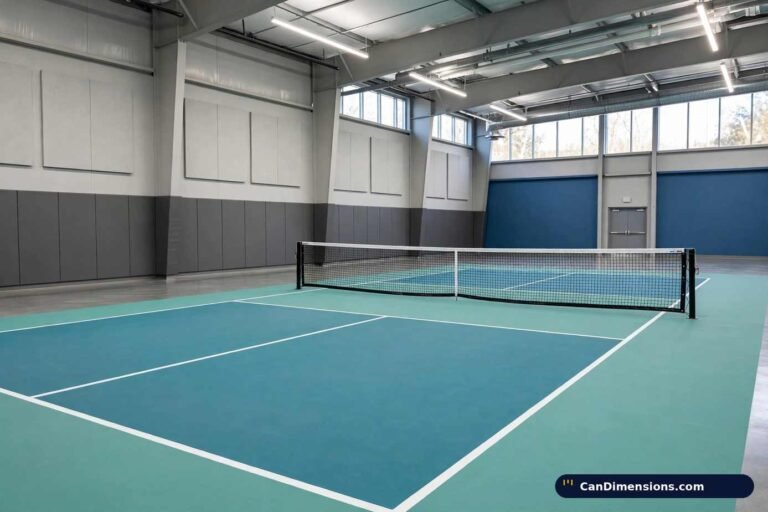
| 7 | Basketball Court Width | Yes | Exact — NBA and NCAA courts are 50 ft wide |
| 8 | 50-Foot Flagpole | Yes | Exact — exposed height 50 ft on maker spec sheets |
| 9 | 50-Foot Utility Pole | Yes | Exact — standard manufactured length 50 ft |
| 10 | Modern 50-Foot Boxcar | Yes | The 50-foot class — inside length 50 ft 6 in |
| 11 | Large Male Sperm Whale | Yes | Mature males reach physical maturity at 49–52 ft |
| 12 | Mature Saguaro Cactus | Yes | The National Park Service’s adult figure — up to 50 ft |
| 13 | 50-Foot Garden Hose | Yes | Exact — a standard manufactured product length |
| 14 | Fire Hose Section | Yes | Exact — attack hose is made in 50-ft sections |
1. Large Class A Diesel Pusher Motorhome
Not counted: The biggest motorhomes on the road feel like they should reach 50 feet, but production Class A coaches stop short. The longest current floor plans — Tiffin’s 45-foot Zephyr and Allegro Bus lines — top out at 45 feet, Entegra’s Cornerstone and Forest River’s Berkshire XLT measure 44 feet 11 inches, and most states cap a single-unit motorhome at 45 feet outright.
So “approximately 50 feet” overstates the largest diesel pushers by about five feet — a full car length. A Class A is a 45-foot reference, not a 50-foot one, and it is kept here so the record is straight.
2. 5-Story Building
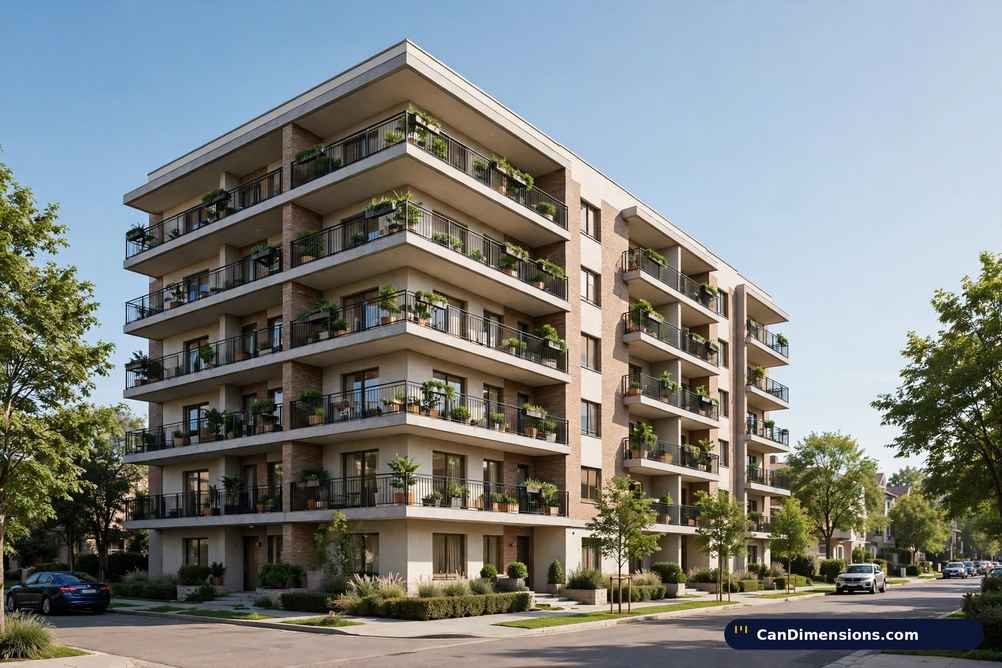
Counted: The everyday rule of thumb is ten feet per residential floor — an 8- or 9-foot ceiling plus the floor structure above it — which puts a five-story apartment building at about 50 feet tall. Treat it as a range rather than a point: real five-story buildings land anywhere from the mid-40s to the high 50s in feet, and commercial floors run taller (12 to 14 feet each), so a five-story office block can pass 60 feet.
One code claim needs correcting while we are here. Fifty feet is sometimes described as an International Building Code “mid-rise” line where requirements suddenly escalate — it is not. The IBC’s high-rise line is an occupied floor more than 75 feet up. Fifty feet is simply where five ordinary residential floors happen to land.
3. Semi-Trailer Truck (Cab Plus Trailer)
Not counted: This is the most common 50-foot mistake on the highway. The “48 to 53 feet” figure belongs to the trailer alone — 53 feet is the standard dry-van trailer length, and federal law since the Surface Transportation Assistance Act of 1982 has protected trailers of at least 48 feet on the National Network. There is no federal 50-foot standard for the whole vehicle.
Add the tractor and the picture changes: a day cab pulling a 53-foot trailer measures roughly 65 to 70 feet overall, and a sleeper cab pushes the combination toward 75 feet or more. A full semi rig is a 70-foot-class reference. Only the trailer, unhitched, lives near this list — and even it is 53 feet, not 50.
4. Humpback Whale
Counted: Adult humpbacks run 43 to 52 feet long according to the Marine Sanctuary Foundation, and the American Cetacean Society puts females at 45 to 50 feet and males at 40 to 48 feet — so a large female humpback is honestly a 50-foot animal, at the top of her range. The National Park Service’s Kenai Fjords averages tell the same story from the other end: a typical male is about 46 feet and a typical female about 49.
Read the basis carefully: 50 feet is the documented ceiling for females, not the average whale. A humpback you meet on a whale-watch boat is more likely to be in the mid-40s — still nine people long, and still the easiest 50-foot picture the ocean offers.
5. Five Average Cars Bumper to Bumper
Not counted: This comparison appears everywhere, and it is built on a car that does not exist. The claim assumes an “average car length of 10 feet” — but a modern midsize sedan runs 15 to 16.3 feet, and the average American car is roughly 14.5 to 15.5 feet long. Five of them parked bumper to bumper measure about 73 to 78 feet, not 50.
Work it the other way and 50 feet is about 3.4 average cars. The five-car picture overshoots by more than 20 feet — nearly half the length again — which is why it is corrected here instead of counted.
6. Mature Canopy Tree
Counted: A mature canopy tree can stand 50 feet tall — but not the species usually named for it. Tulip poplar matures at 70 to 90 feet (US Forest Service figures), American sycamore at 75 to 100 feet, and Douglas fir taller still; all three sail far past 50 feet on the way up and keep going. A tree that passes through 50 feet is not a 50-foot tree.
The count rests on species that genuinely finish at this height. The Morton Arboretum lists red maple (Acer rubrum) at a mature height of 40 to 60 feet — a mature red maple standing at about 50 feet is the honest version of this entry, and one of the commonest shade trees in North America.
7. Basketball Court Width
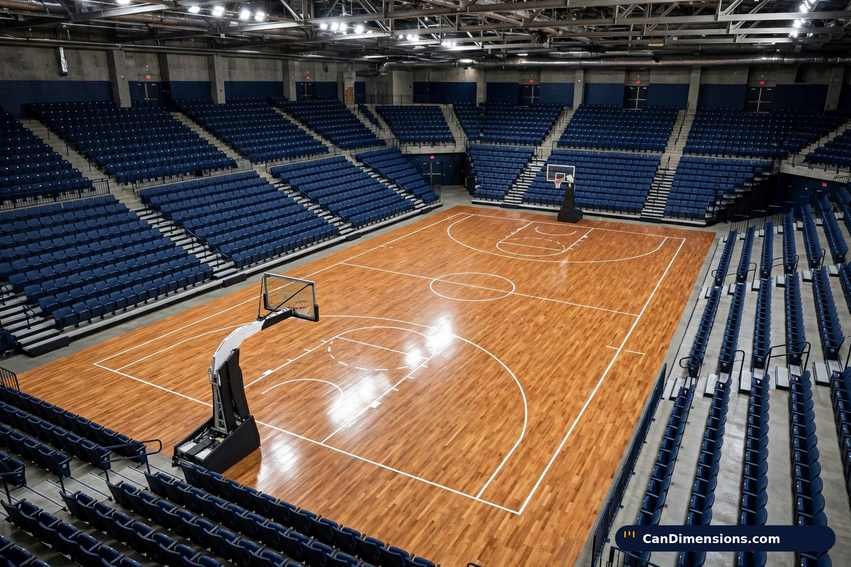
Counted: The cleanest exact 50 feet in this list is painted on gym floors everywhere. NBA Rule No. 1 fixes the court at 94 feet long by 50 feet wide, and NCAA Rule 1 sets the college court at the same 94 by 50 — even the recommended high-school court is 84 by 50, still 50 wide.
One honest exception: international FIBA courts measure 28 by 15 metres, which is about 49 feet 3 inches wide — close, but not 50. On any NBA or college floor, though, the width from sideline to sideline is exactly the length this article is about.
8. 50-Foot Flagpole
Counted: Commercial flagpoles are sold by exposed height — the pole you see above the ground — and 50 feet is a standard catalogue size. Eder’s EC50IH, for example, is specified at an exposed height of exactly 50 feet, with an overall length of 55 feet once the buried foundation section is counted.
That is the height flying 10-by-15-foot flags over schools, courthouses and car dealerships. Stand under one and look up: the flag at the top is nine adults above you.
9. 50-Foot Utility Pole
Counted: Wood utility poles are made to the ANSI O5.1 standard in 5-foot steps, and 50 feet is a standard manufactured length — utilities stock it, for example as a 50-foot Class 4 southern yellow pine pole, and Georgia Power’s pole tables list the 50-foot size with a 7-foot setting depth.
As with the 40-foot pole, you never see all of it: roughly 7 feet goes into the ground, leaving about 43 feet in the air carrying crossarms and wires. The pole is a true 50 feet of timber; it just spends seven of them underground.
10. Modern 50-Foot Boxcar
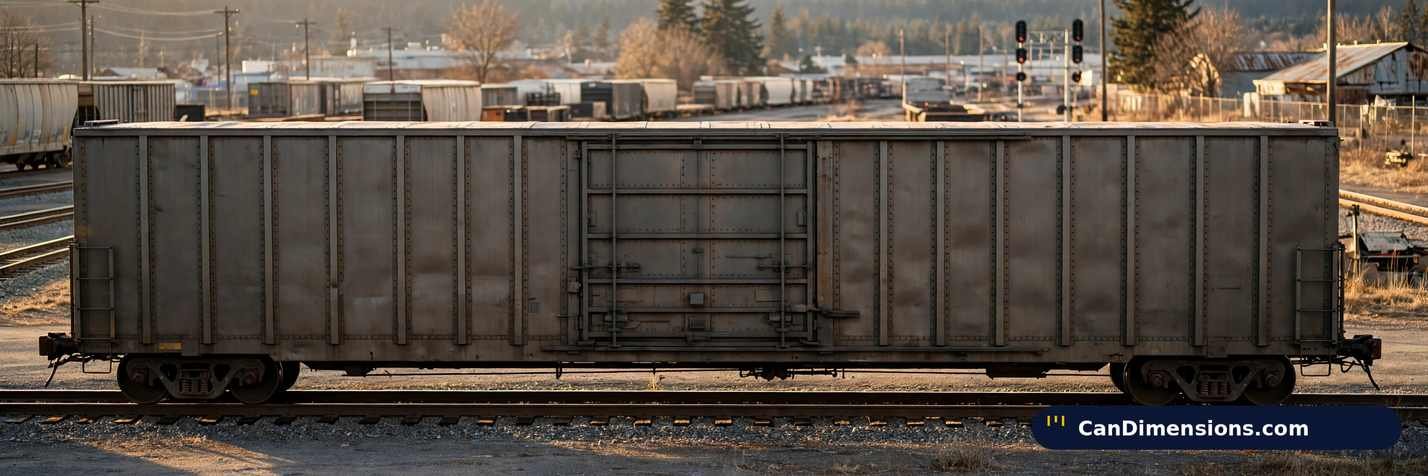
Counted: Today’s standard boxcar carries its size in its name: the 50-foot boxcar. Greenbrier’s 50-foot Plate F boxcar — the workhorse of the modern North American fleet — is specified with an inside length of 50 feet 6 inches, and CSX’s equipment records show the same 50-foot-6 inside figure across the class.
Like the classic 40-foot boxcar before it, this is a class figure rather than an exact external measurement: coupler to coupler, these cars run about 55 to 58 feet. But railroads order, route and bill by the 50-foot class, and the cargo space the name describes really is a whisker over 50 feet.
11. Large Male Sperm Whale
Counted: Where the 40-foot list needed the largest female sperm whales ever measured, this list needs only an ordinary big male. Male sperm whales reach physical maturity at 15 to 16 metres — 49 to 52 feet — and mature males average about 16 metres, so a large bull is a 50-foot animal in the normal course of things.
Females are far smaller, maturing at around 35 feet, which makes the sperm whale the most size-divided whale in the sea. The 50-foot version is always the bull.
12. Mature Saguaro Cactus

Counted: The giant saguaro is the desert’s 50-foot resident. The National Park Service puts it plainly: an adult saguaro, at about 125 years old, may be as tall as 50 feet. Mature plants commonly run 40 to 60 feet, and the tallest saguaro ever measured stood 78 feet before it fell in 1986.
Read the basis the same way as the humpback: 50 feet is a documented adult size near the top of the typical range, reached only by plants well over a century old — a saguaro grows its first arm at around 50 to 75 years. The young one in a garden centre has a very long way to go.
13. 50-Foot Garden Hose
Counted: Some lengths are 50 feet because the product is made that way. Fifty feet is the standard full-size garden hose length: Flexzilla’s best-known model, for example, is a 5/8-inch by 50-foot hose (model HFZG550YW), and the same 50-foot size is the default on shelf after shelf.
Uncoil one across a lawn and you have laid out this article’s length in green rubber — which is also the quickest way to check whether a 50-foot hose actually reaches your far flower bed.
14. Fire Hose Section
Counted: Fire hose is manufactured and sold in standard sections, and the standard attack-hose section is 50 feet. Fire departments buy it that way by the pallet — one municipal bid specification, for example, orders “(30) new 50-foot sections of 1.75-inch attack hose” built to the NFPA 1961 standard — and makers list 50 feet alongside 100 feet as the stock lengths.
Crews couple sections together to reach a fire, counting in 50-foot units as they go. Every length of attack hose rolled on an engine is this article’s length, ready to unroll.
50 Feet Next to Other Lengths
| Length | How 50 Feet Compares |
|---|---|
| 10 feet | Five of them, end to end |
| 25 feet | Exactly double |
| 30 feet | 50 feet is two-thirds longer |
| 40 feet | 50 feet is 25% longer |
| 60 feet | 50 feet is five-sixths of it |
| 100 feet | Exactly half |
The comparison that does the most work day to day is the 40-foot one: the container-and-bus length sits just a quarter-step below this one, and the two together bracket most of the long things in ordinary life.
How to Visualize 50 Feet Without a Measuring Tape
No tape? No problem. Use one of these mental shortcuts:
| Method | How It Works | Accuracy |
|---|---|---|
| 5-Story Building | Count five residential floors up — the roofline is your mark | ★★★★★ |
| Basketball Court Width | Stand on one sideline and look across — exactly 50 feet | ★★★★★ |
| Average Cars Bumper to Bumper | About 3.4 average sedans (at roughly 14.7 feet each) | ★★★★☆ |
| 53-Foot Trailer (Without the Cab) | The trailer alone is 53 feet — close, but 3 feet over | ★★★★☆ |
| Football Field Width | An NFL field is 160 feet wide — 50 feet is about a third of it, not half | ★★★☆☆ |
A warning about two comparisons that circulate with this topic: “five average cars” gives you 73 to 78 feet, not 50, because the average car is about 15 feet long rather than 10 — and “half a football field’s width” gives you 80 feet, because the field is 160 feet wide. Both shortcuts overshoot badly; the court and the building do not.
Measuring 50 Feet with Your Own Body
Your body carries two built-in measures. Your arm span — fingertip to fingertip with both arms stretched wide — is roughly equal to your height, so about nine of your own arm spans laid end to end cover 50 feet. And an ordinary interior door is 30 inches wide: twenty of those widths in a row is also exactly 50 feet, a useful check down a hallway or across a showroom.
For a rougher pass, use your stride. A comfortable walking step is about 2.5 feet, so 20 steps at an easy pace lands you close to 50 feet.
Where Does 50 Feet Appear in Daily Life?
Transportation & Highways: The 53-foot trailer behind every semi is this length’s near neighbour, and the following distance behind one should be counted in seconds, not car lengths — at highway speed, 50 feet passes in about half a second.
Camping & Recreation: Fifty feet is the working length of the campsite and the garden: the standard 50-foot hose, 50-foot power leads and hookup runs are all sized to it — even though the biggest motorhome you can buy stops at 45 feet.
Nature & Wildlife: A large female humpback at the top of her range, a mature bull sperm whale, and a century-old saguaro all stand or swim at about 50 feet.
Urban Construction: Five-story apartment buildings, 50-foot commercial flagpoles and 50-foot utility poles put this length into the built landscape on every block.
What Is Not 50 Feet: Three Near Misses
Plenty of famous lengths get rounded to 50 feet in casual talk and are not. An Olympic swimming pool is 50 metres long — 164 feet, more than three times this length; the metre-foot mix-up is the commonest 50-foot error of all. A blue whale runs to roughly one and a half times this length, commonly 70 to 80 feet or more. And a bowling lane is 60 feet from the foul line to the head pin, so 50 feet leaves your ball 10 feet short. Knowing the near misses keeps the real 50-foot references honest.
Question’s
How long is 50 feet visually?
Picture the width of a basketball court, sideline to sideline, or a five-story building lying on its side — that full span is 50 feet.
How many car lengths is 50 feet?
About 3.4 average cars. The average car is roughly 14.5 to 15.5 feet long, so five cars would overshoot to about 73–78 feet.
How long is 50 feet compared to a human?
About nine adults — 50 feet is roughly 8.8 times the height of a 5-foot-8 person.
How many floors is 50 feet?
About five residential floors, at roughly 10 feet per floor; five commercial floors, at 12 to 14 feet each, would run taller.
How tall is 50 feet compared to a building?
As tall as a five-story apartment building — the roofline of five ordinary homes stacked one on another.
How far is 50 feet when walking?
About 20 normal steps — at a steady 3 mph you cover it in roughly 11 seconds.
Final Thoughts
Fifty feet stops being a number once you have stood next to it. It is the width of every court you have ever played on, five floors of apartments over a shop, the biggest whale at the surface and a boxcar’s worth of freight — all the same honest length, shared by a flagpole, a hose and a fire crew’s standard section.
The slowest reference is the most patient one: an old saguaro in the desert may take 125 years to grow into this length, adding its arms one decade at a time. Count nine adults, cross one court, or pace twenty steps — and you will never misjudge 50 feet again.