25 Things That Measure 100 Feet (ft) In Length
One hundred feet is a long distance. It is equal to 1,200 inches or 33.33 yards. In meters, 100 feet equals 30.48 meters. This length is often used in buildings, sports fields, and streets. It helps us measure big objects and spaces.
Imagine a row of seven cars parked end-to-end. Or think of a ten-story building standing tall. These examples show how big 100 feet really is. You can picture it in cities, parks, and playgrounds. It is easier to understand with real things around you.
How long is 100 feet can also be measured by walking. Walking straight for about 33 to 40 seconds covers this distance. Trees, swimming pools, and fire trucks give more examples.
Knowing this helps in daily life, sports, and building planning.
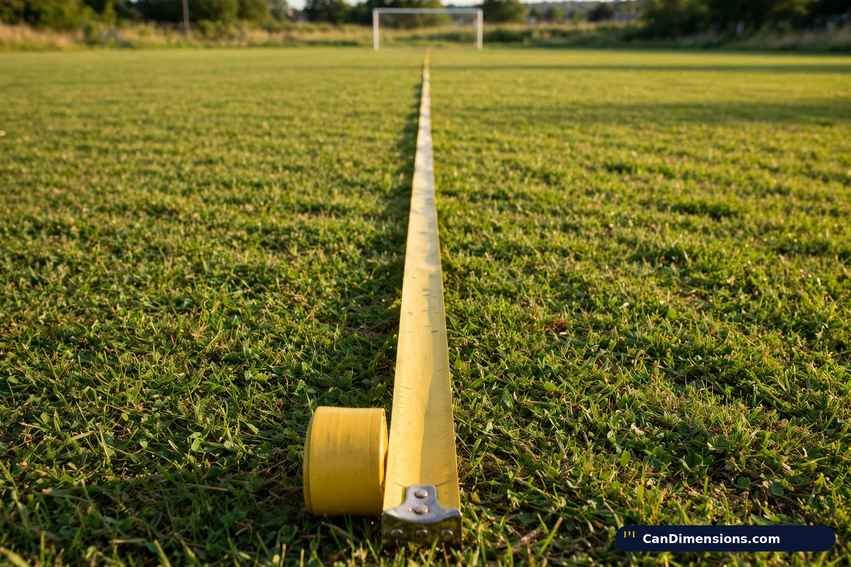
Quick Conversion
Before diving into examples, it is important to understand the conversions for 100 feet in meters, 100 feet in yards, and 100 feet in inches. One hundred feet equals 30.48 meters, which helps in countries using the metric system. In yards, this distance is 33.33, and in inches, it equals 1,200. These conversions are vital for architects, builders, and anyone needing precise measurements for projects. A quick conversion table can make this easier to remember:
| Measurement | Value |
| Feet | 100 ft |
| Meters | 30.48 m |
| Yards | 33.33 yd |
| Inches | 1,200 in |
| Miles | 0.019 mi |
Understanding these conversions provides a foundation for measuring 100 feet accurately and allows better estimation for various 100-foot objects and 100-foot structures.
How Long Is 100 Feet?
Visualizing 100 feet in everyday life helps put this measurement into perspective. A ten-story building height is roughly 100 feet, meaning standing at the base of such a building provides a real sense of scale. Similarly, seven cars end-to-end can stretch close to 100 feet, giving a horizontal perspective that many people encounter daily.
For sports fans, one-third of a football field equals exactly 100 feet, from the goal line to the 33-yard line. Walking this distance takes approximately 33 to 40 seconds at a normal pace, making 100-foot distance noticeable but manageable.

Things That Measure 100 Feet In Length
Here are 25 real-life examples of 100-foot structures and 100-foot objects, explained in detail to help readers visualize 100 feet easily.
Standard School Bus (Plus Small Car)
A standard school bus measures about 35 to 40 feet long, while a compact car is roughly 10 to 15 feet. Combining two buses and a small car gives a length close to 100 feet, making it a relatable 100-foot object for everyday life.
Urban planners and engineers often use standard school bus length to design parking lots, driveways, and streets. Visualizing buses and cars end-to-end helps drivers and pedestrians understand 100-foot distance practically. The measurement becomes a common reference in urban settings.
For children and students, imagining 100 feet as two school buses plus a small car creates a simple yet tangible mental model. This visualization helps educators and planners demonstrate distance estimation effectively, linking abstract numbers to real-world 100-foot structures.
One-Third of a Football Field
An American football field measures 300 feet from goal line to goal line. One-third of this field equals 100 feet, which players instantly recognize. Using football field length as a reference allows fans and athletes to visualize significant distances during games.
Coaches use this measurement to plan plays and drills. 100-foot distance markers on practice fields help athletes understand spacing, speed, and positioning. Observing one-third of a football field in real life strengthens spatial awareness for players of all levels.
Fans watching games can imagine the distance from the goal line to the 33-yard line as a 100-foot stretch. This relatable comparison makes 100-foot objects easy to conceptualize and connects the number to familiar sports experiences.
Ten-Story Building
A typical commercial story is around 10 feet tall, so a ten-story building height equals roughly 100 feet. Observing city skylines provides a visual sense of 100-foot structures, helping people estimate building heights in urban environments.
Architects and engineers rely on this mental reference when planning new developments. Seeing ten-story buildings from street level creates an instant understanding of 100-foot distance, linking vertical structures to human-scale measurements.
Urban dwellers often encounter ten-story buildings in downtown districts. Recognizing their height helps people mentally calculate 100 feet building height for safety, construction, and daily orientation in crowded cityscapes.

Seven Average Cars (End-to-End)
Standard sedans measure about 14 to 16 feet long. Lining up six to seven cars bumper-to-bumper reaches roughly 100 feet. This everyday observation allows drivers to easily visualize 100 feet without measuring tools.
Parking lots and streets offer repeated opportunities to compare seven cars end-to-end. City planners use these estimates to design parking spaces, ensuring that 100-foot distance is accounted for in lot layouts and traffic patterns.
Mentally lining up cars helps pedestrians and drivers relate 100-foot distance to a familiar horizontal perspective. The method translates abstract measurements into tangible 100-foot objects, aiding practical understanding in urban environments.
Standard Bowling Lane (With Approach)
Regulation bowling lanes measure 60 feet from the foul line to the headpin. Adding the 15-foot approach and extra ball-return space approaches 100 feet. Bowling lane length is a recreational example for visualizing 100-foot distance in familiar indoor spaces.
Bowling alleys across the USA follow these dimensions, providing consistent real-world examples of 100-foot structures. Recreational players can intuitively sense this length while practicing, making the measurement relatable and practical.
For families and groups, imagining a bowling lane plus the approach and surrounding space gives a tangible mental model. Linking 100-foot objects to familiar activities reinforces spatial awareness and distance estimation skills.
Basketball Court (Slightly Longer)
A standard basketball court measures 94 feet long, just six feet shy of 100. Basketball court length offers an excellent visual reference for 100-foot distance, especially in gyms, schools, and professional arenas. Players recognize the scale instantly.
Coaches often teach spacing, drills, and movement by referencing court dimensions. Adding a few feet mentally converts the court into a 100-foot estimate, helping athletes understand 100-foot objects without a measuring tape.
Fans and spectators also benefit from this visualization. Watching players move across the court, they can estimate 100-foot distance, enhancing appreciation for the scale of play and the dimensions of 100-foot structures in sports.
Mature Oak or Pine Tree
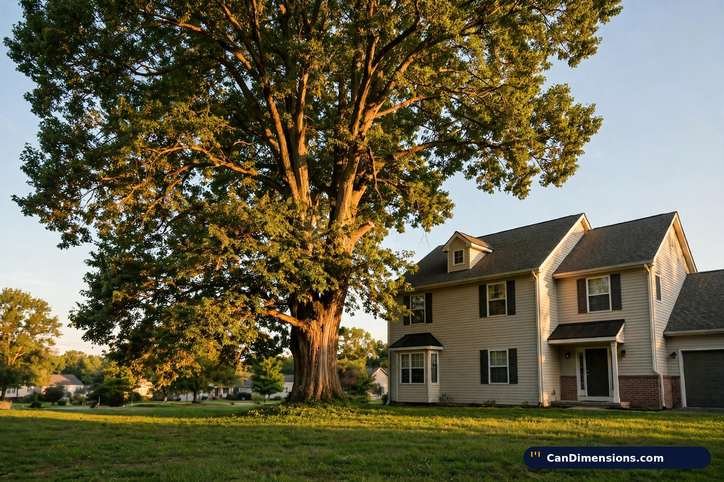
Many mature oak and pine trees reach heights of 80 to 120 feet. Trees measuring around 100 feet provide natural references for vertical 100-foot structures in forests, parks, and urban landscaping. Observing these trees aids visualizing 100 feet.
Arborists and nature enthusiasts often estimate tree height using surrounding objects. Comparing a tree to ten-story building height or a row of cars helps understand 100-foot distance in both vertical and horizontal contexts.
Century-old trees not only provide shade but also demonstrate scale. Seeing a mature oak tree height of 100 feet encourages understanding of large measurements in nature and reinforces the concept of 100-foot objects in everyday life.
Semi-Truck and Full Trailer
A semi-truck tractor measures 20 to 25 feet, and standard trailers are 48 to 53 feet. Longer combinations approach 100 feet. Observing semi-truck length on highways gives drivers and pedestrians a practical sense of 100-foot distance.
Transport companies use these measurements to plan road logistics and parking spaces. Comparing trucks and trailers end-to-end allows people to understand 100-foot structures in real-world transport scenarios.
Highway travelers can visualize 100-foot objects by mentally adding the lengths of tractors and trailers. The comparison helps assess distances safely when passing, parking, or navigating large vehicles.
Three-Lane Swimming Pool (Length)
Olympic pools measure 50 meters (164 feet), while many recreational pools measure around 30 meters, roughly 100 feet. Swimming pool length provides a horizontal reference for 100-foot distance, ideal for swimmers and trainers.
Competitive swimmers often use the length of a pool to pace themselves. Visualizing 100-foot objects in aquatic contexts improves understanding of distance covered during laps and practice drills.
Community centers and gyms showcase pools of this length. Observing a three-lane pool helps users intuitively visualize 100 feet, connecting abstract numbers to everyday experiences and fitness activities.
Fire Truck with Ladder Extended
Fire trucks with aerial ladders extend 75 to 100 feet. Fire truck ladder extension demonstrates practical use of 100-foot distance for rescuing people from tall buildings or reaching emergency zones.
Urban planners and safety officers consider emergency vehicle reach in building codes. A 100-foot ladder helps ensure firefighters can access 100-foot structures, such as ten-story buildings, safely and efficiently.
Training exercises often use extended ladders to simulate real-life scenarios. Firefighters mentally associate 100-foot objects with rescue operations, improving efficiency and safety awareness in emergency situations.
Five Standard RVs (End-to-End)
Class C RVs measure roughly 20 to 25 feet each. Lining up four to five RVs bumper-to-bumper equals about 100 feet, providing a horizontal reference for 100-foot distance. Campgrounds often show this spacing, giving travelers a tangible sense of measurement.
Recreational vehicle enthusiasts can visualize 100-foot objects by imagining how much space five standard RVs occupy. Campground planning and parking layouts often rely on this simple mental reference, linking property lot dimensions to real-world examples.
This visualization is practical for group travel or RV rallies. Observing low-rise apartment building footprints nearby also helps contextualize 100-foot structures, making it easier for planners and drivers to estimate distances accurately.
Tennis Court (Three Times Length)
A standard tennis court measures 78 feet long for singles play, making 100 feet slightly longer than the court itself. Tennis court length provides a sports-related visual to understand 100-foot distance for athletes and spectators alike.
Players and coaches use this mental model to gauge movement and spacing during games. Adding 22 feet to a standard court helps them visualize 100-foot objects efficiently during practice sessions and competitive play.
Tennis courts at schools or clubs provide familiar, everyday references. Understanding 100-foot distance in this way also enhances appreciation for larger 100-foot structures in sports facilities and recreational areas.
Large Yacht or Small Ship
Luxury yachts range from 80 to 120 feet, with 100 feet representing a medium-sized ocean-going vessel. Observing luxury yacht size offers a maritime reference for visualizing 100 feet, giving perspective on boat lengths in marinas.
Professional crews and marina planners consider 100-foot structures when allocating slips and docking spaces. A yacht of this size requires specialized handling, making 100-foot distance crucial for practical navigation and storage.
For enthusiasts and travelers, seeing a 100-foot yacht in real life provides a clear comparison to familiar 100-foot objects on land, like a row of cars or a ten-story building, bridging water and urban scales.
18 Adults (Head-to-Toe)
The average adult measures approximately 5.5 to 6 feet tall. Lining up 18 people head-to-toe equals 100 feet, offering a human-scale reference for 100-foot distance in classrooms, parks, or group demonstrations.
This method helps teachers, event organizers, and planners visualize 100 feet using everyday people. It’s a practical way to demonstrate large-scale measurements without tools or tape measures.
Groups of 18 adults can also be compared to ten-story building height or seven cars end-to-end, reinforcing the concept of 100-foot structures and giving both vertical and horizontal perspectives for estimation.
Small Apartment Building
Low-rise apartment buildings often span 30 to 100 feet in width. Observing low-rise apartment building dimensions helps people understand 100-foot structures in urban areas and residential neighborhoods.
City planners rely on this reference for property lot dimensions and zoning compliance. Estimating 100-foot distance between buildings ensures safe spacing and appropriate land usage, especially in densely populated regions.
Residents and visitors can also use apartment buildings as mental guides. Seeing a building roughly 100 feet wide provides an immediate and practical method for visualizing 100 feet in everyday life.
Streetlight Rows
A row of 10–12 standard streetlights often spans about 100 feet along a roadway. This provides an urban reference for visualizing 100 feet and understanding spacing for 100-foot structures in city planning.
Urban engineers use streetlight spacing to maintain even illumination and traffic safety. By knowing the distance covered by a series of lights, they can design streets with proper zoning clearance distances and property lot dimensions.
Pedestrians and drivers can estimate 100-foot distance by counting streetlight poles. This everyday reference helps relate abstract measurements to real-life 100-foot objects commonly encountered on streets and avenues.
Soccer Field Corner to Goal
In a standard soccer field, the distance from the corner to the penalty area often approaches 100 feet. Football field length comparisons help players and referees visualize 100-foot distance in horizontal play.
Coaches use this measurement to plan offensive and defensive drills. Understanding 100-foot structures on the field allows athletes to gauge movement, passing distances, and strategic positioning accurately.
Fans watching matches can mentally picture 100-foot objects when observing field segments. Linking soccer dimensions to everyday 100-foot distance references improves appreciation of spatial scale in sports.
Baseball Infield Distance
From home plate to second base in professional baseball is often about 127 feet, making the pitcher’s mound to second base roughly 100 feet. 100-foot distance estimates help players practice accurate throws and field positioning.
Coaches consider this when planning defensive strategies and player training. 100-foot objects in baseball, such as infield paths, give players a tangible understanding of spacing and 100-foot structures on the field.
Spectators can also use the infield to visualize 100 feet, comparing it to rows of cars, bowling lanes, or even a small ten-story building height, making sports measurements relatable.
Driveway Length
Long residential driveways often span 100 feet. Homeowners can visualize 100 feet using the driveway itself, which doubles as a reference for 100-foot distance in property layouts and property lot dimensions.
Landscapers and builders use this measurement for planning trees, fencing, and lighting. Knowing a driveway is roughly 100 feet helps estimate 100-foot structures for safety, aesthetics, and vehicle maneuvering.
Walking or driving the full length of a driveway allows residents to mentally grasp 100-foot objects in daily life, linking personal experience to abstract measurements.
Railroad Car Lengths
A standard freight railroad car measures about 50 feet, so two end-to-end equal approximately 100 feet. Semi-truck length comparisons can also help visualize this 100-foot distance in transportation and logistics.
Rail companies use these estimates for track planning, yard layouts, and cargo management. Understanding 100-foot structures ensures efficient operation and safety during loading and unloading.
Rail enthusiasts and travelers can visualize 100-foot objects by mentally lining up two cars on tracks, providing a practical real-world example of 100-foot distance.
Playground Swing Set Rows
Rows of large playground swings often span 100 feet. Children can run or play along the set to visualize 100 feet, creating a fun reference for 100-foot objects and 100-foot distance in parks and recreational spaces.
Designers use this spacing for safety, ensuring children have adequate room to swing without obstruction. Measuring 100-foot structures in this way guarantees proper compliance with playground regulations and zoning clearance distances.
Parents and caregivers can mentally compare swings to other objects like parked cars or trees to visualize 100 feet in familiar outdoor spaces, connecting abstract numbers to physical reality.
Outdoor Tennis Court Rows
A row of three adjacent tennis courts is roughly 100 feet long. Tennis court length provides an athletic reference for visualizing 100 feet in outdoor sports complexes.
Athletes and coaches can use this distance to plan drills, practice spacing, and improve strategic awareness during matches. 100-foot structures in sports facilities benefit from these practical measurements.
Spectators or visitors can mentally walk the row of courts to grasp 100-foot distance, comparing it to cars, bowling lanes, or playground swings for a clear real-world understanding of 100-foot objects.
Fire Escape Ladder Extension
Fire escape ladders on large buildings can extend about 100 feet to ground level. Observing fire truck ladder extension and fire escape ladders helps residents and safety personnel visualize 100-foot structures in emergency planning.
Fire departments incorporate these distances into drills and building code compliance. Emergency vehicle reach and 100-foot distance are vital for ensuring safe evacuation and access for firefighters.
Urban dwellers can compare the extended ladders to ten-story building height or mature oak tree height, making the measurement intuitive and practical for emergency awareness.
Row of Mailboxes
A long row of community mailboxes in a neighborhood often spans 100 feet. Residents can visualize 100 feet by walking the row, making it an everyday example of 100-foot objects in suburban settings.
Urban planners and postal services use these layouts to ensure efficient mail delivery and safe spacing, taking property lot dimensions into account for design and access.
The mental model of a row of mailboxes helps people estimate 100-foot distance, comparing it to parked cars, small RVs, or playground equipment for real-life scale reference.
Light Rail Platform
Light rail platforms often measure approximately 100 feet to accommodate train doors. 100-foot structures like platforms provide urban commuters a practical reference for 100-foot distance in transit systems.
City planners and transit authorities consider 100-foot distance when designing boarding areas, ensuring safety, passenger flow, and compliance with zoning clearance distances.
Riders and pedestrians can visualize 100 feet by comparing platform length to nearby street features, cars, or trees. This helps mentally connect 100-foot objects to urban spaces they encounter daily.
100 Feet Without Measuring
Visualizing 100 feet without measuring can be simple using mental cues and comparisons. Looking at a ten-story building height, imagining one-third of a football field, or mentally lining up seven standard cars bumper-to-bumper are easy methods. Another approach is walking 33–40 seconds at a normal pace, which roughly covers 100 feet. These practical references allow anyone to grasp 100-foot distance intuitively.
Ten-Story Building Height
Looking up at a ten-story building height offers a natural way to estimate 100-foot distance. This vertical visualization helps people intuitively grasp the scale of 100-foot structures in urban and suburban areas.
Builders and architects frequently use ten-story buildings as reference points for height comparisons. Mental measurements against these structures improve accuracy in construction, planning, and real estate evaluation.
Urban dwellers often encounter such buildings daily. Recognizing their height allows individuals to understand 100-foot building height intuitively, whether assessing skyline views, planning construction projects, or estimating emergency clearances.
One-Third of a Football Field
One-third of a football field length, from the goal line to the 33-yard line, equals 100 feet. This familiar sports reference helps players, coaches, and fans visualize 100 feet naturally.
Athletes use this mental measurement for spacing drills, sprints, and strategic plays. Coaches incorporate 100-foot distance into field planning to improve performance and understanding of field layouts.
Spectators can also appreciate 100-foot objects during games. Comparing football field length segments to other structures, like ten-story buildings or parked cars, enhances spatial awareness in sports and daily activities.
Seven Standard Cars Bumper-to-Bumper
Parking seven standard cars bumper-to-bumper, with each sedan about 14–15 feet long, spans roughly 100 feet. This comparison is practical for drivers and pedestrians to visualize 100 feet in urban settings.
City planners use this reference when designing streets, parking lots, and driveways. Understanding seven cars end-to-end ensures 100-foot distance is accounted for in traffic and parking layouts.
For everyday life, lining up cars mentally helps pedestrians estimate distance without measuring tools. Observing 100-foot objects through cars provides horizontal context for large-scale 100-foot structures.
33–40 Seconds of Normal Walking
A normal walking pace covers roughly 3 feet per second. Walking straight for 33 to 40 seconds approximates 100 feet, giving a physical and personal sense of 100-foot distance.
This method is practical for pedestrians, hikers, and urban dwellers needing quick estimation of 100-foot structures or spacing between objects, like buildings or parked vehicles.
Mental pacing connects abstract numbers to real-life experiences. Visualizing 100-foot objects through walking reinforces spatial awareness and helps people estimate 100-foot distance accurately in everyday life.
100 Feet Matters in Everyday Life
Understanding how long is 100 feet has practical applications in many areas. Construction planning improves when estimating 100-foot building height and property lot dimensions. Safety awareness increases when recognizing recommended clearance distances, including fire codes, utility line setbacks, and emergency vehicle reach. Sports enthusiasts gain better appreciation of field and court measurements, while urban planners rely on zoning clearance distances and 100-foot structures for design and compliance. Recognizing familiar 100-foot objects makes daily life, architecture, and planning more intuitive and manageable.
Understanding 100 Feet in Everyday Life
Visualizing 100 feet in everyday life can be tricky, but it’s easier with real-world references. From ten-story building height to seven cars end-to-end, everyday objects provide tangible ways to comprehend this significant measurement. Understanding these references improves practical knowledge of 100-foot structures, 100-foot distance, and everyday spatial awareness.
From construction to sports, knowing 100 feet helps estimate property lot dimensions, zoning clearance distances, and emergency access. Walking 33–40 seconds or counting 100-foot objects like playgrounds or swimming pools reinforces this knowledge. Mentally mapping 100 feet builds intuition for both horizontal and vertical scales in urban and recreational environments.
The Importance of 100-Foot Measurements in Construction
Builders and architects often rely on 100-foot measurements to plan building layouts, roofing, and urban designs. Recognizing 100-foot structures like low-rise apartments or parking lots ensures accurate spacing and compliance with zoning clearance distances. It’s a practical reference for estimating 100-foot building height in city skylines.
Accurate knowledge of 100 feet conversion into meters, yards, or inches is crucial for project planning. Engineers use 100-foot distance estimates for safety, accessibility, and resource allocation. Visualizing 100-foot objects before construction improves efficiency and reduces errors, especially in large-scale developments and residential planning.
Sports as a Tool to Visualize 100 Feet
Sports facilities provide natural ways to visualize 100 feet. Football field length, basketball court length, and tennis courts help athletes and coaches grasp 100-foot distance intuitively. Field markings and court dimensions offer real-life comparisons that are easy to understand.
Fans and spectators also benefit. Watching players move across a field or court, you can mentally map 100-foot objects like a ten-story building height or the length of seven cars end-to-end. Sports thus become an effective educational tool for spatial reasoning and distance estimation.
Nature’s Perspective on 100 Feet
Natural landmarks like mature trees often exceed 80 feet. Observing a mature oak tree height of around 100 feet offers a vertical reference for 100-foot structures in forests or parks. Nature helps people connect abstract measurements to visual cues.
Hiking trails, forests, and parks also provide informal ways to measure 100 feet without tools. Comparing trees, trails, or river stretches to 100-foot distance improves understanding of vertical and horizontal scales, blending outdoor experience with practical measurement skills.
Transportation and 100-Foot Visual References
Vehicles offer practical ways to visualize 100 feet. Semi-truck length, five standard RVs end-to-end, and school buses give horizontal examples of 100-foot objects. Drivers and planners often use these comparisons to design streets and parking layouts.
Highway engineers consider 100-foot distance for lane safety, emergency vehicle access, and logistics. Using vehicles as visual references bridges the gap between theory and practical application. Mentally mapping 100-foot structures like trucks or buses enhances everyday navigation and safety awareness.

Recreational Spaces and 100 Feet
Recreational areas like bowling lanes, swimming pools, and playgrounds help people visualize 100 feet easily. Bowling lane length and swimming pool length offer horizontal benchmarks, making 100-foot distance relatable and tangible. These familiar spaces connect numbers to experience.
Designers use 100-foot objects in planning recreational layouts. Spacing equipment, lanes, or play areas ensures compliance with zoning clearance distances and safety rules. Visualizing 100 feet in leisure spaces makes planning intuitive, safe, and enjoyable for communities.
Emergency Services and 100-Foot Reach
Fire trucks and ladders extend up to 100 feet. Understanding fire truck ladder extension helps planners and residents visualize 100-foot distance in emergencies. Knowledge of this measurement ensures proper safety planning and emergency preparedness in urban areas.
Emergency responders rely on 100-foot structures for strategic access. Mentally connecting ladder reach with ten-story building height or tree heights improves efficiency and safety during real-life operations. Visualizing these distances is vital for effective emergency response planning.
100 Feet in Property and Urban Planning
Real estate and urban planning heavily rely on 100-foot distance as a standard measure. Property lot dimensions and building footprints often approximate 100 feet, helping developers plan space efficiently. Knowledge of 100-foot structures ensures compliance and optimal use of land.
City zoning rules incorporate 100 feet conversion into planning codes for safety, spacing, and aesthetic consistency. Planners often use mental visualization of 100-foot objects, from apartments to parked cars, to anticipate spacing, accessibility, and the practical scale of developments.
FAQs
How long is 100 feet visually?
About the height of a ten-story building or the length of seven cars end-to-end, making it easy to visualize 100 feet in everyday settings.
How many car lengths is 100 feet?
Roughly 6 to 7 standard sedans parked bumper-to-bumper, providing a practical reference for 100-foot distance in urban areas.
What is equivalent to 100 feet?
One-third of a football field, a ten-story building height, or 18 adults head-to-toe all represent common 100-foot objects for visualizing scale.
How many cars can fit in 100 feet?
Approximately 6 to 7 average cars, depending on size, illustrate 100-foot distance in a simple, everyday context.
Conclusion
how long is 100 feet can be understood by looking at many everyday objects. A ten-story building, seven cars parked end-to-end, or one-third of a football field all show this distance clearly. Walking straight for 33 to 40 seconds also covers 100 feet. Trees, swimming pools, bowling lanes, and fire truck ladders give more real-life examples. Using these references helps people see the size of 100-foot objects easily.
Knowing how long is 100 feet is very useful in school, sports, and city life. Builders, planners, and athletes use it to measure spaces safely and accurately. Visualizing 100 feet with cars, buildings, or playgrounds makes it simple to understand. This knowledge helps everyone plan, play, and move safely every day.
For the official numbers, the football field length is 120 yards from end line to end line, including both end zones.