Celsius 12 oz vs 16 oz: Which Can Should You Buy?
Two cans wear the same brand name, and a buyer standing at the shelf has to pick one without opening either. The celsius can dimensions settle most of that choice before flavour or price enters it: the everyday can is a narrow 12 oz shell, and the bigger option is a wider 16 oz shell, and nearly every practical difference between them — grip, fit, fridge space, caffeine per trip to the shop — flows from that single contrast.
This page is written as a buyer’s head-to-head rather than another size chart. It puts the pair side by side first, then walks through the full dimension record section by section, so a reader who only wants the verdict can stop early and a reader who wants every verified figure still gets them all.
One warning before the numbers: the figures circulating for this brand blend the two shells together, pairing one can’s height with the other can’s width. Every measurement below belongs to a named shell, checked against the can makers’ specifications for that shell, and the caffeine figures come from the brand’s own published facts page.
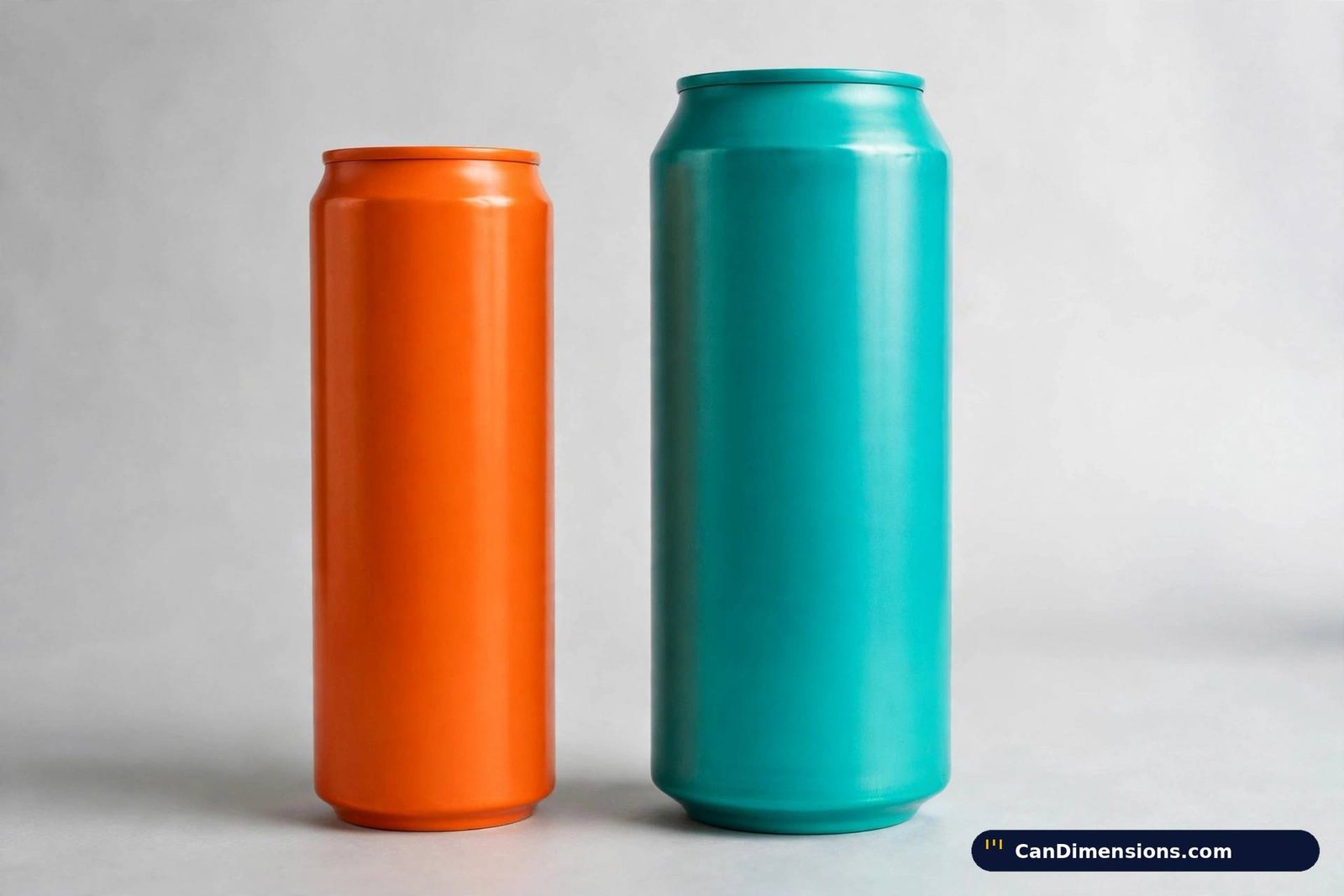
12 oz vs 16 oz Head to Head: The Two Cans Side by Side
Start with the whole contest on one table. The middle column covers the can most buyers mean when they say Celsius: the 12 oz sleek shell carrying the core ranges. The right-hand column covers the 16 oz Essentials can. Every figure is drawn from the shell specifications published by the can makers — the underlying references behind our beverage can dimensions guide.
| Measure | 12 oz Celsius (core ranges) | 16 oz Celsius Essentials |
|---|---|---|
| Volume | 12 fl oz (355 mL) | 16 fl oz (473 mL) |
| Caffeine per can | 200 mg | 270 mg |
| Height | 6.13 in (155.7 mm) | 6.19 in (157.2 mm) |
| Body diameter | 2.26 in (57.4 mm) | 2.6 in (66 mm) |
| Circumference | 7.10 in | 8.17 in |
| Shell | Sleek | Standard-body tallboy |
| Caffeine per fl oz | About 16.7 mg | About 16.9 mg |
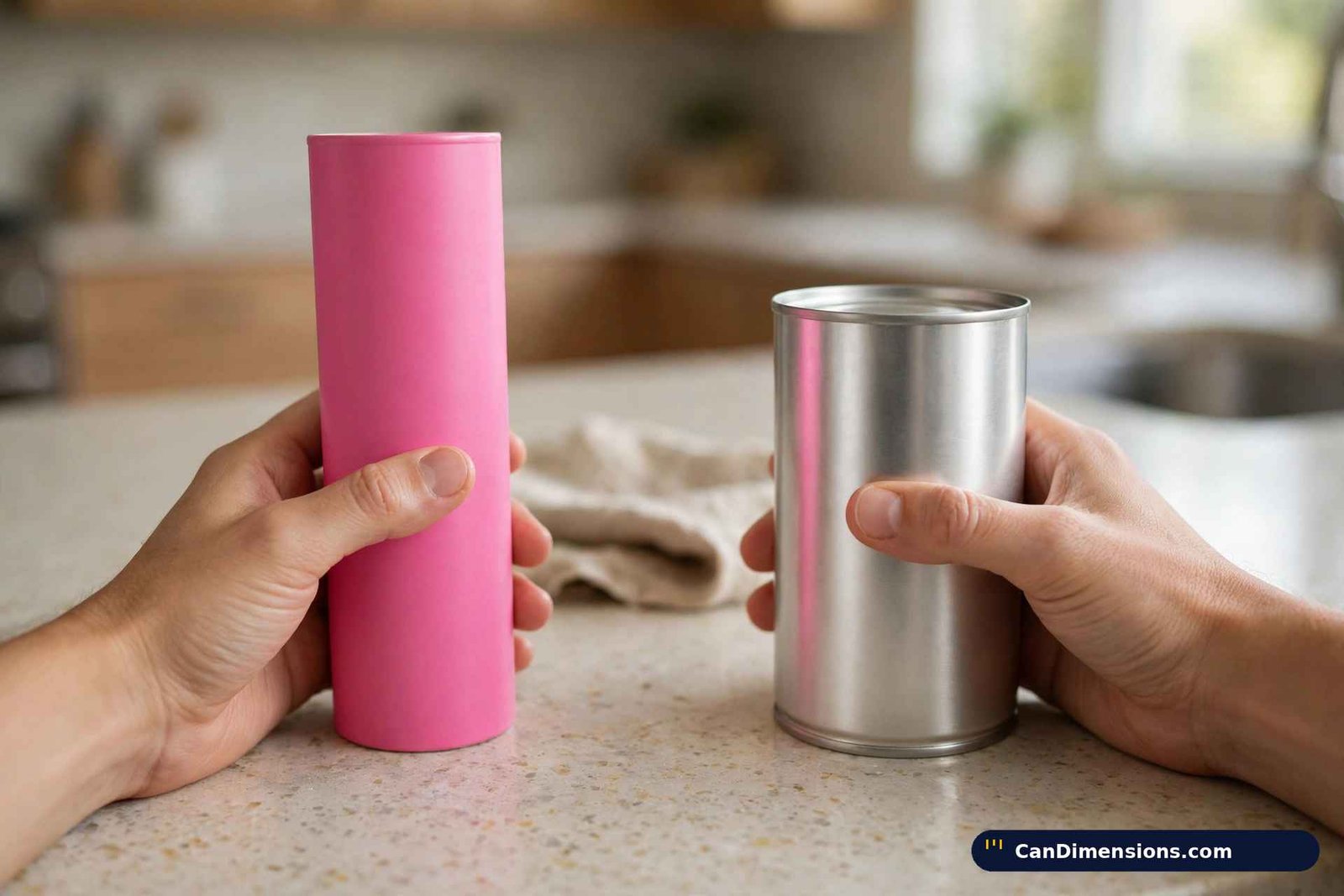
Read the height row first, because it overturns the assumption most buyers bring to the shelf. Barely six hundredths of an inch separates the taller can from the shorter one, so shelf height, door-bin clearance and cooler depth work out effectively identical whichever you choose. The contest gets decided one row down: the Essentials can measures a full 0.34 inches wider through the body, and inside that extra width sits its extra four ounces.
The caffeine rows carry the second surprise, developed in full further down: per can, the Essentials delivers 35 percent more caffeine, yet per fluid ounce the two drinks are poured at practically the same strength. Buying the bigger can buys more drink at the same concentration — it does not buy a stronger drink.
How Big Is A Celsius Can?
With no qualifier attached, the question points at the regular can: 12 fl oz (355 mL) poured into a tall, slim shell that stands 6.13 inches high and spans 2.26 inches through the body. Gyms stock it, grocery chillers stock it, petrol stations stock it, and every core range ships in it — Original and its Sparkling, Vibe and Fizz-Free siblings — with the shell staying constant while the flavours rotate.
Proportions explain the brand’s shelf presence. Put one beside an ordinary soda can holding an identical twelve ounces and the Celsius rises roughly 1.3 inches higher while giving up roughly a third of an inch in width, which is why it reads as fitness equipment among drinks. Yet the regular can accounts for only half the canned range: a second, larger can exists in an altogether different shell, and treating the pair as one product with two labels is the mistake this page exists to correct.
Celsius Can Dimensions
Take the regular can’s measurements one by one. Finished height comes in at 155.7 mm, equal to 6.13 inches. Body diameter comes in at 57.4 mm, equal to 2.26 inches. Circumference — the distance a label, sleeve or koozie has to travel — works out at pi times diameter: 7.10 inches, near enough 18.0 cm.
Specification figures deserve one complication stated plainly alongside them. Retailer listings describe a single can as 2.25 by 2.25 by 6.25 inches. Allow for quarter-inch rounding and the listed width matches the specification; the listed height overshoots the drawn shell by about one-eighth of an inch, being a rounded package measurement rather than a shell measurement. Storage plans, print files and fit checks should all run from 6.13 inches; a tape pressed against a real can will read slightly above 6.1, and the two readings describe identical aluminium.
The format also carries a trade name worth learning, since Celsius shares it with other drinks. Makers call the format a sleek can, and their format references name Celsius among its users next to the hard seltzers in our guide to white claw can dimensions. One shell, identical figures, unrelated drinks — hence a koozie or organiser bought for one sleek-can brand fits the other.
Celsius Can Size
Shoppers in the United States meet two Celsius can sizes, belonging to two separate product families instead of one range with options. The sleek 12 fl oz can carries the entire core line-up and stands as the default purchase — a single serving per can, stocked wherever the brand appears at all. A shop selling Celsius sells this can.
The 16 fl oz size sits inside CELSIUS ESSENTIALS, the performance line introduced towards the end of 2023. Essentials marks the brand’s second run at the larger format: CELSIUS HEAT came first, likewise a 16 fl oz line, debuting in 2017 before being discontinued, leaving Essentials as the only 16 oz Celsius a shelf can hold today. Past those two cans, the brand’s other lines — On-The-Go sticks and the Hydration range — arrive as powders rather than canned drinks.
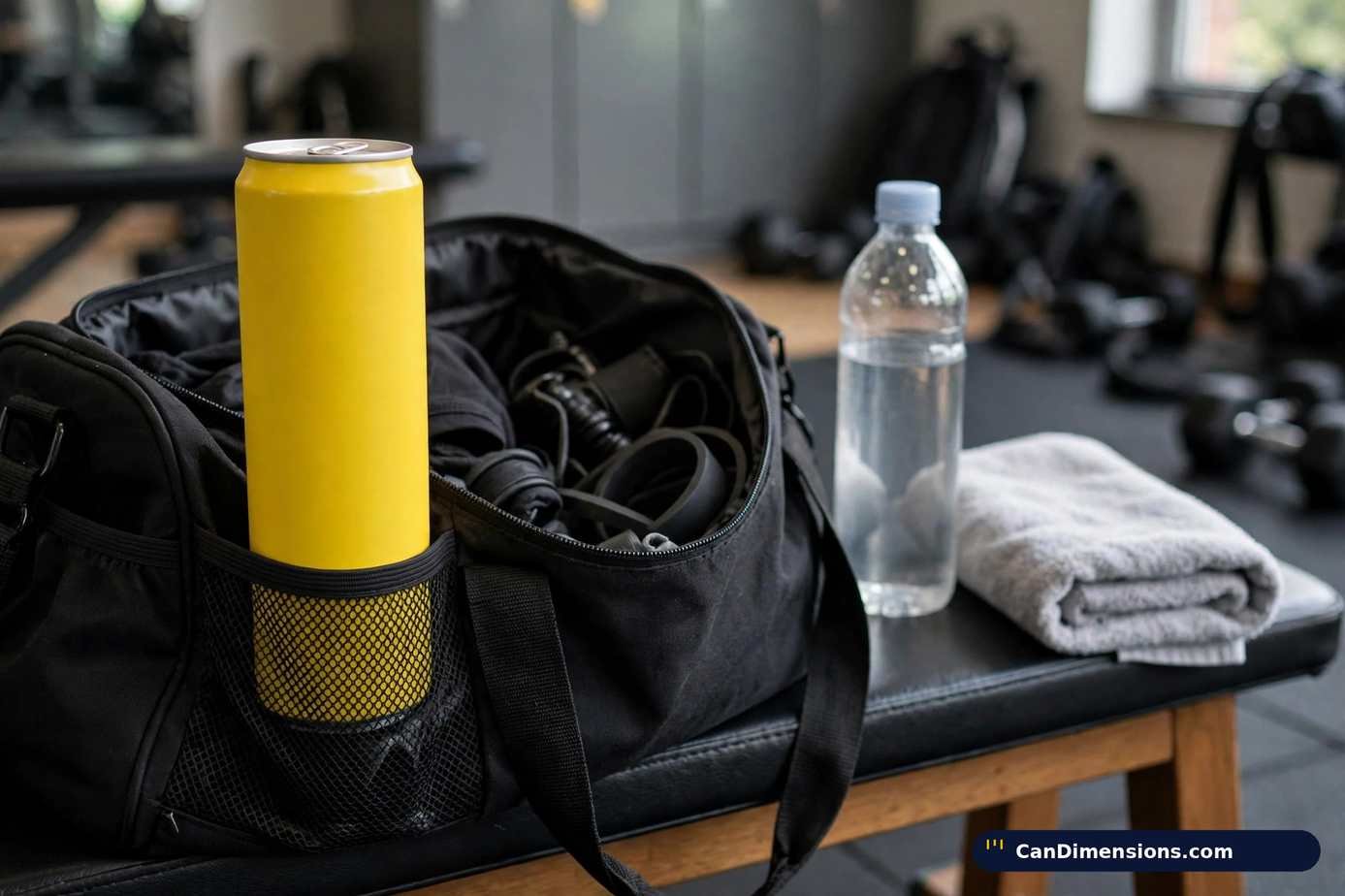
Nor does flavour move the metal. Sparkling Orange and Fizz-Free Raspberry Lemonade share identical aluminium — the same 6.13 by 2.26 inches under different printing — and two Essentials flavours likewise share 6.19 by 2.6. A listing assigning different dimensions to different flavours within a line describes its own data entry, never the cans.
Caffeine per Can and per Ounce: What the Bigger Can Actually Adds
The brand’s own Essential Facts page, checked for this guide, publishes caffeine content by product line: core and Vibe cans carry 200 mg of caffeine per can, and Essentials carries 270 mg per can. Those are the only caffeine figures printed here, and they reward a closer look, because the headline gap and the real gap are different numbers.
Per can, the arithmetic is simple: 270 minus 200 is 70 mg, and 70 over 200 is a 35 percent increase. Per fluid ounce, divide each figure by its can: 200 mg across 12 ounces is about 16.7 mg per ounce, while 270 mg across 16 ounces is about 16.9 mg per ounce — a difference of roughly one percent, inside any reasonable rounding. The two drinks are mixed to effectively the same strength; the Essentials can is a larger serving of a same-strength drink, plus a small top-up.
That reframing changes how the pair should be compared on value. Three Essentials cans hold 48 fluid ounces — exactly the volume of four 12 oz cans — and deliver 810 mg of caffeine against the four smaller cans’ 800 mg. Volume for volume and milligram for milligram, the two routes to the same fridge stock land within a few percent of each other; what actually differs is the serving pattern. One Essentials is a single large serving the brand itself caps at one per day in its published guidance, while its guidance allows up to two of the 12 oz cans a day. A buyer choosing between them is really choosing between one big serving and the option of two smaller ones spread across a day — a packaging decision, not a potency decision.
Celsius Can Height
Height for the regular can is 6.13 inches — 155.7 mm, or 15.57 cm — taken on a finished, sealed can between the surface beneath it and the top of its rim. Shelf presence starts with this number: the can towers over its soda neighbours by roughly 1.3 inches despite pouring an equal volume.
Copied charts blur the figure from two directions. Retailer data rounds upward to 6.25 inches, the package figure dealt with in the dimensions section above, while other charts print a range stitched from both numbers. No range exists and no second height exists: a single shell, drawn at 155.7 mm.
Buyers weighing the pair against each other can treat height as settled. Essentials stands 6.19 inches tall (157.2 mm), exceeding its sibling by a sixteenth of an inch — a gap no shelf, bin or cooler will ever register. Vertical clearance budgeted for one Celsius can automatically covers the other, and any source claiming the 16 oz can demands dramatically more headroom is working from the error corrected in the 16 oz section further down.
Celsius Can Diameter
Diameter for the regular can is 2.26 inches — 57.4 mm, or 5.74 cm — measured across the body’s widest point. Copied charts mishandle this figure more than any other, most often by handing the sleek can the 2.6-inch body belonging to the standard soda shell, and the whole head-to-head turns on it: 0.34 inches is simultaneously the gap separating the two Celsius cans and the gap separating a sleek can from a soda can.
Two qualifications protect the number from misuse. First, diameter refers to the body alone. Towards the top, the wall necks inward to meet the lid — a 202 end, nominally 2.13 inches by its code value, with the neck itself drawn at about 52.4 mm, roughly 2.06 inches, in makers’ drawings — while the base closes into a smaller domed standing rim. Descriptions claiming uniform width from top to bottom match no beverage can ever drawn. Second, narrowness does practical work beyond styling: a 2.26-inch body closes more easily inside a smaller hand, its 7.10-inch circumference consumes less aluminium than the standard body’s 8.17, and extra cans stand along a shelf row. Stability pays the price — height plus narrowness lifts the centre of gravity, so the can topples sooner than a squat rival would.
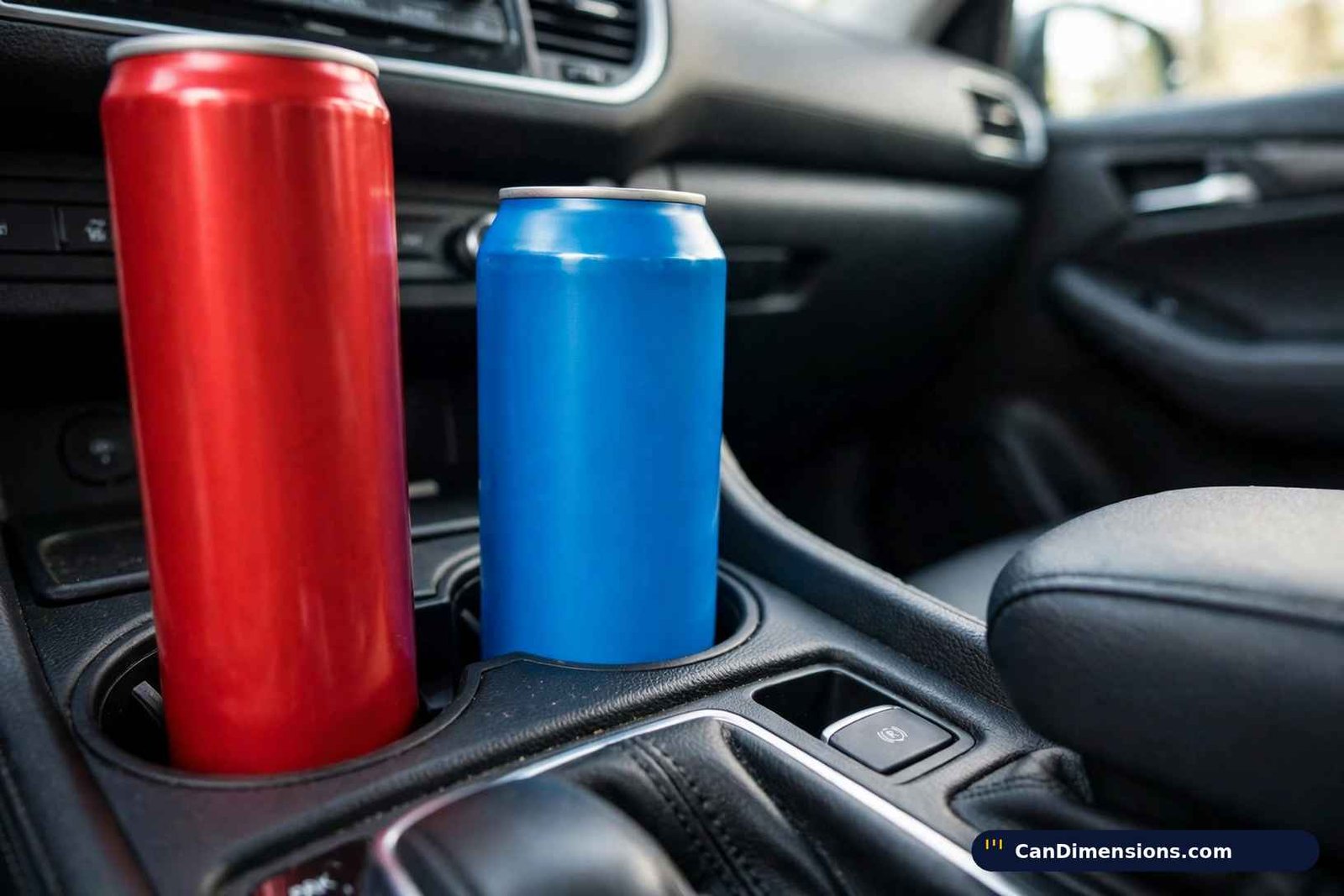
Diameter also settles the cup-holder question the competitor’s page tries to answer using height. Holders are bored to receive standard cans and bottles, so the 2.26-inch sleek can drops in loosely — wedging never happens, though rattling on a hard corner can — whereas the 2.6-inch Essentials can seats exactly like a soda can. No published standard supports the claim that holders are designed around 3-inch containers; fit is a diameter question, and on diameter the wider Celsius is the tidier passenger.
Standard Celsius Can Measurements
Gathered into one place, the regular can’s complete measurements — the 12 oz sleek shell — run as follows. Height 6.13 inches (155.7 mm). Body diameter 2.26 inches (57.4 mm). Circumference 7.10 inches (about 18.0 cm). Capacity 12 fl oz, exactly 354.88 mL and labelled 355 mL. The lid is a 202 end, with the neck drawn at about 2.06 inches (52.4 mm). Makers publish these figures for the shell, and neither flavour nor retailer nor state alters them.
Weight alone needs its working displayed. A water-based drink at 355 mL weighs about 12.5 ounces by itself, yet that figure circulates as though it covered the whole can. Aluminium contributes roughly a further half ounce, pushing a full, unopened can slightly past 13 ounces; listings from retailers round one can up to a 14 oz item weight, with a 12-pack listed near 9.3 to 9.4 pounds all-in. Apply identical arithmetic to Essentials and 473 mL of drink weighs about 16.7 ounces, giving a full can slightly past 17 ounces — the per-can weight gap a gym bag or a case carrier actually feels.
Set the regular Celsius against the standard soda can sharing its shelf and the contrast reduces to redistribution: roughly 1.3 inches of extra height, 0.34 inches less width, zero difference in volume. Identical drink, alternative silhouette — the sleek format performing exactly its intended job.
What Are the Dimensions of a 16 oz Can?
Celsius’s 16 oz can — the Essentials can — stands 6.19 inches tall on a 2.6-inch diameter: 157.2 mm by 66 mm, wrapping to a circumference of 8.17 inches and holding 16 fl oz (473 mL). Can makers publish those numbers for the 16 oz tallboy, the default large beverage shell across the United States and the sole 16 oz beverage shell American makers draw.
The biggest correction on this page belongs here, so it gets made slowly. Figures in wide circulation assign this can a height between 7.5 and 8 inches at an unchanged 2.6-inch diameter, crediting height with the extra volume. Aluminium refuses the story: at 2.6 inches wide, a can standing 7.9 inches tall would swallow well over 20 ounces, leaving nowhere for the claimed capacity to hide. Tracing the number leads to packaging rather than metal — the retail listing for the Essentials 12-pack records the package itself at 13.82 by 7.99 by 6.46 inches, and the phantom can height is simply the box’s middle side misread as a can. The listing disproves the claim unaided, since the complete twelve-can package stands only 6.46 inches tall in total.
Corrected figures invert the usual story for the buyer. Essentials exceeds the 12 oz can by a whisker in height (6.19 against 6.13 inches) and by a clear margin in width (2.6 against 2.26). Growth happened sideways, not upwards: the bigger Celsius feels bigger in the hand while asking a shelf for practically unchanged vertical room, which is the precise shelf problem the tallboy format was invented to solve.
Celsius Can vs Other Energy Drink Cans
Placed beside rival cans, each Celsius format finds a twin elsewhere on the shelf. Verified shell figures from elsewhere in this guide and our sibling can guides fill the table below.
| Drink | Shell | Volume | Height | Diameter |
|---|---|---|---|---|
| Celsius (core ranges) | Sleek | 12 fl oz | 6.13 in | 2.26 in |
| Celsius Essentials | Tallboy | 16 fl oz | 6.19 in | 2.6 in |
| Red Bull | Slim | 8.4 fl oz (250 mL) | 5.28 in | 2.1 in |
| Standard soda can | Standard | 12 fl oz | 4.83 in | 2.6 in |
| Monster Energy | Tallboy | 16 fl oz | 6.19 in | 2.6 in |
At the small end sits Red Bull’s core can, the genuinely slim shell at 5.28 by 2.1 inches — our guide to red bull can dimensions sets that shell out in full — and Celsius pours roughly 43 percent more drink from a can under an inch taller. At the large end, Monster’s 16 oz can shares the tallboy shell with Essentials down to the last figure, as documented in the monster can dimensions guide: the performance Celsius and Monster’s flagship amount to identical aluminium carrying different print. One circulating figure also needs correcting here — descriptions sometimes stretch energy-can diameters across 2.6 to 2.8 inches, yet 2.6 marks the standard body and no mainstream energy shell gets drawn at 2.8; every entry in the table measures 2.6 inches across or narrower.
Gym Bag, Cup Holder and Fridge: Living with Each Can
Daily life sorts the pair more sharply than the spec table does. In a gym bag, the sleek can is the natural traveller: its 2.26-inch body slips into the side pockets and bottle sleeves sewn for narrow drinks, and at a little over 13 ounces full it adds the least weight per serving. The Essentials can rides in the main compartment instead — its standard-width body is too broad for many side pockets — and at a little over 17 ounces it is the can you feel on a long carry. Neither height troubles a bag; both stand a shade over 6.1 inches.
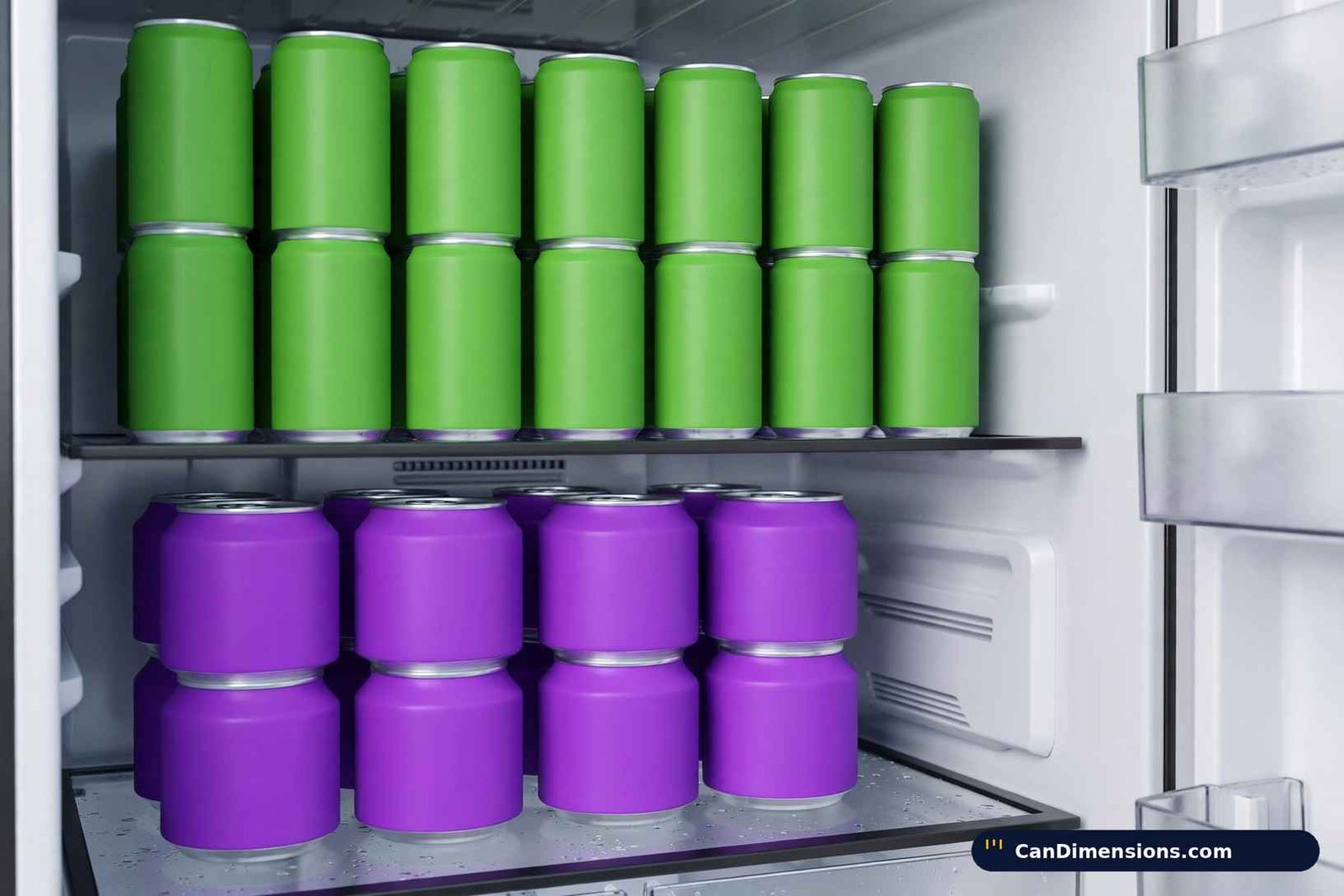
In the car, the verdict reverses, as the diameter section set out: the sleek can sits loose in a holder bored for standard cans, while the Essentials can’s 2.6-inch body seats the way any soda can seats. In the fridge, height is a tie — both cans need a touch over 6.19 inches of headroom, so budget 6.25 and either one lifts out comfortably from the same shelf or door bin. Footprint is where they part. Twelve sleek cans in a three-by-four grid occupy about 9.0 by 6.8 inches of shelf; twelve tallboys on the same grid take about 10.4 by 7.8 inches — roughly a third more shelf area for a third more drink, a fair trade stated honestly. Door bins favour the sleek can, whose narrow body packs tightly in rows.
Accessories follow the shell, never the brand. A slim-cut koozie sized around a 7.10-inch circumference dresses the 12 oz can; a tall boy koozie built for the standard body dresses Essentials — sleeve sizes for both shells are matched in the can koozie dimensions guide. Buy the sleeve for the can you actually stock, and the head-to-head settles the accessory drawer as well.
Which Celsius Can Should You Buy? A Buyer’s Verdict by Use
The verdicts follow from the measurements, use by use. For a daily single serving carried to the gym or the office, the 12 oz sleek can is the default done right: lightest per serving, pocket-friendly, and the brand’s own guidance permits two across a day, which suits a morning-and-afternoon pattern no single large can can match. For one long session — a tournament day, a long drive, a double shift — the Essentials earns its width: a third more drink and 70 mg more caffeine in one can, at the cost of the standard-body fit everywhere it travels.
For stocking a fridge for a household, run the footprint arithmetic before the flavour choice: sleek multipacks pack about a third tighter per can, so a small fridge holds more servings in the 12 oz format, while a large fridge gives the difference away. For a car-based routine, the Essentials is the tidier passenger. And for anyone comparing shelf prices, compare like with like using the per-ounce figures in the caffeine section: the two formats are poured at the same strength, so the honest comparison is price per fluid ounce of the same drink — three Essentials cans equal four 12 oz cans in volume, near enough, and whichever route prices those 48 ounces lower is the better buy that week. Prices move; the shells do not.
FAQs
What is the size of a CELSIUS can?
The regular can holds 12 fl oz (355 mL) and stands 6.13 inches tall on a 2.26-inch diameter — the sleek shell, unchanged across the core ranges. Essentials holds 16 fl oz and measures 6.19 by 2.6 inches.
How big is CELSIUS drink?
Two can sizes cover the canned range: a 12 fl oz sleek can at 6.13 by 2.26 inches carrying 200 mg of caffeine per the brand’s published facts, plus a 16 fl oz Essentials can at 6.19 by 2.6 inches carrying 270 mg. On-The-Go and Hydration products are powders rather than cans.
Why was CELSIUS banned by NCAA?
No ban ever happened. Caffeine counts as a threshold substance for the NCAA, so a positive test demands a urine concentration beyond 15 micrograms per millilitre — around 500 mg taken in the hours before competition. Guarana’s place on the list is only as one illustration of where caffeine comes from; the NCAA made that explicit during June 2025, and the brand records zero athletes losing eligibility over its drinks. Competitors should still confirm the rules currently in force before an event.
What is the size of a can in CM?
The regular Celsius can measures 15.57 cm in height and 5.74 cm in diameter. Essentials measures 15.72 cm by 6.60 cm, and a standard soda can 12.27 cm by 6.60 cm — the core Celsius runs taller and narrower than the soda can in metric exactly as in inches.
What are the dimensions of a 16 oz can?
A 16 oz can — the tallboy shell behind Essentials — stands 6.19 inches (15.72 cm) tall on a 2.6-inch (6.60 cm) diameter. Printed heights of 7.5 to 8 inches for this can mislead: they originate in the dimensions printed for the 12-pack’s retail box, a box itself standing only 6.46 inches tall.
Conclusion
Two cans, one brand, and a choice governed by width rather than size. The 12 oz sleek can — 6.13 inches tall, 2.26 inches across, 7.10 inches around — pours the lighter, narrower, pocket-friendly serving at about 16.7 mg of caffeine per ounce. The 16 oz Essentials can — 6.19 by 2.6 inches, built on the standard tallboy — adds a third more drink and 35 percent more caffeine per can at effectively unchanged strength per ounce, paying with a standard-body fit across holders, pockets and fridge grids. Shelf height never separates them; diameter always does.
Choose by where the can will live and how the servings will fall, and the measurements do the rest. What sits inside either can belongs to the wider energy-drink shelf, where caffeine is routinely paired with compounds such as taurine — but it is the aluminium, identical in height and a third of an inch apart in width, that decides which can comes home.