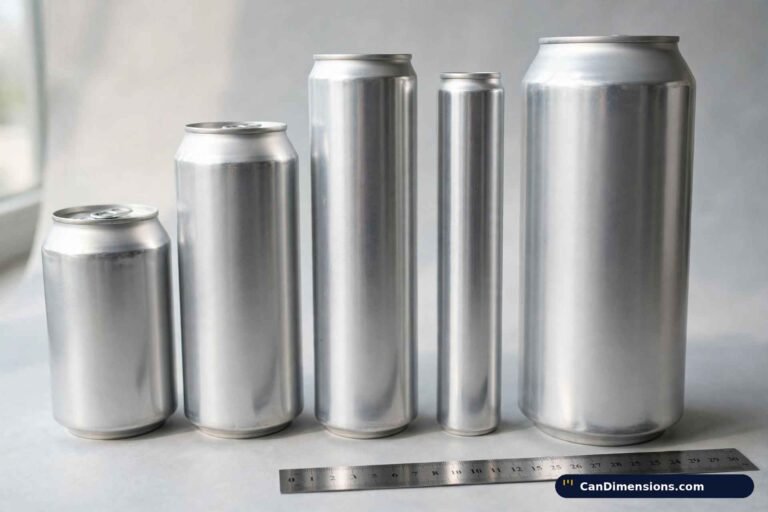
Red Bull Can Design Guide: How the Slim Can Became an Icon
People usually ask how tall is a red bull can because the object in their hand refuses to match the soda-can shape they expected. The classic can stands 5.28 inches tall on a body only 2.1 inches across, and that tall, narrow silhouette is the whole subject of this page.
Read as a piece of design, the can explains itself: a small serving presented like a precision instrument, in silver and blue, decades before slim cans filled an aisle. Read as an everyday object, it has to earn its place on a desk, inside a gym bag and on a collector’s shelf.
So this guide treats the can both ways. The verified measurements for all four sizes come first, then the working numbers a designer needs to wrap one, and finally the sizes as they behave in daily life — with the familiar reference sections kept complete in between.
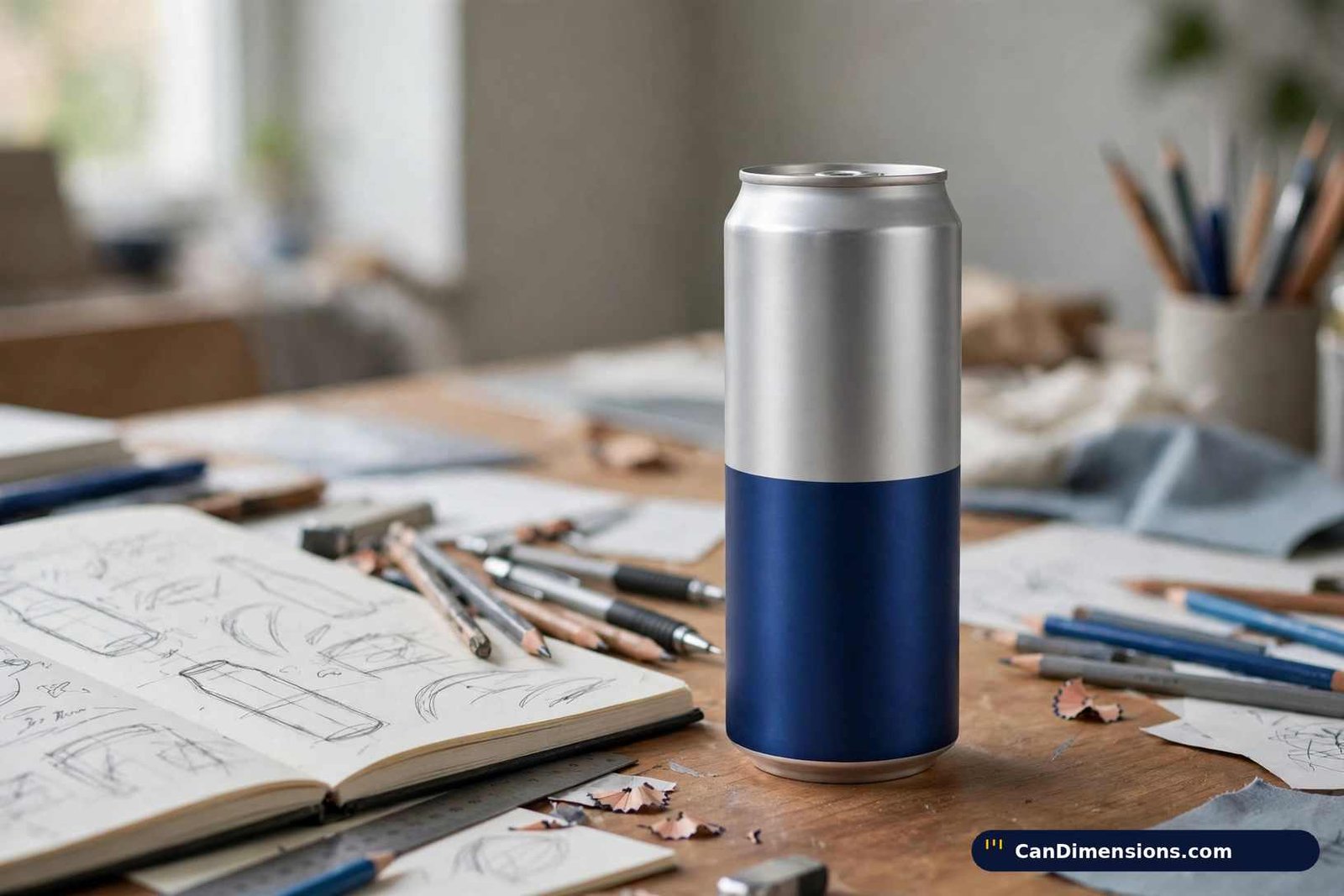
The Slim Can as a Design Object: How a Small Can Became an Icon
Most drinks packaging is designed to disappear into a category. This one was designed to start a category, and its dimensions are the design. A 250 ml serving in a wide soda shell would have looked like a short measure; poured into a shell 5.28 inches tall and 2.1 inches wide, the same volume reads as concentrated — a dose rather than a refreshment.
The backstory is short and well documented. Dietrich Mateschitz came across Krating Daeng, a Thai tonic bought by lorry drivers working through the night, while travelling in Thailand in 1982. Red Bull was founded in 1984 and launched in Austria in 1987, with the drink carbonated and adjusted for Western tastes. The Thai original came in a small glass bottle; the Austrian product arrived in aluminium, slim and two-tone, and the container did as much talking as the contents.
Three design decisions still show in every can. First, proportion: height does the signalling, so the can rises above a standard soda can while holding less. Second, restraint: two colours, silver above and blue below, where rival drinks shout in warm reds and oranges. Third, permanence: the shell has stayed recognisably itself for decades, which is why a can from a modern multipack still matches the silhouette in our beverage can dimensions chart, where this slim shell sits at the narrow extreme of the whole family.
That permanence matters to anyone who designs around the can. A shape that never changes becomes infrastructure: shelf strips, vending spirals, fridge trays and printed wraps are all tooled once and used for years. The sections below give the numbers that infrastructure is built from.
Red Bull Can Dimensions Comparison Chart
Four sizes, three body shells. The brand publishes volumes only, never exterior measurements, so every figure here comes from the specifications can makers publish for the shells this range is filled into — the same verified set used across this site.
Quick Reference Table
| Can Size | Volume | Height | Diameter | Can Format |
|---|---|---|---|---|
| Classic | 8.4 fl oz / 250 ml | 5.28 in | 2.1 in | Slim |
| Mid-size | 12 fl oz / 355 ml | 6.13 in | 2.26 in | Sleek |
| Tall can | 16 fl oz / 473 ml | 6.19 in | 2.6 in | Standard body |
| Largest can | 20 fl oz / 591 ml | 7.6 in | 2.6 in | Standard body |
Flavoured Editions and the Sugarfree line change the artwork, never the aluminium: size for size, they are filled into these identical four shells, so one chart serves the entire range.
Height Comparison (in inches)
The range climbs in two different ways. Between the classic and the 12 oz can the height jumps by 0.85 inches — the sleek shell stretches the design upward. Between the 12 oz and the 16 oz it hardly changes at all, 6.13 against 6.19 inches, because that step is taken sideways, in width. The 20 oz can then grows upward only, reaching about 7.6 inches, and stands apart from its siblings at a glance.
Diameter Comparison (in inches)
Width tells the format story best. At 2.1 inches the classic body is one of the slimmest in the entire drinks aisle. The sleek body widens the recipe barely at all, reaching 2.26 inches. At 16 oz the range abandons the narrow shells entirely and adopts the familiar 2.6-inch body — the width shared with the cans our beer can dimensions guide covers — and the largest can keeps that width. Hold a classic and a 16 oz can together and the family resemblance is in the colours, not the shape.
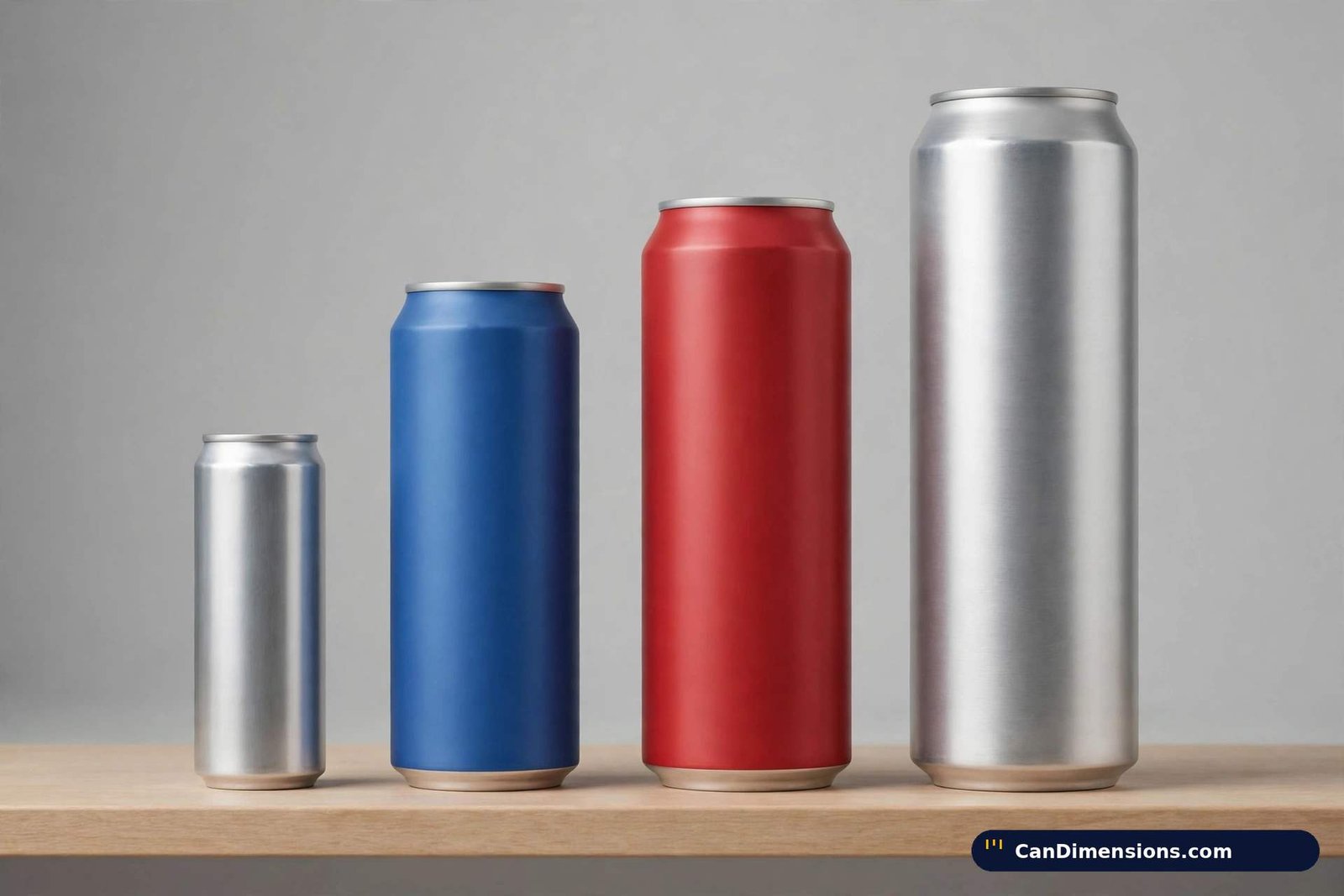
Standard Red Bull Can Dimensions (250 ml / 8.4 fl oz)
This is the founding object: the size launched in Austria in 1987 and still the one most people picture. Can makers list it as the 250 ml slim format, industry code 202 × 504, finished at 5.28 inches (134 mm) tall with a body of 53.4 mm — 2.1 inches — across. Listings quoting 5.25 inches are reading that same format code as fractions; listings saying 5.3 inches are rounding. All three describe one can.
The Classic Slim Can Size
Look at the can as a drawn object and its lines are economical. The body wall runs straight for most of the height, then the shoulder sweeps inward a long way to a small lid — the 202 end — and that long taper is what makes the silhouette read as elegant rather than stubby. The shell itself is a two-piece construction: it begins as one disc of metal, drawn up into body and base in a single piece, and the lid alone is a second part, seamed shut once the drink is in.
The contents match the presentation. Each classic can carries 80 mg of caffeine — the brand’s own comparison is a cup of coffee — in a serving deliberately smaller than a soda. Set beside the standard can covered by our coke can dimensions guide — 4.83 inches tall, 2.6 inches wide, 355 ml inside — the contrast is the brand in miniature: this one stands higher, grips narrower, and gives back roughly thirty percent of the volume.
All Red Bull Can Sizes
Above the classic, the range adds three larger sizes, led by the American market. Each larger size arrives in a different shell, not merely a taller pour of the same one, so a designer or a buyer should always work from the size actually in hand.
12 fl oz (355 ml) Red Bull Can Dimensions
The 12 oz can is filled into the can makers’ sleek shell: 6.13 inches (155.7 mm) tall on a 57.4 mm body — 2.26 inches across — topped with the 202 end, per Ball’s published sleek specification. It holds exactly the volume of an ordinary soda can while standing 1.3 inches higher, its body narrower by a third of an inch — a different object that happens to contain the same amount. Any chart giving this can a 2.6-inch diameter has measured a soda can by mistake.
16 fl oz (473 ml) Red Bull Can Size and Height
At 16 oz the slim idea is retired. This can uses the industry’s standard 16 oz shell — 6.19 inches (157.2 mm) tall, 2.6 inches (66 mm) through the body — the specification shared with tallboy beer cans and the big energy cans. Beside the 12 oz it looks almost the same height and plainly fatter: the extra third of drink arrived sideways.
20 fl oz (591 ml) Red Bull Can Measurements
The largest size, mostly an American one, stays on that standard 66 mm body and grows upward only, to about 7.6 inches (193 mm). Treat listings that widen this can beyond 2.6 inches with suspicion. Can makers simply do not draw a wider body for drinks in this class — 66 mm is the ceiling — so the 2.9-inch figure circulating on some charts belongs to no can ever manufactured: an error copied from guide to guide.
Red Bull Sugarfree and Flavor Variant Dimensions
The Sugarfree line and the flavoured Editions are printed differently and filled identically. A Sugarfree classic measures the same 5.28 × 2.1 inches as the original, and every larger variant matches its counterpart above, size for size. For design work this is the useful fact: one set of shells carries every flavour, every limited artwork run and every market’s labelling, so templates built on the figures above never need a flavour exception.
Label and Wrap Dimensions: Designing Around a Slim Can

A designer wrapping this can needs one number before all others: the circumference, because a wrap, sleeve or printed band must travel all the way around the body. Circumference is pi multiplied by the body diameter, and for this range the arithmetic gives three working widths.
| Can | Body diameter | Full wrap width (circumference) |
|---|---|---|
| 8.4 fl oz slim | 2.1 in (53.4 mm) | 6.60 in (16.8 cm) |
| 12 fl oz sleek | 2.26 in (57.4 mm) | 7.10 in (18.0 cm) |
| 16 oz and 20 oz standard body | 2.6 in (66 mm) | 8.17 in (20.7 cm) |
Height needs more judgement than width. The straight body wall — the printable band — always ends below the can’s full height, because the shoulder tapers inward to the lid and the base rolls under; artwork drawn to the full 5.28 inches of the classic can will climb the shoulder and distort. Work from the straight wall of a physical can, measure that band directly, and confirm the final template with whoever prints the run: can makers publish the shell dimensions used in this guide, but no public template fixes a universal label panel for this brand, and none is invented here.
Two practical consequences follow from the slim shell. A 6.60-inch wrap is a narrow canvas — narrower than the 8.17-inch band around a standard can — so wordmarks and legal text compete for room sooner, which is one reason the original design keeps so few elements. And because the Editions change only the print, a wrap template proven on the classic shell transfers across flavours unchanged; only a change of size, from slim to sleek or standard body, starts the measuring again.
Why Red Bull Cans Have Unique Dimensions
The Science Behind the Slim Design
The slim format predates this brand — can makers already produced narrow shells — but choosing it for a flagship drink was the creative act. A small tonic-style serving, presented tall, signals concentration: the drinker is buying potency by the dose, not volume by the gulp. The proportions also photograph and shelve differently from everything around them, which is why the shape, once chosen, became inseparable from the name it carries.
Portability and Ergonomics
A 2.1-inch body closes comfortably inside one hand and stays grippable when condensation slicks the wall. Narrow cans enter the places wide cans cannot: bottle pockets on bags, slim sleeves, tight fridge-door rows. The bigger sizes trade that quality away in stages — the sleek can keeps most of it, while the standard-body cans handle exactly like the soda and beer cans they share a shell with.
Material and Manufacturing Considerations
The range runs on ordinary can-making lines; nothing exotic enters the metal, and the slim shell is a special proportion rather than a special material. What it saves sits at the top, where a small lid needs less aluminium than a wide one. What it earns is stability: one unchanging shape lets filling plants, multipack lines and vending equipment stay tooled for it year after year. Consistency, repeated millions of times, is the manufacturing story.
Red Bull Can Dimensions vs. Competitor Energy Drinks
Monster Energy Can Size Comparison
Monster built its range on the standard 16 oz shell: 6.19 inches tall, 2.6 inches in diameter — the very shell this range adopts only at 16 oz, and the one detailed by our monster can dimensions guide. Stand a classic slim can beside one and the Austrian can gives away about 0.9 inches of height and half an inch of width while holding roughly half the volume. Monster also sells 24 oz cans on the wide body, a size this range does not attempt.
Rockstar Energy Can Dimensions
Rockstar’s common 16 oz cans likewise ride the standard wide body, at about 6.2 inches tall and 2.6 inches across per the industry specification, with taller 24 oz versions above them. Against the classic slim can, a Rockstar belongs to another species of object: double the liquid, a fistful more width, and none of the narrow format’s discipline.
Bang Energy and Other Brands
Bang’s 16 oz cans use that same standard tall shell, 6.19 × 2.6 inches. The brands thinking most like this one are the sleek-can drinks — Celsius, for instance, is filled into the same 6.13 × 2.26-inch sleek shell as the 12 oz size above. Even those stop short of the classic: at 2.1 inches, it remains the narrowest mainstream energy can on the shelf.
Four Sizes in Everyday Life: Desk, Gym Bag, Cup Holder and Shelf
Dimensions become real where the can spends its day. On a desk, the classic is the well-mannered size: a 2.1-inch footprint crowds nothing, and at 5.28 inches it stands below most monitor bezels rather than looming over the keyboard. The 12 oz sleek can keeps the small footprint and adds height; the two standard-body cans occupy the same desk territory as any soda or beer can.
In a gym bag the narrow shells justify themselves. Both the slim and sleek cans slide into bottle pockets and side sleeves that refuse a 2.6-inch body, and they ride upright without wedging. The 16 oz can fits where a tallboy beer can fits and nowhere narrower; the 20 oz, at about 7.6 inches, is the awkward traveller of the family, taller than many bag pockets are deep.
The car makes the same point through its cup holders. Width never troubles any size here — the widest body in the range equals an ordinary soda can — but height does: the tall 20 oz rides high in shallow holders and can foul a sliding console lid. At home, fridge doors ask for clear height rather than width: allow roughly five and a half inches for the classic, six and a half for the middle pair, and a full eight for the largest can. And if the can will live inside a sleeve, match the sleeve to the shell — the narrow cans rattle loose in a standard holder, as the sizing in our can koozie dimensions guide shows.

Red Bull Can Weight and Material Specifications
How Much Does a Red Bull Can Weigh?
Strip the drink away and the classic shell is featherweight: somewhere between 13 and 15 grams of aluminium, varying a little from run to run — call it half an ounce. Sealed and full, the same can tips the scales at roughly 265 grams (about 9.3 ounces), nearly all of it the 250 grams of liquid inside. The bigger cans scale with their contents: a full 16 oz at roughly 490 grams (about 17 ounces), a full 20 oz at roughly 610 grams (about 21½ ounces). Worth knowing before you post one or pack a cool box.
Aluminum Can Thickness and Durability
Ignore the 0.25 mm wall quoted in some listings — no modern can is built anywhere near that thick. The drawn body wall measures roughly a tenth of a millimetre, about 0.004 inches; extra metal survives only where strength is non-negotiable, in the domed base and up at the neck beneath the seam. Hence the parlour trick of the object: crushable in the fist when empty, drum-tight when full, because the fizz inside carries much of the load. And aluminium loops back into new cans endlessly without degrading, which gives even this sliver of metal genuine scrap worth.
Collecting and Displaying Red Bull Cans
Collectors are drawn to this range for a structural reason: the artwork changes constantly while the aluminium underneath does not. Editions and special prints arrive on the same four shells, so a collection displays as variations on three bodies — slim, sleek and standard — and a shelf planned around those bodies never needs rebuilding when a new print appears.
Plan display space from the verified figures. A shelf needs clear height above the tallest can you keep — about 7.6 inches for a complete four-size run, plus finger room — and depth only a little beyond the widest body, 2.6 inches, for a single row. Empty cans weigh almost nothing, 13 to 15 grams for the classic shell, so ordinary shelving carries a long row easily; the real enemies are sunlight, which fades print, and dents, which a wall that thin collects from a single knock. Keep the narrow cans where they cannot topple: at 5.28 inches tall on a 2.1-inch base, the classic is the least stable object in the range precisely because of the proportions that made it famous.
Question’s
What are the Red Bull can sizes?
Four: 8.4 fl oz (250 ml), 12 fl oz (355 ml), 16 fl oz (473 ml) and 20 fl oz (591 ml). Sugarfree and the Editions use the same four sizes.
What are the dimensions of a 12 oz Red Bull can?
6.13 inches tall and 2.26 inches in diameter (15.6 × 5.7 cm) — a sleek shell, taller and slimmer than the standard soda can holding the same volume.
How tall is a Red Bull can 250ml in cm?
13.4 cm (134 mm), with a diameter of 5.3 cm.
How tall is a can of Red Bull in inches?
The classic can is 5.28 inches. Across the range: 5.28 inches (8.4 oz), 6.13 inches (12 oz), 6.19 inches (16 oz) and about 7.6 inches (20 oz).
How tall is a 355ml Red Bull can?
6.13 inches (15.6 cm).
How tall is a 473 ml Red Bull can?
6.19 inches (15.7 cm), on the standard 2.6-inch body.
Conclusion
Four sizes stand on three bodies: the slim classic at 5.28 × 2.1 inches, the sleek 12 oz at 6.13 × 2.26 inches, and the standard 2.6-inch body carrying the 16 oz at 6.19 inches and the 20 oz at about 7.6 inches. Every other fact on this page — the wrap widths, the desk footprint, the collector’s shelf — is arithmetic worked outward from those six numbers.
That is the lasting lesson of this can. A serving smaller than a soda’s became the premium object on the shelf not through decoration but through proportion, held steady for decades until the shape itself meant the brand. It remains a textbook case of industrial design — proof that the dimensions of an everyday object, chosen once and defended ever since, can do the work of a logo.