Aluminum Can Dimensions: Standard Sizes, Height and Diameter Explained
The aluminum can diameter that runs the American drinks aisle is 2.6 inches (66 mm) — the body width of the standard 12 oz can, which stands 4.83 inches (122 mm) tall and holds 355 mL. In the can makers’ own code that body is the “211” size, and nearly every other format is a variation on it: narrow the body for slim and sleek cans, or keep it and stretch the height for tallboys.
Those codes are where the wrong numbers start. A code like 211 is a nominal label written in inches and sixteenths — it is not a tape-measure reading, and the finished can measures a few millimetres less than the code converts to. Charts that convert the code and print the result as the can’s diameter, or weld one shell’s height onto another shell’s body, are how the errors in circulation got there.
Below is the verified diameter and height of every common aluminum can format — standard, slim, sleek, stubby, tallboy, the metric 330, 440 and 500 mL sizes and the crowler — in inches, centimetres and millimetres, each traced to a can maker’s specification or a national standard, with the copied-around mistakes corrected as they come up.
Aluminum Can Size Chart
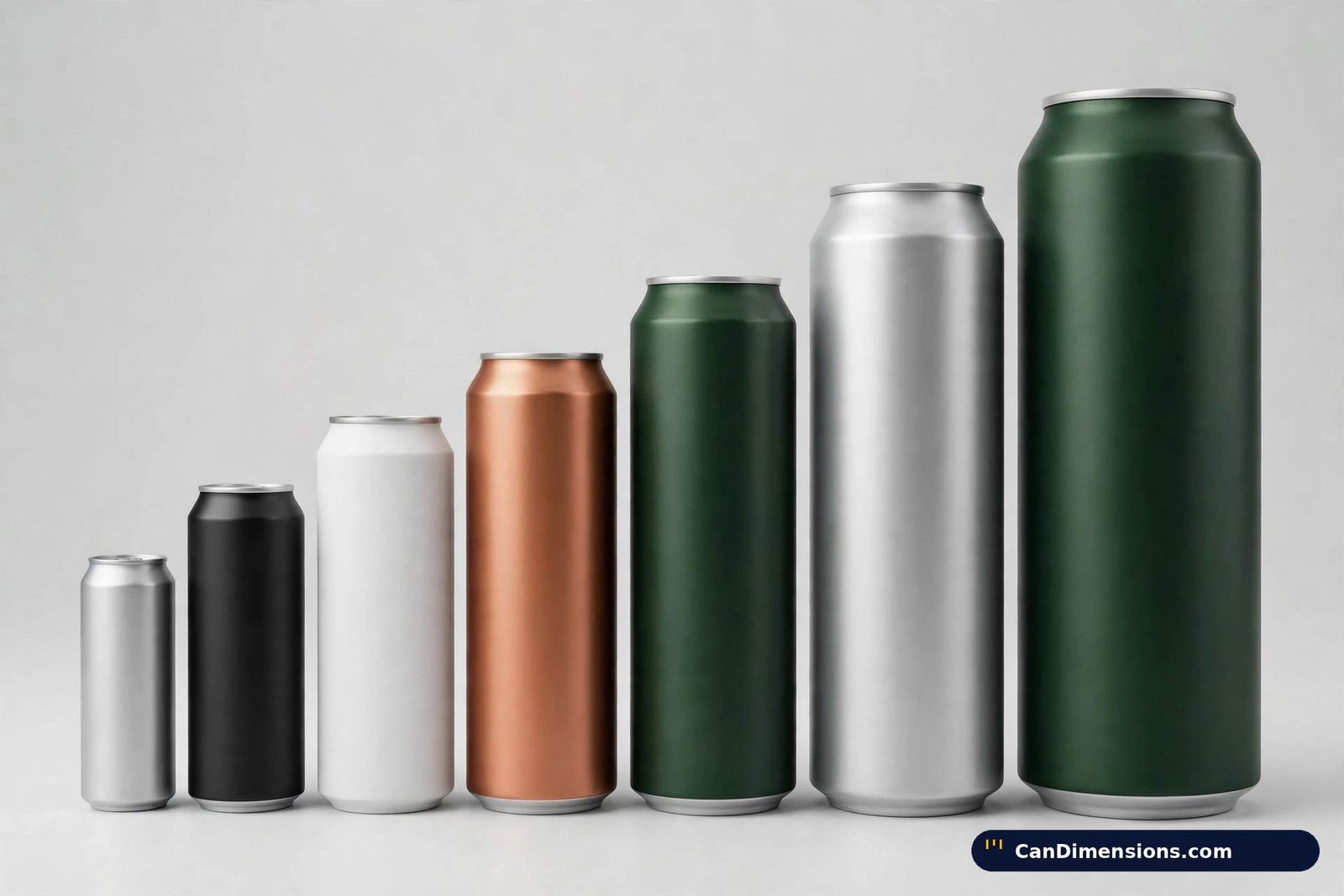
One chart for the whole family. Diameters come in a small set of maker shells; heights do the rest. Every row is a specification value except where marked “about”.
| Can Type | Volume | Diameter | Height | Common Use |
|---|---|---|---|---|
| Standard | 12 oz / 355 mL | 2.6 in / 66 mm | 4.83 in / 122 mm | Soda, Beer, Iced Tea |
| Sleek | 12 oz / 355 mL | 2.26 in / 57.4 mm | 6.13 in / 156 mm | Hard Seltzers, RTD Cocktails |
| Stubby | 250 mL / 8.45 oz | 2.62 in / 66.6 mm | 3.6 in / 91.5 mm | RTD Coffee, Specialty Drinks |
| Slim | 250 mL / 8.45 oz | 2.1 in / 53.4 mm | 5.28 in / 134 mm | Energy Drinks, Carbonated Water |
Read the standard row carefully, because it carries the chart’s one real trap. The standard body is designated 211 — a code that reads as 2 11/16 inches — yet the finished can measures 66 mm (2.6 in) across, and both numbers appear side by side in copied charts as if they were the same measurement. They are not: 2 11/16 inches converts to 68.3 mm. The code is the industry’s name for the shell; 66 mm is what a caliper reads. The Diameter Specifications section below untangles the two systems properly.
Standard Aluminum Can Dimensions
The Standard 12 oz Aluminum Can – America’s Most Common Size
The standard 12 oz aluminum can is the most recognizable beverage container in America. This classic size holds 355 mL of liquid and has become the industry benchmark for sodas, beers, and other drinks.
What are the dimensions of an aluminum can? The standard 12 oz can measures 2.6 inches (66 mm) in diameter across the body and 4.83 inches (122 mm) in finished height. These measurements represent the most common aluminum can size found in stores nationwide — the shell measured can by can in our coke can dimensions guide. It is a two-piece drawn-and-ironed can: a 211 body necked in at the top to take a 202 end, the lid size decoded in the FAQ below.
Aluminum Can Height Variations Across Different Formats
Not all aluminum cans share the same can dimensions. Modern beverage packaging includes sleek, stubby, and slim variations that serve different market needs. Each format has specific height measurements that affect both appearance and functionality.
Sleek cans stand taller at 155.7 mm (6.13 in) compared to standard cans. Stubby cans measure only 91.5 mm (3.6 in) in height, making them shorter and wider in proportion. Slim cans reach 134.0 mm (5.28 in) tall while maintaining a narrow profile that appeals to energy drink consumers. And on the standard 66 mm body itself, height alone does the sizing: 122 mm at 12 oz, 157.2 mm at 16 oz, 168.0 mm at 500 mL and 188.1 mm at 19.2 oz.
Aluminum Can Sizes in the US Market

Sleek Aluminum Cans – Modern and Sophisticated
Sleek aluminum cans hold the same 12 oz (355 mL) volume as standard cans but feature different proportions. The diameter measures 57.4 mm (2.26 in), making them noticeably narrower than traditional cans. The height extends to 155.7 mm (6.13 inches) — Ball’s 12 oz Sleek manufacturing specification, code 202/204 × 602.
Premium beverages frequently use sleek can dimensions for enhanced shelf appeal, and the format’s signature category is hard seltzer: the taller, slimmer profile is what separates a seltzer or ready-to-drink cocktail from the beer beside it, even though both hold exactly 355 mL. This aluminum can size has gained significant market share in recent years. It is the shell measured size by size in our white claw can dimensions guide.
Stubby Aluminum Can Dimensions
Stubby cans offer a unique alternative with their compact, wide design. These cans hold 250 mL (8.45 oz) with a diameter of 66.6 mm (2.62 in) — the full standard-width body — and a height of just 91.5 mm (3.6 inches), the figures tabulated for the format in IS 14407:2023, the Indian national standard that specifies these shells.
Specialty beverages often choose stubby cans for their distinctive appearance, and ready-to-drink coffee is the format’s modern signature. The shorter can height creates a vintage aesthetic that stands out on retail shelves. Despite the reduced volume, the familiar diameter provides excellent stability — a stubby is exactly as wide as the standard can, only shorter.
Slim Aluminum Can Measurements
Slim cans combine narrow width with moderate height for a sleek presentation. The 250 mL capacity fits within a 53.4 mm (2.1 in) diameter and 134.0 mm (5.28 in) height — the “250 Slim” of IS 14407:2023. This aluminum can dimension became popular with energy drink brands, and it is the classic shell measured in our red bull can dimensions guide.
The narrow can diameter feels comfortable in hand and fits easily into car cup holders. Energy drink companies pioneered this format, and it now appears across multiple beverage categories. The tall, thin profile maximizes branding space on store shelves.
Aluminum Can Diameter Specifications
Standard Can Diameter Measurements
What is the diameter of a tin can? While tin cans vary, aluminum beverage cans follow strict standards. The most common diameter is designated 211 — and the designation itself needs translating before it can be compared with a measurement. Can codes are written in inches and sixteenths: the first digit is whole inches, the next two are sixteenths, so 211 reads as 2 11/16 inches. But the code is a nominal label, not a finished dimension. Ardagh’s specification sheet for a 211-body can lists an outside body diameter of 66.3 mm maximum, and a real standard can measures 66 mm — 2.6 inches — across the body. Convert the code literally and you get 68.3 mm, a diameter no finished beverage can has.
This standard can diameter enables universal compatibility with filling equipment and packaging machinery. Manufacturers worldwide recognize the 211 body as the industry benchmark. The consistent measurement ensures cans stack properly and fit standard cases. For wrap and label work, the figure that follows from it is the circumference: π × 66 mm ≈ 207 mm (20.7 cm, about 8.17 in) around the body. The whole diameter family, format by format, is charted the same way in our beverage can dimensions guide.
Diameter Variations in Specialty Aluminum Cans
Specialty formats introduce different can diameter options for market differentiation. Sleek cans use a 57.4 mm body, slim cans narrow further to 53.4 mm, the 7.5 oz mini runs on a 58 mm sleek-family body, and at the wide end the crowler’s 307 body measures 83.6 mm (3.29 in) across. These variations affect how consumers perceive and handle the product.
Wider diameters provide better stability but reduce the number of cans per case. Narrower profiles maximize packing efficiency and create a premium appearance. Beverage can manufacturers carefully select diameter based on target audience and distribution channels. For scale, even the widest drinks package most people handle — the Pringles tube, whose lid measures 3.13 in (79.4 mm) in our pringles can dimensions guide — is narrower than the crowler body.
Aluminum Can Dimensions in CM and MM
For metric listings, shelf plans and wrap or koozie projects, here is the full range in centimetres and millimetres, with the circumference — the measurement a label, sleeve or wrap is actually cut to.
| Can Size | Height (cm) | Height (mm) | Diameter (cm) | Diameter (mm) | Circumference (cm) |
|---|---|---|---|---|---|
| 7.5 fl oz / 222 mL mini | ≈10.4 | ≈104.4 | 5.8 | 58 | 18.2 |
| 250 mL slim | 13.4 | 134.0 | 5.3 | 53.4 | 16.8 |
| 250 mL stubby | 9.2 | 91.5 | 6.7 | 66.6 | 20.9 |
| 330 mL standard | 11.5 | 115.2 | 6.7 | 66.6 | 20.9 |
| 12 fl oz / 355 mL standard | 12.2 | 122 | 6.6 | 66 | 20.7 |
| 12 fl oz / 355 mL sleek | 15.6 | 155.7 | 5.7 | 57.4 | 18.0 |
| 440 mL standard | 15.0 | 149.9 | 6.6 | 66.2 | 20.8 |
| 16 fl oz / 473 mL | 15.7 | 157.2 | 6.6 | 66 | 20.7 |
| 500 mL | 16.8 | 168.0 | 6.6 | 66 | 20.7 |
| 19.2 fl oz / 568 mL | 18.8 | 188.1 | 6.6 | 66 | 20.7 |
| 24 fl oz / 710 mL | ≈19.6 | ≈196 | ≈7.3 | ≈73 | ≈22.9 |
| 32 fl oz / 946 mL crowler | 19.3 | 193.0 | 8.4 | 83.6 | 26.3 |
Centimetre figures are rounded to one decimal place. If you need a precise fit, work from the millimetre column — those are the specification values for every size except the mini, whose height is a catalogue figure, and the 24 oz, whose finished figures are measured values.
Aluminum Can Length and Height
How Aluminum Can Height Is Measured
Can height measurements follow precise industry standards from seam to seam. The overall height includes the can body plus the bottom and top end pieces — it is the finished, sealed can that is specified, which is why this guide measures a can the way a shelf or a case sees it. Manufacturing tolerances are tight: Crown’s drawing for the 440 mL can allows its 149.90 mm finished height a tolerance of ±0.30 mm.
Professional measurements account for the double seam at both ends of the can. The body height of the open, unseamed can differs slightly from the overall finished height because of those seamed connections. Quality control systems continuously monitor these specifications during production.
The Relationship Between Can Height and Volume
Aluminum can dimensions create a mathematical relationship between height, diameter, and volume. Taller, narrower cans can hold the same liquid volume as shorter, wider ones. The can size perception often differs from actual capacity.
A 12 oz sleek can appears larger than a standard 12 oz can despite identical volume — 355 mL standing 155.7 mm tall on a 57.4 mm body, against 122 mm on a 66 mm body. The increased can height creates a premium impression that justifies higher retail prices. Manufacturers leverage these dimensional psychology factors in product positioning.
Aluminum Can Fit Guide: Koozies, Cup Holders and Cases
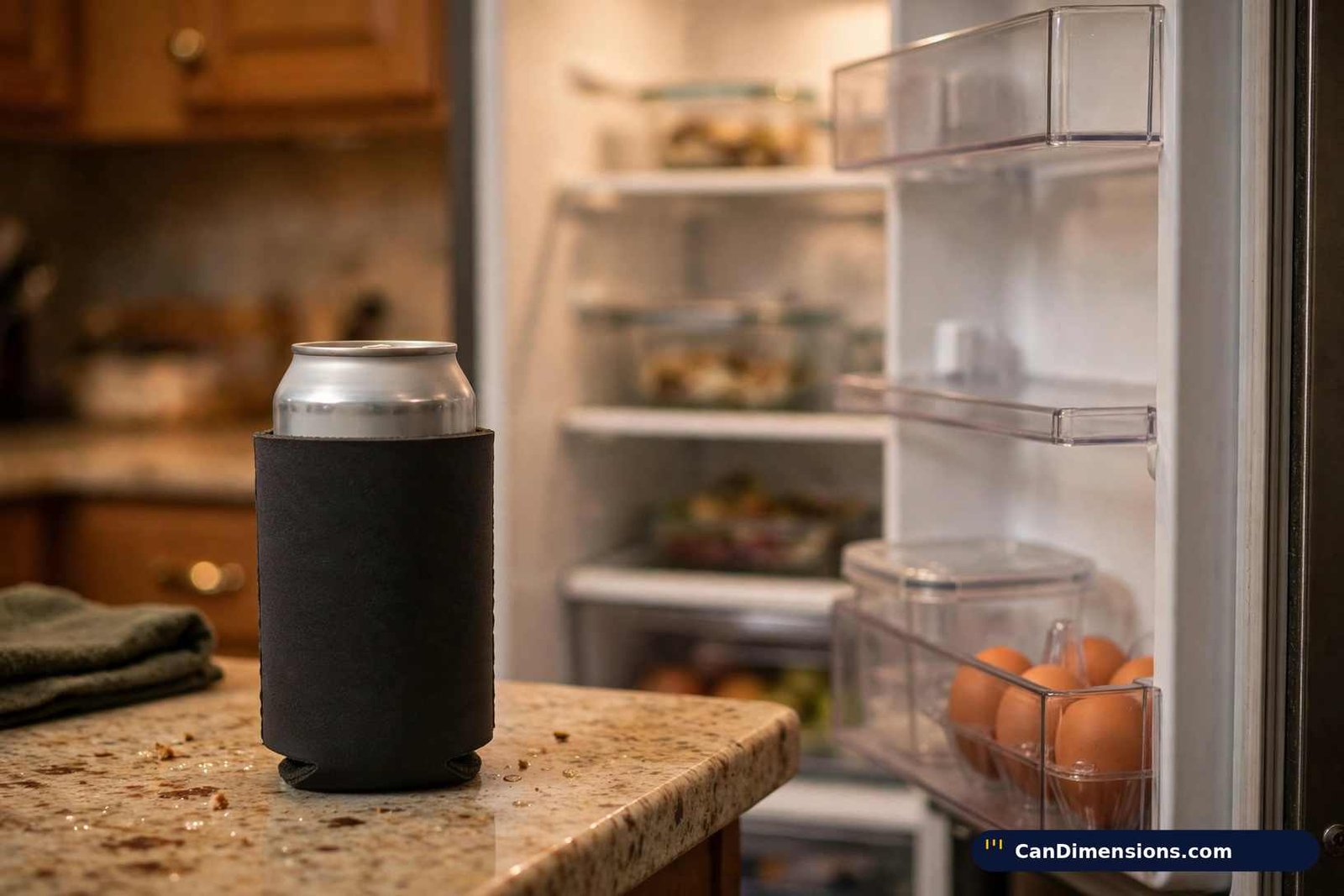
Diameter, not height, decides what a can fits. A standard foam koozie is cut for the 66 mm body, so the 330 mL, 12 oz, 16 oz, 500 mL and 19.2 oz cans all wear the same one; sleek and slim cans rattle in it and want their own sleeves — sizing a sleeve by body diameter is the whole subject of our can koozie dimensions guide. In a car cup holder, every standard-body can fits anywhere a soda can does, slim cans fit with room to spare, and the crowler’s 83.6 mm body is the one that will not go in.
Height decides the rest. On a fridge door shelf, allow at least 5 inches of clear height for a 12 oz, 6.5 inches for a 16 oz and a full 8 inches for a stovepipe or crowler. And the standard case checks out arithmetically: a 24-pack of 12 oz cans at six by four, each 2.6 inches across, gives a footprint of 15.6 × 10.4 inches — the approximately 16 × 10.5 × 5 inch case size retailers quote, with the 4.83-inch can plus its tray making the height.
Popular Aluminum Can Sizes and Dimensions
16 oz Tall Boy Aluminum Can Dimensions
The 16 oz tall boy extends the standard can design with increased height. The diameter remains 66 mm, exactly like a standard can, while the height reaches 6.19 inches (157.2 mm) on Ardagh’s manufacturing specification for the format — tallboy heights are sometimes printed as 158 mm, which converts to 6.22 in; the specification figure is 157.2 mm. This can size accommodates approximately 33% more volume than the standard 12 oz can, a claim that checks out arithmetically (16 ÷ 12 = 1.33). Craft beer and energy drinks frequently use this imposing format — and the same tallboy shell carries the 16 oz can measured in our celsius can dimensions guide.
Mini Aluminum Can Sizes
Mini cans serve a different purpose than their larger counterparts. The 7.5 oz (222 mL) mini runs on a sleek-family shell: a 58 mm body standing about 4.11 inches (104.4 mm) tall, a catalogue figure for a format Ball lists in its Sleek family. It is worth saying plainly, because mini cans are where copied charts go wrong: the pairing sometimes printed for them — a 53 mm diameter at about 94 mm tall — matches no shell the makers sell. 53 mm is the slim body, and a slim can at 250 mL stands 134 mm tall; the real mini is wider and shorter than that pairing in every dimension.
These smaller portions suit low-calorie beverages and mixer applications. Portion control drives much of the demand in this category. The miniature proportions create an upscale image for premium products.
Large Format Aluminum Cans (19.2 oz, 24 oz, 25 oz)
Large format cans maximize single-serve capacity. The 19.2 oz (568 mL) stovepipe keeps the standard 66 mm body and stretches it to 7.41 inches (188.1 mm) — Ardagh’s finished height for the format; the 7-inch (178 mm) figure sometimes printed for it is 10 mm short. The 24 oz sizes need separating into two cans. Ball’s wide-body 24 oz shell — the can sold resealable as the Mega measured in our monster can dimensions guide — flanges at 7.60 inches tall with a 2.87-inch base diameter and finishes at about 7.7 inches by about 2.9 inches; the taller figure of about 8.46 inches seen on beer size charts is a different can, a 24 oz single built on the standard 66 mm body. The “25 oz” of this heading is, in the makers’ catalogues, 25.4 oz (750 mL) — the top of Ball’s King family, on the same wide-body format; Ball publishes no finished height for it, so none is printed here rather than an estimate dressed up as a specification.
Craft beer singles dominate this category. The extreme height requires reinforced construction to prevent buckling. Convenience stores feature these formats prominently in cold storage sections.
Aluminum Can Sizes Around the World
Outside the United States the same shells are named in millilitres. The European standard is the 330 mL can: 115.2 mm tall on the 66.6 mm body, from Ardagh’s own drawing for the format. The British 440 mL can stands 149.9 mm finished height with a 66.3 mm maximum body diameter and the same 202 end — Crown’s catalogue figure, and the answer to the most-asked metric question on this page. The 500 mL can reaches 168.0 mm on the standard body, and the British pint can, 568 mL, is the stovepipe shell at 188.1 mm under another name. In Japan and Brazil, the 350 mL can is simply the 12 oz shell by a metric name.
The diameter story is the same on every continent: bodies of 66, 57.4 or 53.4 mm, a 202 end on top of nearly all of them, and height doing the sizing. What changes by market is which heights are common — 440 mL is an everyday size in Britain and a rarity in America, which is why its height is the one people search for.
How to Measure an Aluminum Can Yourself
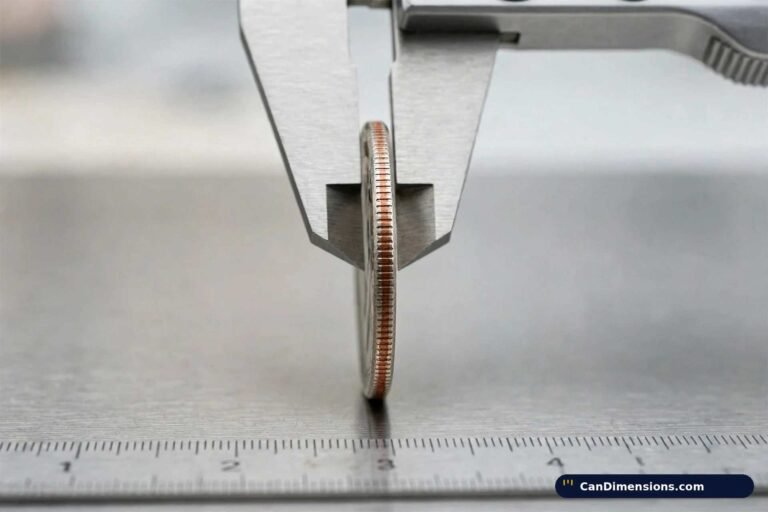
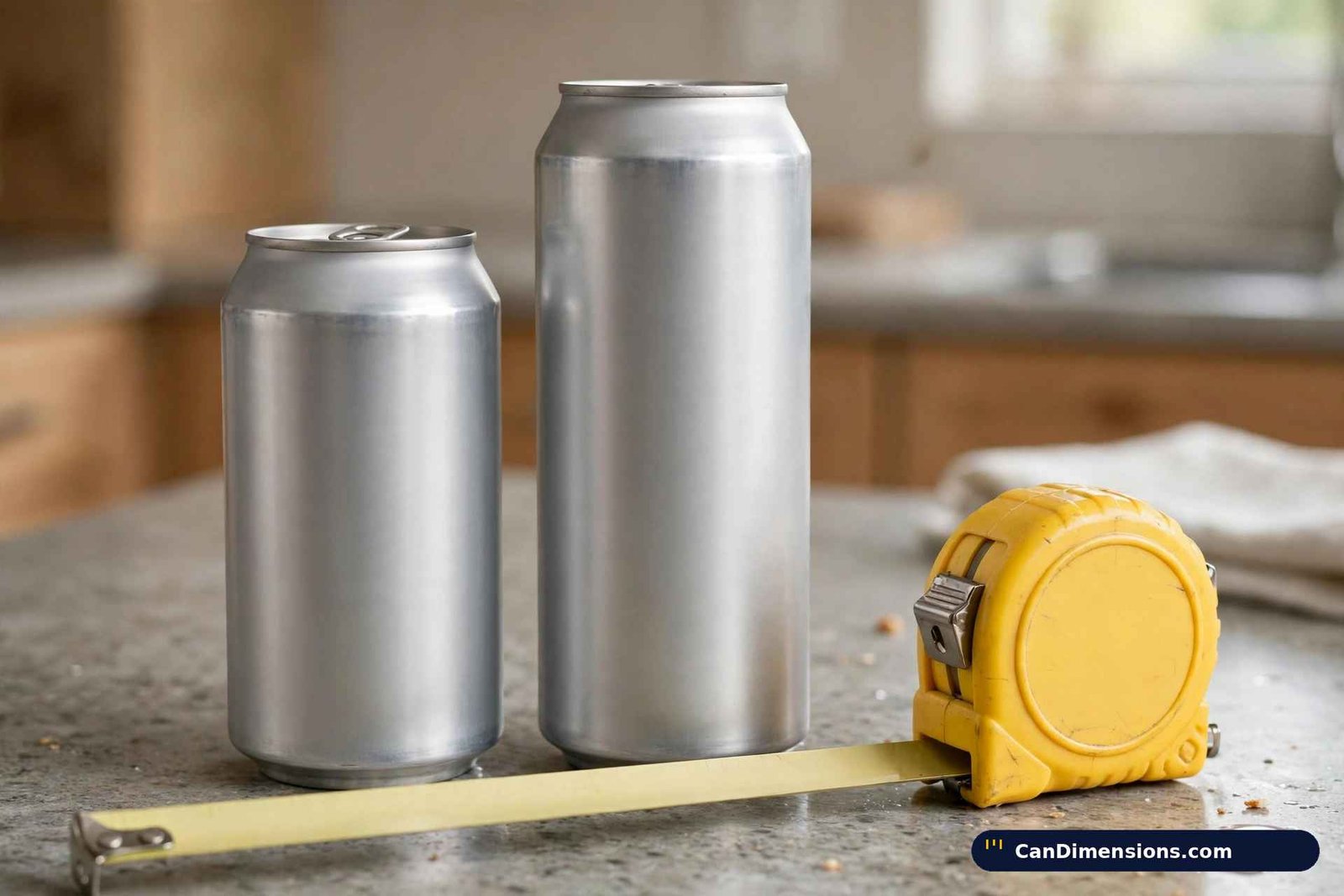
Measure height on the sealed can, standing on a flat surface against a wall, with the ruler against the body so the domed base cannot tilt the reading. Measure diameter across the widest part of the body, never across the lid — the 202 end necks down to about 52.4 mm, and mistaking the lid for the body is the single most common measuring error with cans.
If calipers will not fit, wrap a strip of paper around the body, mark the overlap, measure the strip and divide by π (3.1416): a standard can’s wrap is about 207 mm, which returns the 66 mm body. Compare your result with the tables above allowing a few tenths of a millimetre either way — that is the tolerance the makers themselves work to.
Question’s
What are the dimensions of an aluminum can?
The standard 12 oz can: 2.6 in (66 mm) body diameter, 4.83 in (122 mm) finished height, 355 mL capacity.
What is the standard size of a can?
12 oz (355 mL) — 4.83 in tall × 2.6 in diameter — is the standard beverage can size in the United States. The 330 mL can (115.2 × 66.6 mm) is the equivalent standard across most of Europe.
What is the diameter of a tin can?
Beverage cans are not made of tin, so there is no single tin-can diameter: food cans in tinplate steel come in many sizes. The beverage can’s standard body diameter is 66 mm (2.6 in).
What is the difference between a tin can and an aluminum can?
A “tin can” is steel sheet coated with a thin layer of tin — tinplate. An aluminum can is an alloy: bodies are drawn from 3004/3104 aluminum alloy (about 1% each of manganese and magnesium, not pure metal) with walls ironed to roughly 0.097 mm, and ends are stamped from 5182 alloy. Aluminum’s density, about 2.7 g/cm³ against steel’s 7.85, is why the aluminum can is so much lighter.
How tall is a 440mL can?
149.9 mm (5.90 in) finished height, on the standard 66 mm body — Crown’s catalogue figure for the size. Heights around 168 mm sometimes quoted for it belong to the 500 mL can.
What size is a 202 can lid?
“202” is a code, not a measurement: it reads as 2 2/16 inches, which converts nominally to 54.0 mm — but the finished end actually measures about 52.3–52.5 mm across (Ardagh’s neck plug diameter for it is 52.4 mm). The code names the size; the measured end is the smaller figure.
Conclusion
Every aluminum can in the drinks aisle is built from a short list of shells. The diameters are 53.4 mm (slim), 57.4 mm (sleek), 58 mm (mini), 66 mm (the standard 211 body behind the aluminum can diameter most people mean) and 83.6 mm (the crowler) — and the heights run from the stubby’s 91.5 mm to the stovepipe’s 188.1 mm on that one standard body. Once the diameter code is read as a name rather than a measurement, the whole chart stops contradicting itself.
If you take one habit from this page, make it this: measure the body, not the lid, and check any chart’s inches against its millimetres before trusting either. It is the same discipline that separates the modern aluminum can from the tinplate food can whose nickname it inherited — two packages that share a shelf and almost nothing else.