20 Feet: 11 Things with Pictures That Are 20 Feet Long or Tall
Stand in an empty parking lot and ask how far is 20 feet visually, and the honest answer is the length of the space you are standing in at its generous end — or the steel box that carries the world’s trade, the van at the kerb, and the biggest crocodile ever measured, all sharing one length.
It is also a length the internet rounds with unusual confidence. The famous “20-foot” shipping container actually measures 19 feet 10½ inches, no giraffe that has ever been measured reaches 20 feet, and a standard school bus is nearly twice as long — each of those claims is checked below, and the two that fail stay on the page, corrected.
This guide converts 20 feet into every unit that matters, then walks through 11 real things that measure 20 feet long or tall — each one checked against a manufacturer’s specification, an official standard or a published record, with the basis stated wherever a figure is a class name, a labelled size or the edge of a range rather than an exact tape measurement.

How Long Is 20 Feet?
Twenty feet is 240 inches, 6.667 yards or 6.096 metres. It is too long for a room and too tall for a house’s single story, which is why most people judge it against containers, vehicles and parking lots instead of a ruler.
| Unit | 20 Feet Equals |
|---|---|
| Inches | 240 in |
| Yards | 6.667 yd |
| Centimeters | 609.6 cm |
| Millimeters | 6,096 mm |
| Meters | 6.096 m |
If you have already paced out 25 feet for a driveway or a garden, 20 feet is four-fifths of that. It is also exactly two 10-foot lengths end to end — a handy check, because 10 feet is the basketball-rim height and a standard trade length all over the building site.
20 Feet Compared to a Human
The average adult stands about 5 feet 8 inches tall. Divide 20 by 5.67 and you get about 3.5 — so 20 feet is roughly three and a half adults standing on each other’s shoulders, or three and a half adults lying head to toe along a pavement.
That one comparison unlocks most of this list. A two-story house is three and a half people tall. A parking space is three and a half people long. When a record crocodile stretched out on a riverbank, it covered three and a half people of ground. Keep the number three and a half in mind and every example below becomes easy to picture.
11 Common Things That Are 20 Feet Long or Tall
| # | Thing | Counted? | Basis |
|---|---|---|---|
| 1 | Standard 20-Foot Shipping Container | Yes | Nominal class — ISO external length 6,058 mm (19 ft 10½ in) |
| 2 | Standard School Bus | No | A standard Type C bus runs about 25–40 ft; typical ≈36 ft |
| 3 | Full-Grown Giraffe | No | Males typically 15–18 ft; tallest ever recorded 19.3 ft |
| 4 | Standard Passenger Van or Minibus | Yes | About — long-wheelbase Ford Transit measures 237.6 in (19 ft 10 in) |
| 5 | Small Motorboat or Fishing Boat | Yes | The 20-foot class — Key West 203 FS: nominal 20 ft, LOA 20 ft 3 in |
| 6 | Standard Parking Space Length | Yes | Top of the standard range — US stalls run 18–20 ft; many codes specify 20 |
| 7 | A Two-Story House | Yes | About — two residential floors at roughly 10 ft each |
| 8 | 20-Foot Flagpole | Yes | Exact — exposed height 20 ft on maker spec sheets |
| 9 | Lolong, the Record Saltwater Crocodile | Yes | Named individual — Guinness-measured at 20 ft 3 in |
| 10 | Adult Male Orca (Killer Whale) | Yes | Bottom of the typical range — males run 20–26 ft |
| 11 | A Large Reticulated Python | Yes | Documented range — wild specimens measured past 20 ft |
| 12 | 20-Foot Extension Ladder | Yes | Labelled size — two 10-ft sections totalling 20 ft; working length 17 ft |
| 13 | A 20-Foot Moving Truck | Yes | Rental class name — U-Haul’s 20 ft truck box measures 19 ft 5 in inside |
1. Standard 20-Foot Shipping Container
Counted: On the nominal class basis — and with the word “exactly” corrected. The 20-foot container, the TEU (twenty-foot equivalent unit) that all container shipping is counted in, is the foundational unit of global trade. But ISO 668, the standard that fixes its size, sets the external length at 6,058 millimetres — 19 feet 10½ inches, with a manufacturing tolerance of a quarter inch. The “20 feet” is the class name the whole industry plans around, not a tape measurement.
That disclosure made, the class is real and universal: every port, ship and rail yard on Earth stacks and tracks boxes by this unit, and a container is the closest thing on this list to a guaranteed find. Just know that the steel itself stops an inch and a half short of the name on the door.
2. Standard School Bus
Not counted: There is no 20-foot standard school bus, and the description printed with the claim mixes up the bus types. The familiar full-size bus — the Type C conventional, with its long hood — runs from about 25 feet at the very shortest to 40 feet, with the typical bus measuring around 36 feet. The flat-nosed bus is a Type D, and it is just as long. Blue Bird’s own owner’s manual for its conventional bus puts the range at 25 to 40 feet.
The only yellow buses that approach 20 feet are the smallest Type A cutaways — van-chassis minibuses carrying a handful of children — and they are the exception in any fleet, not the standard. A bus short enough to be this article’s length would hold about one row of the classroom the original claim seats. Kept here so the record is straight.
3. Full-Grown Giraffe
Not counted: The giraffe is the tallest land animal on Earth, and it still does not reach 20 feet. Guinness World Records puts an adult male at typically 4.6 to 5.5 metres (15 to 18 feet), and the tallest giraffe ever recorded — a Masai bull named George, received at Chester Zoo in 1960 — stood 5.8 metres, about 19 feet; the largest scientifically measured bull on record reached 5.88 metres (19.3 feet). No measured giraffe, living or historical, reaches the full 20-foot mark.
So “regularly reaches the full 20-foot mark” overstates the species by a foot or more. The honest picture is better anyway: a big bull giraffe stands about 18 feet — this article’s length minus a tall man — and the 20-foot animals on this list are all in the water or on a riverbank, as the added examples below show.
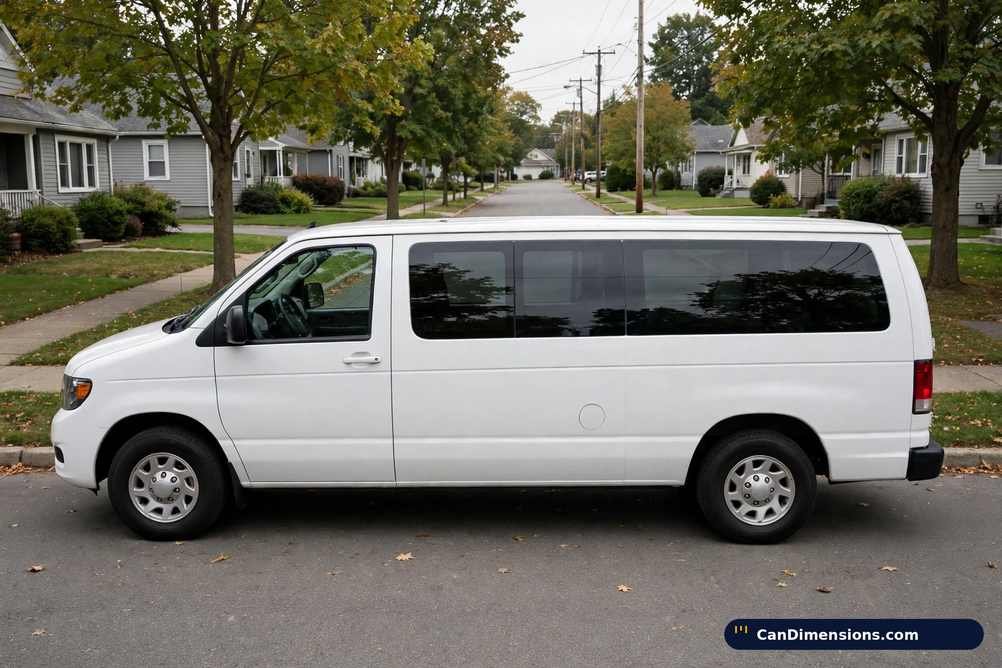
4. Standard Passenger Van or Minibus
Counted: On the “approximately” basis the claim itself uses. Full-size American vans cluster just under this length rather than on it: Ford’s published specifications put the long-wheelbase Transit at 237.6 inches overall — 19 feet 10 inches — and the Mercedes-Benz Sprinter’s standard body at 233.5 inches. The extended versions of both jump past 20 feet entirely (the Transit extended measures 263.9 inches, about 22 feet).
So a hotel shuttle or corporate minibus is a fair everyday picture of about 20 feet — within a couple of inches — and it is the vehicle most likely to be parked at your kerb at this size. Read the number as the class figure it is: the vans are sold and scheduled as the 20-foot class, and the tape says 19 feet 10.
5. Small Motorboat or Fishing Boat
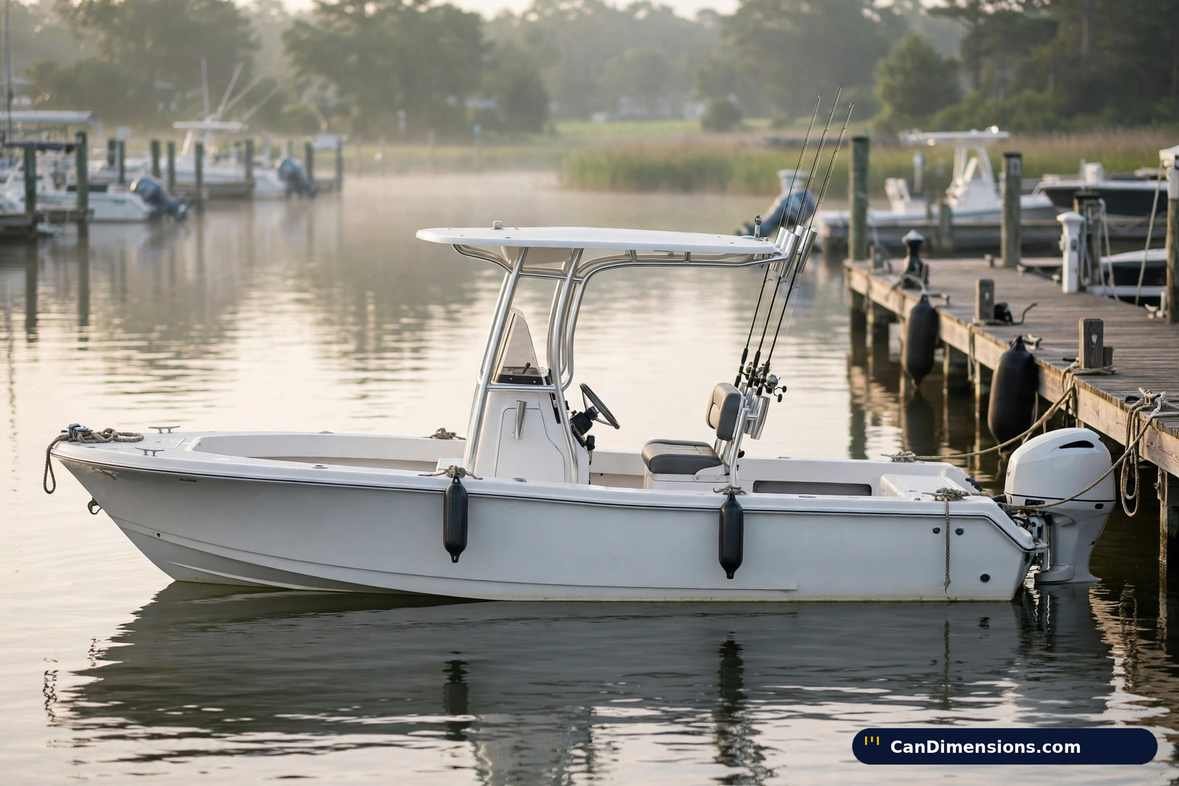
Counted: On the labelled class basis. Twenty feet is the most popular size class in American recreational boating, and the class is real: Key West’s 203 FS — a typical centre-console fishing boat — carries a nominal length of 20 feet with a length overall of 20 feet 3 inches on the maker’s figures, and Boston Whaler, Grady-White and Mako all build models in the same 20-foot class, as the original list says.
The disclosure is how boat lengths work: the number in the model class is nominal, the hull’s measured overall length runs a few inches either side of it, and the engine and swim platform sit outside the figure entirely. A “20-foot boat” is a true class reference — trailerable behind a standard pickup, exactly as claimed — as long as nobody promises you a tape-exact 240 inches of fibreglass.
6. Standard Parking Space Length
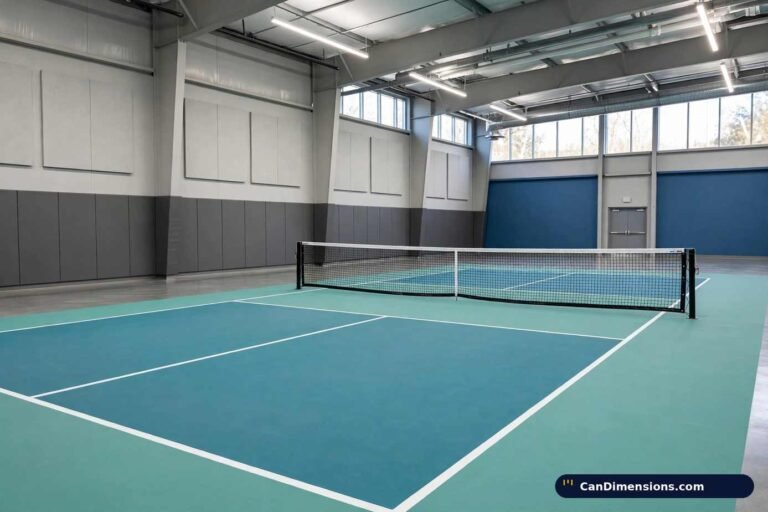
Counted: At the top of the standard range — read the basis carefully. There is no single national parking-space standard in the United States: stall sizes are set by local zoning codes, and the standard perpendicular stall runs 18 to 20 feet long, with 18 feet the most common planning figure and 20 feet specified outright in many municipal codes (and as the standard length for parallel spaces, which run 20 to 24 feet).
Two claims printed with this example need correcting. The Institute of Transportation Engineers publishes design guidance; it did not establish 20 feet as “the minimum comfortable length” — no such federal or ITE minimum exists. And the space in front of you at the grocery store is more likely 18 feet than 20. The example survives honestly in this form: a 20-foot stall is a real, code-specified standard size — the generous end of the standard range, repeated in millions of lots — which is also why it anchors the visualize table below.
7. A Two-Story House
Counted: On the same floor-height basis this run uses for buildings. The everyday rule of thumb is ten feet per residential floor — an 8- or 9-foot ceiling plus the floor structure above it — which puts the two-story wall of an ordinary house at about 20 feet tall. Stand in the street and the top plate of a two-story home’s wall, where the roof begins, is roughly three and a half adults overhead.
The disclosure: 20 feet is the height of the two floors, not the roof peak. The roof itself adds several more feet — a typical two-story house peaks around 25 feet or higher depending on the pitch — so picture the wall, not the ridge, when you use a house as your reference.
8. 20-Foot Flagpole
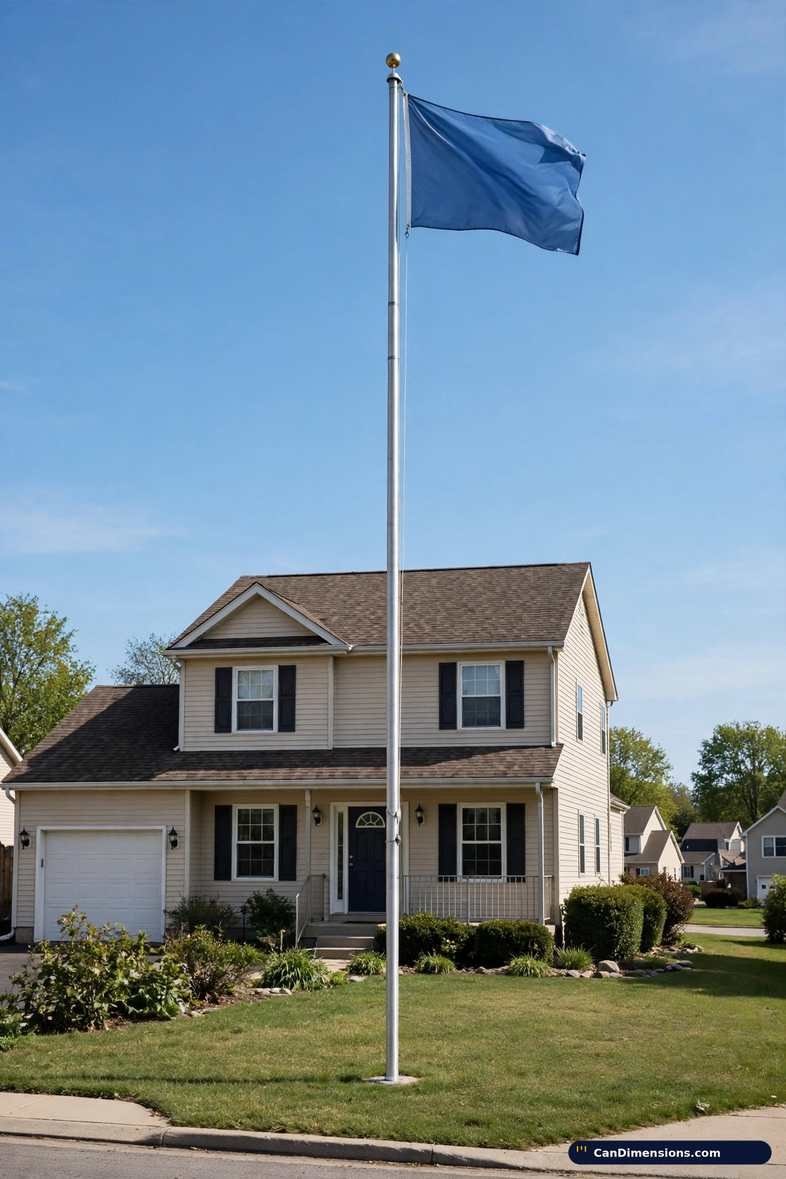
Counted: Exactly, on the figure the industry sells. Flagpoles are specified by exposed height — the pole you see above the ground — and 20 feet is the most common residential size in America. Manufacturer specifications for a 20-foot pole list an exposed height of exactly 20 feet with an overall length of 22 feet once the buried foundation section is counted (Flagpole Warehouse’s Independence Series: exposed height 20 ft, overall height 22 ft, set depth 2 ft — the same pairing the NAAMM FP 1001-07 guide recommends, flying a 4-by-6-foot flag).
This is the pole in the front yard two doors down. Stand under one and look up: the flag at the top is three and a half adults above you.
9. Lolong, the Record Saltwater Crocodile
Counted: As a named and measured individual — 3 inches over, disclosed. Lolong, a male saltwater crocodile captured in Bunawan, Philippines, in September 2011, was sedated and measured by crocodile expert Adam Britton at 6.17 metres — 20 feet 3 inches — and 1,075 kilograms, and certified by Guinness World Records in June 2012 as the largest crocodile ever held in captivity. He died in February 2013, and no crocodile measured since has beaten him.
Saltwater crocodiles are the largest living reptiles, and big males are the one land-and-river animal that genuinely lives at this length: ordinary large males run to about 20 feet, and Lolong is the documented top of the record. Where the giraffe above fails by a foot, the crocodile passes by three inches — which is exactly why the measurement had to be Guinness’s and not a fisherman’s.

10. Adult Male Orca (Killer Whale)
Counted: At the bottom of the typical adult range — read the basis carefully. Reference figures for the orca put adult males at typically 6 to 8 metres (20 to 26 feet) long, with females smaller at 5 to 7 metres. That makes a 20-foot orca a small adult male rather than a giant — but a normal, documented adult size, not a record or a rounding.
It is the same honest pattern as this run’s blue whale at 80 feet: the largest member of the dolphin family starts adult male life at roughly this article’s length, and the exceptional individuals grow well past it, to a recorded maximum near 32 feet.
11. A Large Reticulated Python
Counted: On the documented range basis. The reticulated python is the world’s longest snake: a study of more than a thousand wild pythons in southern Sumatra put the species’ length range at 1.5 to 6.5 metres (about 5 to 21 feet 4 inches) — so a 20-foot python is a genuinely large but documented wild size, and Guinness notes the species regularly exceeds 6 metres (19 feet 8 inches), which no other snake does.
The named records run well past this article’s length — a Balikpapan specimen measured under anaesthesia at 6.95 metres (22 feet 10 inches), and the captive Medusa at 7.67 metres (25 feet 2 inches) — but the count does not need them: it rests on the published wild range, inside which 20 feet sits as the size of an exceptional but real animal.
12. 20-Foot Extension Ladder
Counted: As a labelled size, disclosed — the way ladder sizes actually work. An extension ladder’s size is the sum of its two sections: Werner’s 20-foot models (the D6220-2 fibreglass and D1220-2 aluminium ladders) are built from two 10-foot sections totalling exactly 20 feet of ladder. That is the figure on the badge, the figure the trade buys by, and the figure this count rests on.
The disclosure is printed in Werner’s own specification tables: because the sections must overlap to lock, the maximum working length is 17 feet, and Werner’s reach guide gives a 20-foot ladder a highest standing reach of about 19 feet. So the ladder is 20 feet of ladder — it just never stands 20 feet tall in use, and any list that shows it leaning against a 20-foot wall is selling you the label, not the climb.
13. A 20-Foot Moving Truck
Counted: On the rental class basis. The “20-foot truck” is a standard rental class — U-Haul’s mid-size mover, rated for a two-to-three-bedroom home — and like the container at the top of this list, the name is a class figure rather than a tape measurement. U-Haul’s published dimensions put the truck’s cargo box at 19 feet 5 inches long inside (7 feet 8 inches wide, 7 feet 1 inch tall, 1,016 cubic feet including the over-cab Mom’s Attic shelf), while the whole vehicle measures about 26 feet 7 inches bumper to bumper.
So the class name describes neither the box nor the truck exactly — it names the slot in the rental ladder between the 15-foot and 26-foot trucks. As a visual reference it still earns its place: the box truck loading in a driveway near you is sold, signed and scheduled as a 20-footer, and its cargo floor is within seven inches of the full length.
20 Feet Next to Other Lengths
| Length | How 20 Feet Compares |
|---|---|
| 10 feet | Exactly double |
| 25 feet | 20 feet is four-fifths of it |
| 40 feet | Exactly half |
| 50 feet | 20 feet is two-fifths of it |
| 80 feet | Exactly a quarter |
| 100 feet | Exactly a fifth |
The neighbours do most of the work. Twenty feet is twice the 10-foot span this run measured on its own, half the 40-foot container-and-bus length, and a little over halfway up the 50-foot court-width length — and the 80-foot waterfall-and-flagpole length is exactly four of these end to end. The ladder of everyday lengths is built out of this one rung.
How to Visualize 20 Feet Without a Measuring Tape
These real-world methods help you estimate 20 feet quickly and accurately:
| Method | How It Works | Accuracy |
|---|---|---|
| 20-Foot Parking Space | A stall built to the 20-ft end of the standard range — check the lot’s longer stalls | ★★★★★ |
| 3½ Adults Lying Head to Toe | Average adult height × 3.5 (four adults overshoot to about 22.7 ft) | ★★★★☆ |
| Two-Story Wall | Count two residential floors up — the top of the wall is your mark | ★★★★☆ |
| 20-Foot Flagpole | The standard front-yard pole: exposed height exactly 20 ft | ★★★★★ |
Two of the shortcuts that circulate most with this topic need correcting. “Two compact cars bumper to bumper” overshoots badly — a compact car is about 14 feet long, so two of them measure roughly 28 feet, not 20; there is no common 10-foot car to halve the trick with. And the “short school bus” shortcut fails with the bus section above: the standard bus is 25 to 40 feet, and only the smallest van-chassis minibuses come near 20.
Measuring 20 Feet with Your Own Body
Your body carries two built-in measures. Your arm span — fingertip to fingertip with both arms stretched wide — is roughly equal to your height, so about three and a half of your own arm spans laid end to end cover 20 feet. And an ordinary interior door is 30 inches wide: eight of those widths in a row is also exactly 20 feet, a useful check down a hallway or across a showroom floor.
For a rougher pass, use your stride. A comfortable walking step is about 2.5 feet, so 8 steps at an easy pace lands you close to 20 feet — the same arithmetic the walking question below is checked against.
Where Does 20 Feet Appear in Daily Life?
Shipping & Commerce: The 20-foot TEU shipping container is the literal building block of American international trade — every port and freight yard in the country is engineered around this exact dimension. (The steel itself measures 19 feet 10½ inches; the dimension the industry is engineered around is the class.)
Transportation: Passenger vans, minibuses and 20-foot rental trucks all reference 20 feet as a core operational length — the maximum comfortable size class for standard American road and parking infrastructure, with the vans’ tapes reading 19 feet 10 and the truck box 19 feet 5.
Recreation & Nature: 20-foot motorboats define the most popular segment of American recreational boating, while the record saltwater crocodile Lolong at 20 feet 3 inches gives the natural world its most precisely measured 20-foot animal — the giraffe, at a recorded maximum of 19.3 feet, falls just short.
Urban Infrastructure: Parking spaces at the 20-foot end of the standard range make this one of the most physically replicated dimensions in American commercial real estate — embedded into parking lots and street layouts nationwide, alongside 20-foot flagpoles in front yards and two-story walls on every residential street.
What Is Not 20 Feet: Three Near Misses
Plenty of famous lengths get rounded to 20 feet in casual talk and are not. A full-grown giraffe tops out at a recorded 19.3 feet — the tallest land animal alive still misses by eight inches. A standard school bus overshoots to 25–40 feet, roughly double at its typical 36. And two compact cars end to end measure about 28 feet, because a compact car is about 14 feet long, not 10. Knowing the near misses keeps the real 20-foot references honest.
Question’s
How long is 20 feet visually?
Picture the long end of a standard parking space — a stall built to the 20-foot end of the standard 18-to-20-foot range — or a 20-foot flagpole in a front yard. Both give an immediate visual reference for 20 feet; the shipping container is an inch and a half under it at 19 feet 10½ inches.
What is 20 feet compared to a human?
20 feet equals roughly 3.5 times the height of an average adult at 5 feet 8 inches — or about three and a half adults lying head to toe. (Four adults overshoot: 4 × 5 feet 8 inches is about 22 feet 8 inches.)
What animals are 20 feet tall?
None on land. The tallest land animal, the giraffe, reaches a recorded maximum of 19.3 feet — no land animal stands 20 feet tall. The animals that genuinely measure 20 feet are long rather than tall: a large male orca starts at 20 feet, a big reticulated python passes it, and the record saltwater crocodile Lolong measured 20 feet 3 inches.
What is 20 feet tall in perspective?
20 feet is roughly the height of a two-story residential building’s wall — two 10-foot floors — before the roof adds its own height on top. It is also exactly two basketball-rim heights: the rim stands at 10 feet, so 20 feet is the rim stacked on itself.
How far is 20 feet to walk?
20 feet takes approximately 8 normal walking steps — at a comfortable step of about 2.5 feet, 8 × 2.5 = 20 — and about 4 to 5 seconds at an ordinary walking pace of 3 miles per hour (4.4 feet per second). It is a short walk, but not under 3 seconds unless you hurry.
Final Thoughts
Twenty feet stops being a number once you have stood next to it. It is the stall at the long end of the parking lot, the shuttle van at the kerb, the fishing boat at the dock and the flagpole in the front yard — all the same honest length class, shared by a two-story wall, a rental truck and a ladder’s worth of aluminium.
The most precisely measured reference is the animal: a giraffe, for all its fame at this height, has never been measured at 20 feet — while a crocodile named Lolong was, to the inch, by the people who keep the records. Count three and a half adults, double one basketball rim, or pace eight steps — and you will never misjudge 20 feet again.