What Weighs 20 Grams? 14 Baking-Ready Things That Weigh 20 Grams
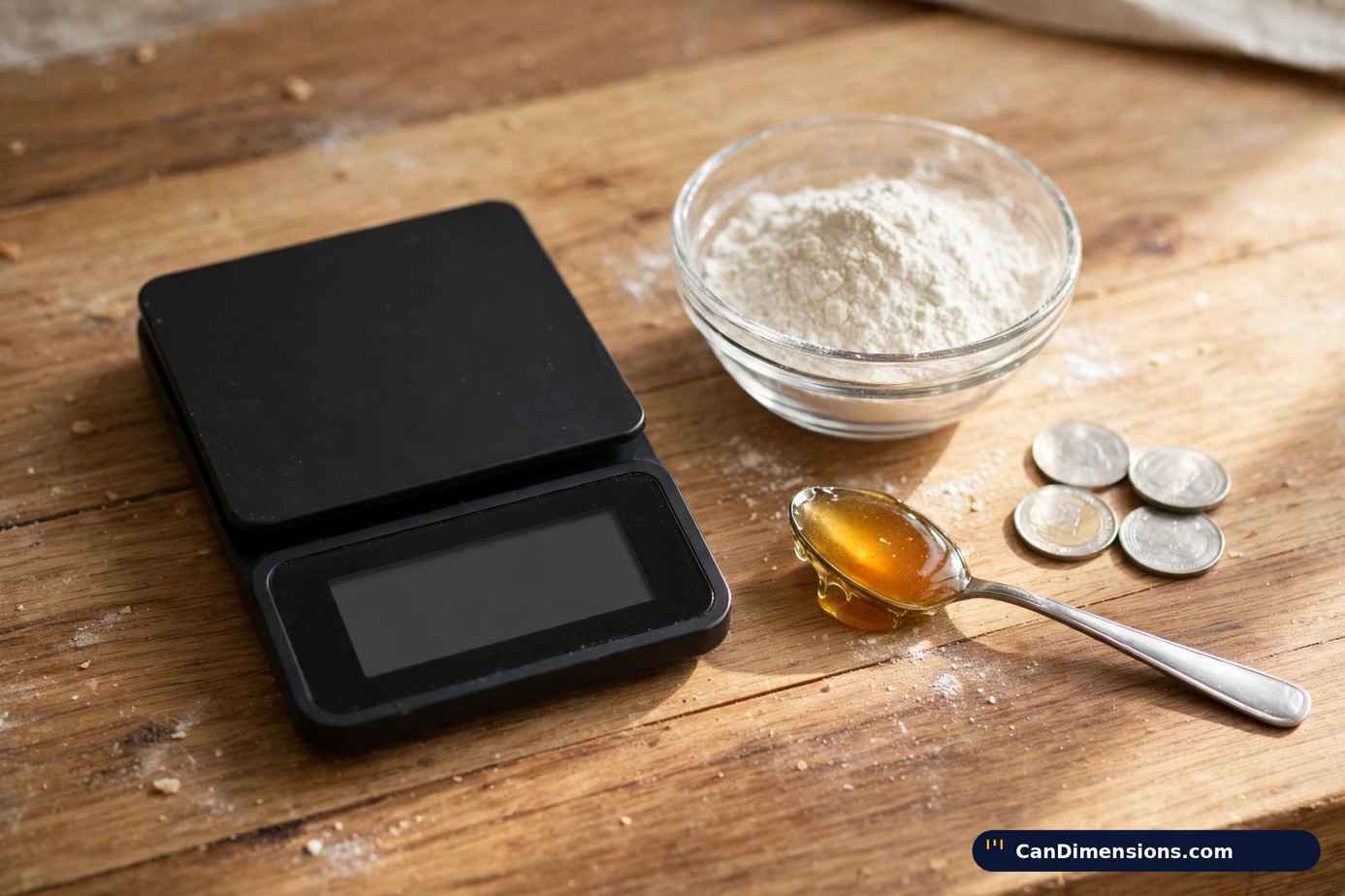
A baker meets 20 grams in the small print of a recipe: a spoonful of honey, a pinch-level dose of salt scaled up, a starter feed, a spice blend. At that size a guess is not a measurement, and a cheap kitchen scale is only useful once something trustworthy has checked it.
That is the job this page does differently. Instead of treating the weight as a trivia list, it treats it as a bench test: fourteen references, every one traced to a primary source — a mint’s specification, a manufacturer’s datasheet, a product label, an official standard — and each one usable to test a scale or to portion an ingredient.
Eight familiar claims did not survive that checking, among them the AAA battery and the heaped spoon of peanut butter. They stay on the page in their original places, with the corrected figure printed beside the claim, so the error stops travelling from kitchen to kitchen.
What Does 20 Grams Mean?
On paper the weight is simple arithmetic. It equals 0.705 ounces, 0.0441 pounds, 0.02 kilograms and 20,000 milligrams, and jewellers meet the same mass as 100 carats. None of those conversions, on their own, tells a hand what the weight feels like.
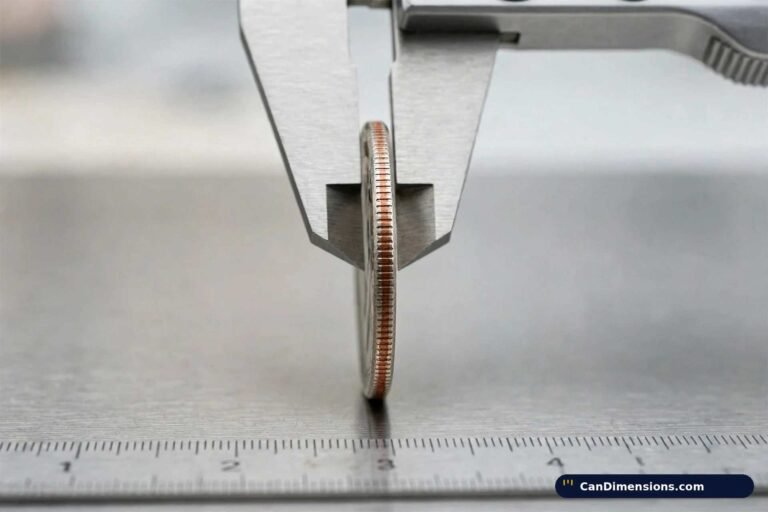
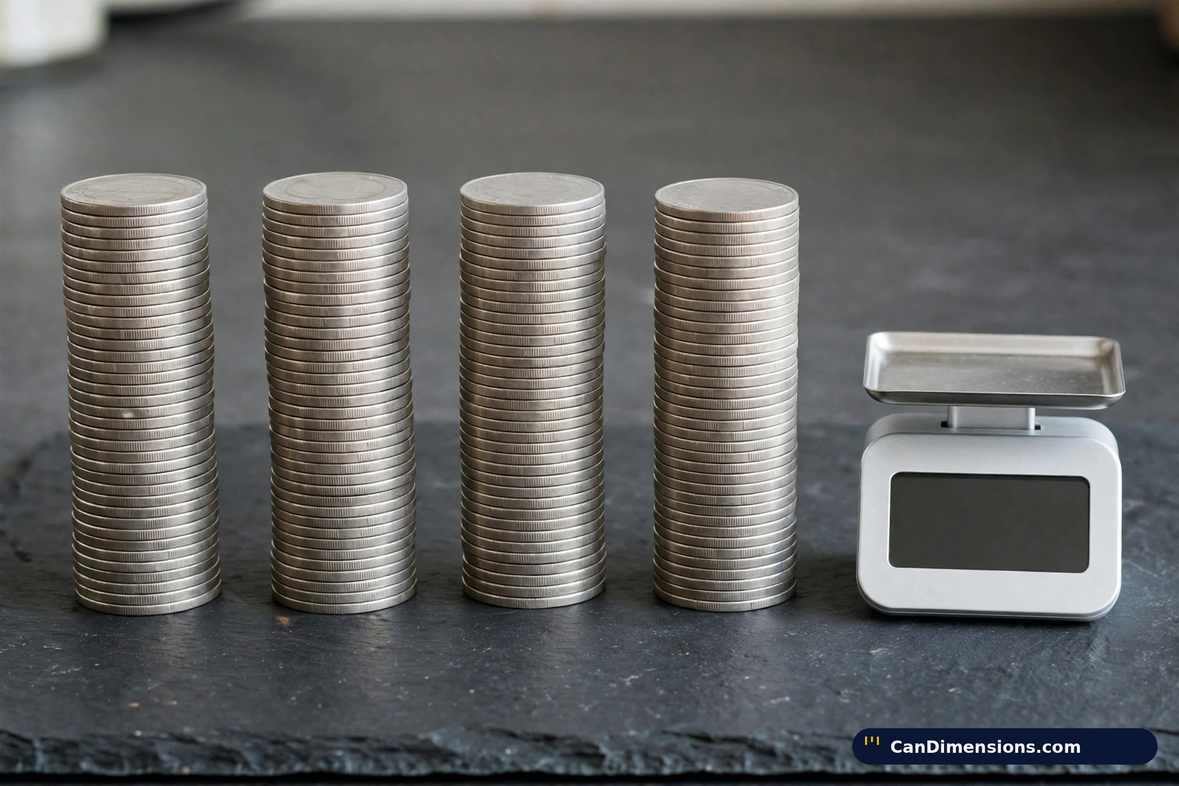
In the hand it is a gentle, definite pressure. Four American nickels resting on an open palm give the exact sensation, because the United States Mint strikes each nickel to 5.000 grams. Anything claiming to be this weight can be judged against those four coins before it is trusted anywhere else.
Checking a Kitchen Scale at 20 Grams
A kitchen scale earns trust at the weights a cook actually uses, and this is one of them. Place four clean nickels on the pan. A healthy scale settles on 20.0 grams; a reading of 19 or 21 means the next recipe measured on it inherits that error, however carefully the ingredients were chosen.
The same test can be run from British change. A 20 pence piece is specified by the Royal Mint at 5.0 grams; four of them come to 20.0 grams, and eight post-1982 American cents, specified at 2.500 grams apiece, arrive at the identical total by a third route.
| Unit | 20 Grams Equals |
|---|---|
| Ounces | 0.705 oz |
| Pounds | 0.0441 lb |
| Kilograms | 0.02 kg |
| Milligrams | 20,000 mg |
| Carats | 100 ct |
| Grains | 308.6 gr |
| Water | 20 ml |
Keep the ounce line in view when a recipe mixes systems. Readers converting between the two can follow our grams to ounces guide for the full ladder, but for this weight the figure to memorise is 0.705 — noticeably less than a full ounce, and more than the rounded 0.70 that copied charts print.
14 Most Common Things That Weigh About 20 Grams
Fourteen references passed checking. The table gathers them first, with the basis for each stated openly, and the sections beneath it work through every item in full — the nine claims from the list this page improves on, in their original order, followed by thirteen further checked references. Eight of the original nine failed checking and are marked as not counted where they stand.
| Item | Weight | Basis |
|---|---|---|
| Four U.S. nickels | Exactly 20.000 g | U.S. Mint specification, 5.000 g each |
| Four British 20p coins | Exactly 20.0 g | Royal Mint specification, 5.0 g each |
| Eight US pennies (post-1982) | Exactly 20.000 g | U.S. Mint specification, 2.500 g each |
| Four Brazil nut kernels | 20 g | USDA portion data, 5 g per kernel |
| Two medium baby carrots | 20 g | USDA FoodData Central, 10 g each |
| 20 millilitres of water | Exactly 20 g | 1 ml of water weighs 1 g |
| A 20 g calibration weight | Exactly 20 g | Made and certified to that mass |
| A 20 g gold bar | Exactly 20 g | Minted to a 20 g specification |
| Twenty US dollar bills | About 20 g | About 1 g per bill (Bureau of Engraving and Printing) |
| Four sheets of A4 paper (80 gsm) | About 19.96 g | Rated paper weight, 4.99 g per sheet |
| Four badminton shuttlecocks | About 20 g | BWF legal range, 4.74–5.50 g each |
| Four credit or debit cards | About 20 g | About 5 g per standard card |
| One tablespoon of honey | About 20 g | USDA standard, 21 g per level tablespoon |
| Four grapes | About 19.6 g | USDA data, 4.9 g per grape |
Four U.S. Nickels
Counted: exactly 20 grams. Four nickels are the bench test this whole page leans on. The Mint’s specification fixes one nickel at 5.000 grams, so the stack of four lands on 20.000 grams with no rounding involved and no brand variation to argue about.
For a baker the value is practical rather than patriotic. Keep four clean nickels in a jar beside the scale, drop them on the pan before a bake, and a drifting scale announces itself in seconds — long before it can quietly ruin a batch that depended on small, precise doses.
A Standard AAA Battery
Not counted — checked and corrected. Placing a single AAA cell at about this weight, and it is one of the most durable errors in the small-weight world. Energizer publishes the E92 datasheet for its standard alkaline AAA, and the typical weight printed there is 11.5 grams; the lithium AAA drops to 7.6 grams.
So one AAA supplies little more than half the target. The confusion has an obvious origin one drawer slot away, where the AA cell — 23.0 grams typical from the same maker — genuinely does neighbour this weight.
Twenty Paperclips
Not counted — no specification exists. Start with the appealing version: a clip is a gram, twenty clips are this weight. It falls apart at the first step, because no manufacturer states a clip’s weight, and measured examples spread widely — small clips near half a gram, large ones near 1.4 grams.
Spread across twenty clips, the uncertainty compounds into a pile that might total 10 grams or might approach 28. That is not a reference; it is a range wearing a reference’s clothes, and it earns its place here only as a corrected claim.
A Compact Disc (CD)
Not counted — checked and corrected. Nostalgia gives the compact disc a heft it does not have. A standard 120 mm disc, a 1.2 mm polycarbonate sheet, typically comes in around 15 to 16 grams.
The format’s published range does extend to 20 grams, but a range’s ceiling is not a typical value. Call a bare disc a 15-gram object, and remember that a scale reading taken with the jewel case in place is mostly measuring the case.
A Tablespoon of Peanut Butter
Not counted — checked and corrected. Kitchen folklore awards the tablespoon of peanut butter this weight, and the standard tables refuse to back it. USDA’s level tablespoon is 16 grams; only a heaped spoon, whose shape nobody can standardise, climbs higher.
To portion the full amount, take a level tablespoon, then a level teaspoon on top — one and a quarter spoonfuls, roughly, in total. Bakers weigh nut butter precisely because spoon geometry refuses to repeat itself.
Twenty Jelly Beans
Not counted — checked and corrected. Bean maths assumes a gram apiece, neat and countable. Jelly Belly’s label tells a different story: roughly 27 pieces to a 30 gram serving, which puts a single bean near 1.1 grams and a count of twenty near 22 grams.
Eighteen beans is the honest count for this weight. With sweets, start from what the maker printed on the packet and work backwards; never trust a round guess per piece.
A Disposable Lighter (BIC Lighter)
Not counted — cannot be verified. No weight for the classic pocket lighter appears in anything BIC publishes, and the numbers quoted second-hand wander between about 15 and about 24 grams from model to model. The object also sheds mass as it works, since burning fuel is burning weight.
A reference that changes every time it is used, with no specification behind it, cannot check anything. The claim is kept, marked as unverifiable, because readers will meet it elsewhere.
Twenty M&M’s Candies
Not counted — checked and corrected. Twenty candies at an assumed gram each would be tidy, but Mars’s own serving maths describes lighter pieces: about 32 pieces to 28 grams, or 0.875 grams per candy. Twenty pieces therefore reach only about 17.5 grams.
The count that works is nearer twenty-three. Once again the manufacturer’s label, not the round per-piece guess, is where candy arithmetic has to start.
A Standard Highlighter Pen
Not counted — no standard exists. “A standard highlighter” is a thing that does not exist as a weight. Sharpie, the brand the claim usually names, states no weight for its highlighters, and the models whose supplier sheets do give one disagree with each other — a liquid-ink example lists roughly 12 grams, and tank-style designs weigh more.
A figure that might be 12 or might approach this weight, depending on an unnamed pen, is not information. The claim is corrected here and excluded from the count.
Four British 20p Coins
Counted: exactly 20 grams. Britain’s 20 pence piece is struck to a Royal Mint specification of 5.0 grams, and four together come to 20.0 grams precisely.
That makes the coin a scale check a British reader can perform from loose change. Test with one coin and the pan should read five; add three more and it should read twenty; keep counting to twenty coins and the same check extends to a hundred.
Eight US Pennies (Post-1982)
Counted: exactly 20 grams. Eight cents add up to this weight, provided every coin is the modern zinc issue. The Mint sets that cent at 2.500 grams, and eight multiplied out give 20.000 grams exactly.
Date is the trap. Cents struck in copper before the 1982 changeover weigh 3.11 grams apiece, so eight older coins land near 25 grams instead. Flip each coin over, confirm a year from 1983 onwards, and the sum holds.
Four Brazil Nut Kernels
Counted: 20 grams, on USDA portion data. Four kernels are enough. USDA portion data assigns 5 grams to a single Brazil nut kernel, and the nut’s size and density explain why the count stays so low when other nuts need far larger handfuls.
Treat the number as a guide to a typical kernel, not a guarantee for any particular bag, since growing conditions shift individual nuts. Even as an approximation it is a handy one — four kernels, roughly 130 calories of them, picture the weight immediately.
Two Medium Baby Carrots
Counted: 20 grams, on USDA data. Two baby carrots, of the size USDA FoodData Central calls medium, do it: the database gives 10 grams apiece.
Produce is never machined to a tolerance, so a real pair may sit a gram either side of the figure. As a visual cue on a plate, though, the pairing is about as clear as vegetables get.
20 Millilitres of Water
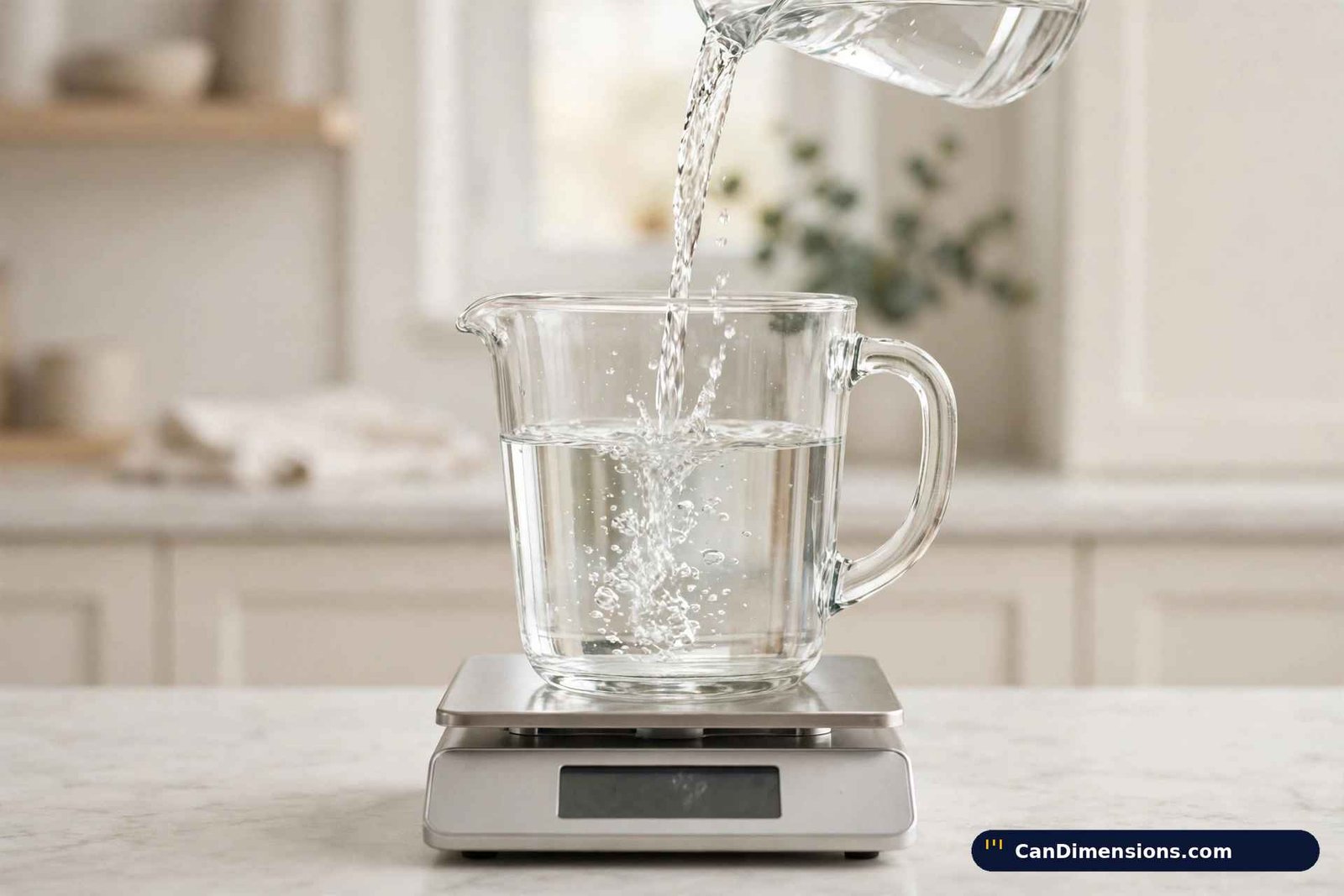
Counted: exactly 20 grams. No maker, label or mint is needed for this one, because the units were designed to make it true: a millilitre of water has a mass of one gram, so the 20 millilitre measure — a tablespoon and a teaspoon poured together — is this weight by construction.
Bakers lean on that identity daily. Bread hydration written in grams can be poured from a marked jug with confidence, something no other common ingredient allows, because no other ingredient shares water’s exact conversion.
A 20 g Calibration Weight
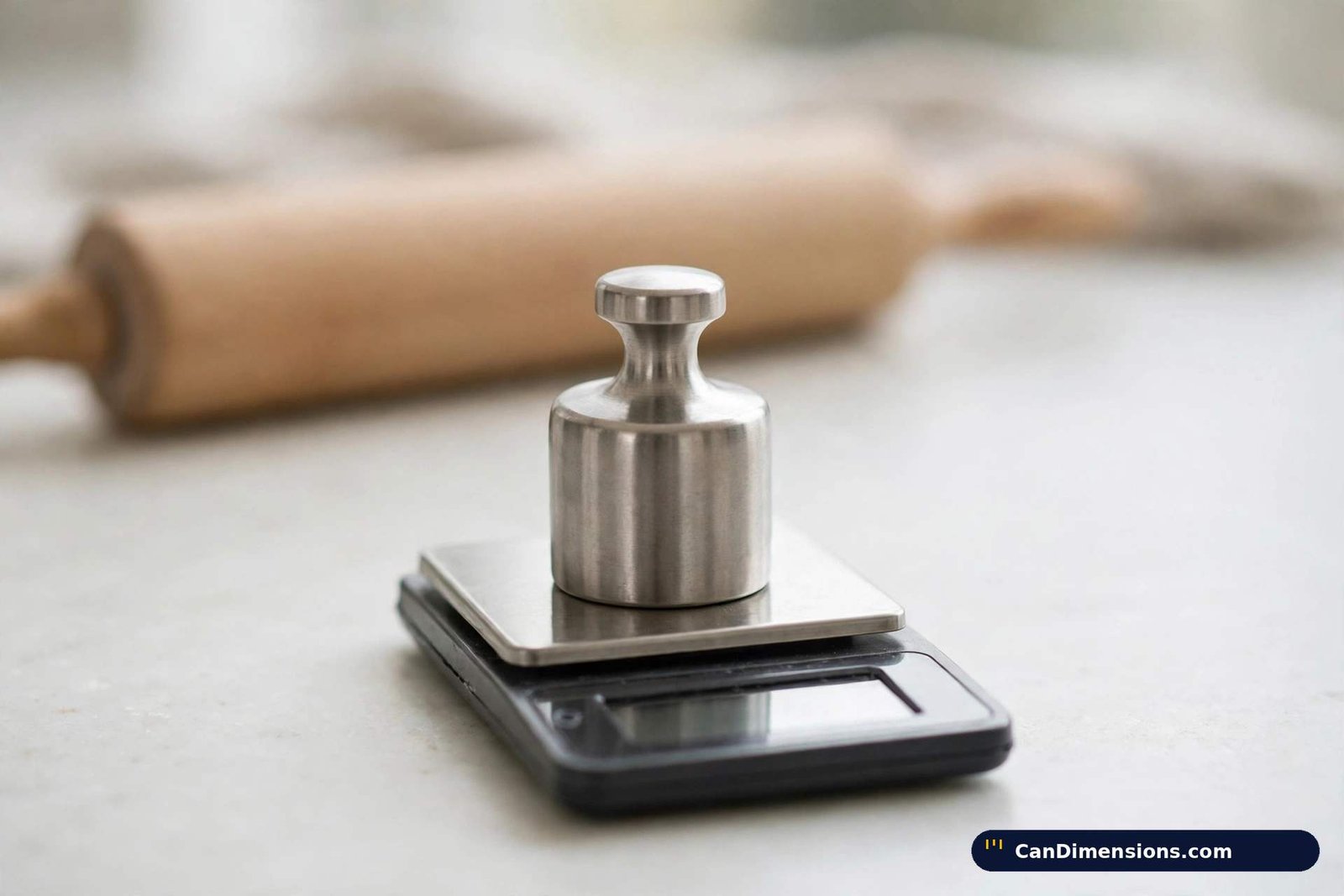
Counted: exactly 20 grams, by definition. This entry is a manufactured object whose entire purpose is to be this mass: a stainless steel weight, certified under the ASTM and OIML class systems, with even the loosest class tolerating an error of mere hundredths of a gram from the value marked on it.
If one purchase comes out of this list, let it be this weight. Rest it on a scale and the scale’s honesty is settled; set four nickels beside it and the coins confirm the same figure from the opposite direction.
A 20 g Gold Bar
Counted: exactly 20 grams. Refiners sell small gold bars in set sizes — 1, 2.5, 5, 10, 20, 50 and 100 grams — and houses such as PAMP produce the 20 gram bar to that exact mass, sealed in an assay card.
Hold one and density becomes obvious. Gold squeezes this mass into a wafer with a footprint close to a postage stamp, the opposite extreme from the airy shuttlecocks further down the list.
Twenty US Dollar Bills
Counted: about 20 grams. American paper money offers a rough-and-ready handful: the U.S. Bureau of Engraving and Printing reckons a note at roughly a gram, denomination aside, so twenty notes come to roughly this weight. A stack of hundreds and a stack of singles feel identical in the hand.
The wording stays at “about” deliberately. The Bureau’s own figure is an approximation, and a circulated note picks up moisture and grime that nudge it upward.
Four Sheets of A4 Paper (80 gsm)
Counted: about 19.96 grams. Printer paper can be worked out from its packet. The gsm figure is a rating in grams per square metre; at the common 80 gsm rating an A4 sheet comes to 4.99 grams, and four sheets come to 19.96 grams — close enough to stand in for the target.
The same arithmetic gives the next step: five sheets make about 25 grams. Few household materials let you calculate a weight from the packaging, but paper does, as long as the rating and the sheet size are what the packet claims.
Four Badminton Shuttlecocks
Counted: about 20 grams. Badminton’s laws, written by the Badminton World Federation, confine a shuttlecock to the band from 4.74 to 5.50 grams — a cork base carrying sixteen feathers, or a synthetic equivalent. Four together therefore span roughly 19 to 22 grams, with the middle of the band on this weight.
They are the deceptive entry in the list. Spread four across an open hand and they feel like next to nothing, all air and feather, yet the scale insists on the full figure.
Four Credit or Debit Cards
Counted: about 20 grams. Payment cards are built to a worldwide format, and a standard plastic card sits at roughly 5 grams — Chase quotes about that figure for its ordinary cards — so a wallet’s usual four add up to this weight.
Premium metal cards are the outlier, at two to three times the mass, and they are not the reference. Four ordinary plastic cards, already in most readers’ pockets, are.
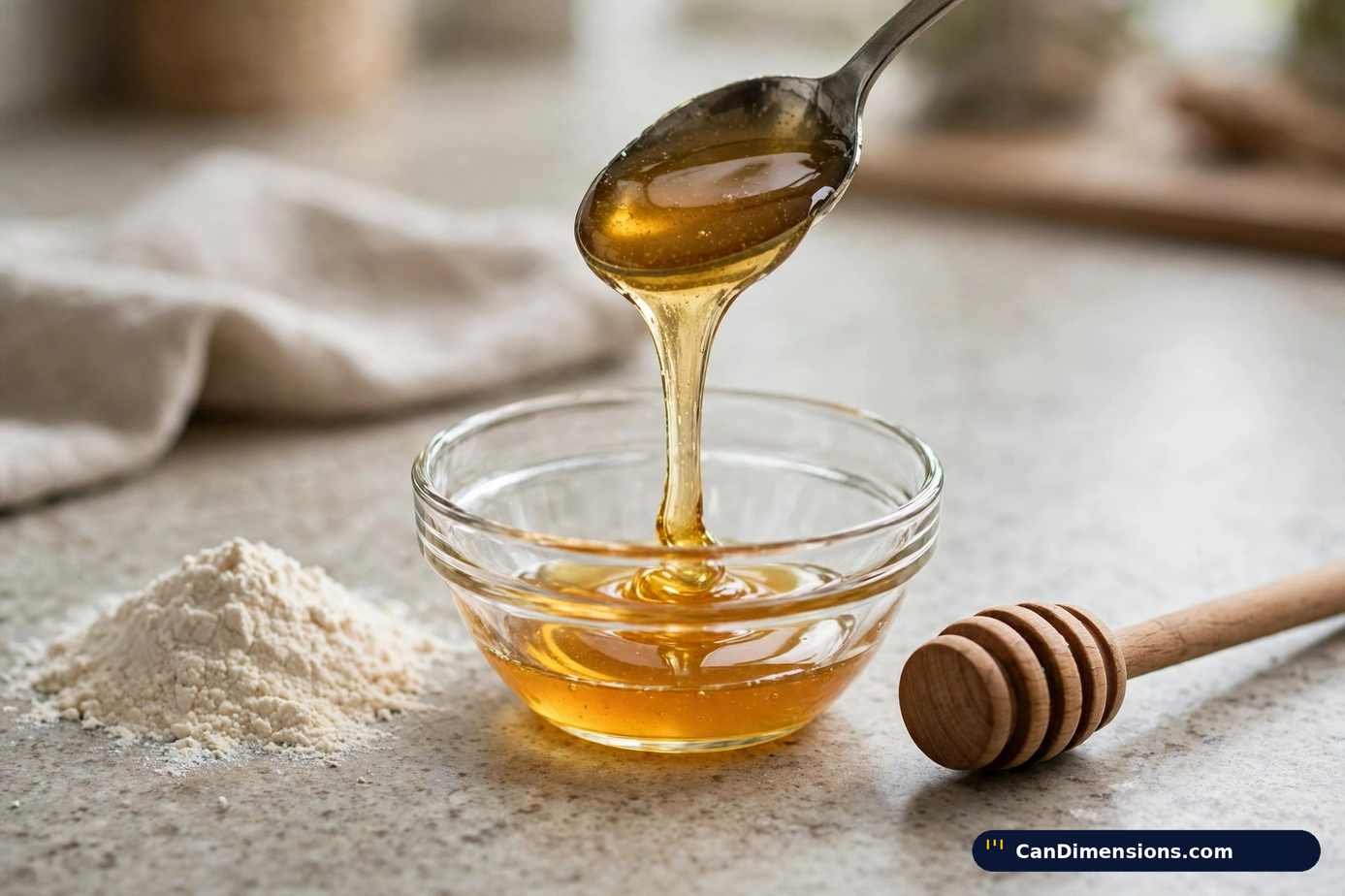
One Tablespoon of Honey
Counted: about 20 grams. Honey earns its place where peanut butter lost its own. USDA figures give 21 grams for a level tablespoon of honey, a near miss close enough to count, and the reason is density: honey is around 1.42 times as heavy as the same volume of water.
For a baker that single fact organises every spoon on this page. A tablespoon fixes volume only; weight follows density, which is why the same spoon holds about 15 grams of water, 16 grams of peanut butter and 21 grams of honey.
Four Grapes
Counted: about 19.6 grams. Fruit closes the list at its softest. USDA’s reference grape weighs 4.9 grams — ten grapes to 49 grams in its entry — and four of them come to about 19.6 grams.
Variety and season move grapes around more than they move coins or cards, so use the four as an illustration, not a calibration. As an illustration it works instantly: a row of four grapes is a surprisingly small thing to carry this much mass.
How to Measure 20 Grams Without a Scale
Using Common Household Items as References
Start with the references that carry a specification behind them. Four nickels are exact, four 20p coins are exact, and a certified calibration weight is exact by definition. Build a small drawer kit from those, and a scale-free estimate stops being a guess.
Leave the folklore out of the kit. The AAA battery, at 11.5 grams typical, is too light to help, and clips are too inconsistent to help either — no maker builds them to a weight, so a pile of twenty proves nothing.
Kitchen Measurement Conversions
Volume works, provided you know which ingredient is in the jug. Twenty millilitres of water is this weight in liquid form. Granulated sugar runs about 12.6 grams per level tablespoon, or 4.2 grams per teaspoon, so reaching the target takes a little shy of five level teaspoons; spooned all-purpose flour is lighter, at about 8 grams per tablespoon.
Liquids divide by density. Twenty millilitres of cooking oil weigh about 18 grams, because oil sits at roughly 0.91 of water’s density, while the same volume of honey weighs about 28 grams. A jug never lies about volume. Turning that volume into grams is where each ingredient goes its own way.
DIY Balance Scale Method
A ruler balanced across a pencil makes a working fulcrum. Set the unknown item on one end and add checked references — nickels first — to the other end until the ruler sits level, then read the weight off the references you used.
Patience is the price of the method, and for a single check it is a fair one. In a kitchen the balance has a second use: it shows a child, or a sceptical adult, that the scale’s number and the coins’ specification agree, which is the whole argument of this page in miniature.
20 Grams in a Recipe: Spoon, Jug and Density Traps
Most recipe errors at this size come from treating a spoon as a weight. A level tablespoon holds a fixed volume and nothing more. Filled with water it carries about 14.8 grams, with granulated sugar about 12.6 grams, with peanut butter 16 grams and with honey about 21 grams — four different weights from one utensil, before heaping enters the picture at all.
Heaping is the second trap. A heaped spoon of peanut butter can plausibly reach this weight, which is exactly why the claim circulates, but a heap has no standard shape and cannot be repeated by the next cook, or even by the same cook twice. Recipes written in grams are asking for mass; a scale, checked against four nickels, settles the question instantly, in a way no spoon chart can.
The jug is the honourable exception, and only for water-based liquids. Because water converts one-for-one, 20 millilitres on a jug’s markings is this weight on the pan. Milk and stock sit close enough to water for kitchen purposes; oil and honey, as the conversions above show, do not.
Comparing 20 Grams to Other Weights
Lighter Than 20 Grams
Step down and the weight halves. Ten grams — the subject of our how much is 10 grams guide, checked by the same method — is two nickels, two 20p pieces or 10 millilitres of water. Step down again to the single gram of our things that weigh 1 gram guide and the reference is one banknote.
Batteries confuse this end of the ladder, so place them carefully: an AA cell, at Energizer’s typical 23.0 grams, sits above this page’s weight, not anywhere near 10 grams.
Heavier Than 20 Grams
Step up and the anchors change. At 50 grams the reference becomes a USDA large egg, which weighs exactly that, or a row of ten nickels; this page’s weight is two-fifths of either. The ladder’s top in this family is the subject of our what weighs 100g guide, reached with twenty nickels. Readers converting upward can continue to how much is 2 ounces.
Discount two comparisons found elsewhere. Golf balls approach 50 grams only because the rules permit at most 45.93 grams, and apples overshoot the class entirely — a medium one is 182 grams in USDA data.
Visual Weight Progression
Coins make the cleanest staircase in the small-weight family. Five grams is a nickel. Double the coins for ten, double again for the weight on this page, and keep counting to ten nickels for fifty and twenty for a hundred.
The staircase also catches a circulating error. Add a AAA battery to two nickels and the claimed total is often 30 grams; add the datasheet figures instead — 11.5 and 10.0 — and the real total is 21.5 grams, a whisker past this page. Staircases built from checked rungs are the only ones worth learning.
Baking With 20 Grams: Portions That Actually Use It
This weight turns up in a kitchen in predictable places. It is a tablespoon of honey for a glaze, a jug-measured splash of water for adjusting a dough, four Brazil nuts chopped over a cake, or the scale check performed before any of those are trusted. Small doses are where baking precision lives: salt, spices and leavening are all portioned in single grams and small multiples of them, so an error at this size is proportionally large even when it looks tiny on the pan.
Portioning by reference helps when the scale is elsewhere. Twenty millilitres of water from a marked jug is exact. A level tablespoon of honey is close, at 21 grams on USDA data. Sugar measured out in level teaspoons, a little shy of five spoonfuls, lands close, with the spoon caveat from the recipe section above kept firmly in mind.
What this weight is not is a flour measure. Flour is portioned in hundreds of grams, and no reference on this page should be stretched into one. The references earn their place at the small end of a bake — the check, the dose, the glaze — which is precisely where a baker’s scale has to be right.
Common 20-Gram Baking Myths, Checked
- “One AAA battery gets you there.” Nowhere near: Energizer’s E92 datasheet puts a typical alkaline AAA at 11.5 grams. Its bigger AA sibling, at 23.0 grams, is the battery that actually neighbours this weight.
- “One spoon of peanut butter does it.” A level tablespoon holds 16 grams in USDA data. Reaching the full amount takes that spoon plus a level teaspoon more.
- “A CD is a 20-gram disc.” Ordinary discs sit nearer 15 to 16 grams. Only the heaviest pressings touch the top of the format’s 15-to-20 gram range.
- “Count twenty clips and stop.” Nobody manufactures clips to a stated weight, and a real set of twenty can land anywhere from roughly 10 to roughly 28 grams.
- “Call it 0.70 ounces and be done.” The precise conversion is 0.705 ounces; the shorter version shaves off real mass.
- “Two-thirds of an ounce, surely?” That fraction equals 18.9 grams. This weight clears seven-tenths of an ounce, just.
Question’s
How much does 20 grams weigh?
0.705 ounces, or 0.0441 pounds, in imperial terms. Held, the closest everyday picture is four nickels side by side, each struck to exactly 5.000 grams by the U.S. Mint.
How to measure 20 grams at home?
A kitchen scale is the direct route, and four nickels will audit it before you start. Scale absent, the nickels themselves, a 20 millilitre pour of water or a certified weight all stand in. A AAA battery cannot: its datasheet weight is 11.5 grams.
What items weigh 25g?
The exact answer is five nickels, totalling 25.000 grams. Near misses include an AA battery at 23.0 grams typical and six level teaspoons of sugar at about 25 grams. Strawberries vary too much to help — USDA’s medium berry is only about 12 grams.
What is an example of 21 grams?
Honey again: one level tablespoon of it is 21 grams in USDA data. Paperclip routes to 21 grams depend on each clip happening to weigh a gram, and no maker guarantees that premise.
What part of a human weighs 21 grams?
No body part carries this as a standard weight. The number traces to Duncan MacDougall’s 1907 soul-weighing experiment, never replicated and rejected by science. Neighbouring facts: an eyeball runs about 7 grams; a tongue, roughly 60 to 70.
Is 1 tablespoon 20 grams?
Ingredient decides. The spoon is a volume measure, so its load is set by density: water about 14.8 grams, granulated sugar about 12.6, peanut butter 16, honey about 21.
What is an example of 20 grams of protein?
Roughly 65 grams of cooked chicken breast supplies it, on USDA’s figure of about 31 grams of protein per 100 grams. Three large eggs come close at about 19 grams, as does about 200 grams of Greek yogurt, plain and non-fat. Note that 85 grams of chicken, often quoted here, supplies nearer 26 grams.
Conclusion
The checked picture, gathered up, is reassuring on one side and embarrassing on the other. Reassuring, because exact stand-ins are everywhere once you know them: coinage from two mints, a pour of water, a certified weight, a minted bar. Embarrassing, because the claims repeated most confidently — a battery, a heaped spoon, a handful of clips — collapse the moment a datasheet or a label is consulted. Both halves are printed here in full, the failures beside the successes, so the next reader inherits the corrections along with the references.
For a baker, the habit worth keeping is the check itself. Four nickels in a jar beside the scale turn every bake into a verified one, whether the dose is honey for a glaze or starter for a loaf of sourdough — and a scale that passes at this weight can be trusted with everything larger.