What Weighs 100g? 17 Common Things That Weigh 100 Grams
If you are asking what weighs 100g, the short answer is: about as much as a small apple, a standard chocolate bar or a pocketful of nickels — exactly 100 grams, which is 3.53 ounces or 0.2205 pounds.
It is a weight that turns up everywhere once you start looking. Recipes call for it, parcels are priced by it, and it is the size of the calibration weight used to check a kitchen scale. The trouble is that most of us have no feel for grams, so 100 grams stays abstract until it is tied to objects we already know.
So below are 17 everyday things that weigh 100 grams, each one checked against a real source — USDA food data, US Mint specifications or a manufacturer’s own numbers. You will also get the conversions, a quick-reference table, and the honest corrections: a few famous “100 gram” examples, including the butter stick and the paperclips, do not actually weigh 100 grams, and this guide says so where they appear.
100 Grams in Different Units
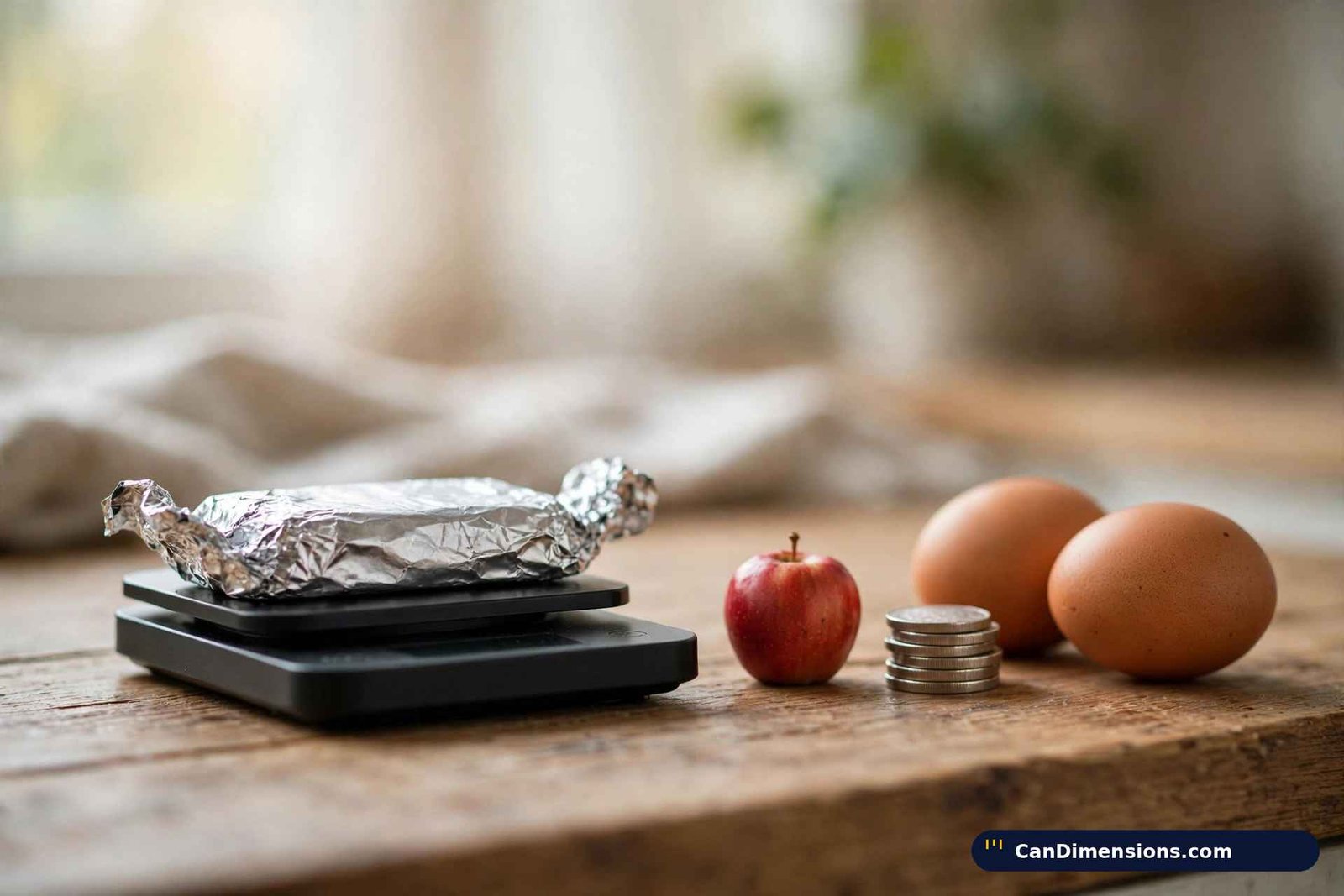
100 grams is a metric weight, but it converts cleanly. The weight conversions below are exact; the cup and spoon rows depend on what you are measuring, because a cup of flour and a cup of water do not weigh the same.
| Unit | 100 Grams Equals |
|---|---|
| Kilograms | 0.1 kg |
| Ounces | 3.527 oz |
| Pounds | 0.2205 lb |
| Milligrams | 100,000 mg |
| Water | 100 ml (about 6.7 tablespoons) |
| Granulated sugar | About 1/2 cup |
| All-purpose flour | About 0.8 cup |
| Table salt | About 1/3 cup |
Two rows deserve a warning. Spoons and cups measure volume, not weight, so the flour and salt rows are estimates based on standard ingredient weights — flour is light and fluffy, salt is dense, and 100 grams of each fills a very different space. And if you think in inches rather than grams, our guide to how big is 10 inches gives you the same kind of everyday anchors on the imperial side.
100 Grams vs 100 Millilitres: When Weight and Volume Match
For water, 100 grams and 100 millilitres are the same thing — that relationship is built into the metric system, and it is why the water row in the table above works. Milk and most thin drinks come close enough that home cooks treat them as equal.
The match stops there. A cup of all-purpose flour weighs about 120 grams, so 100 ml of flour is only about 50 grams; a cup of honey weighs about 340 grams, so 100 ml of honey is roughly 144 grams. Whenever a recipe swaps grams and millilitres for anything thicker or fluffier than water, it is guessing — weigh it instead.
📊 Quick 100-Gram Reference Table
Here is the whole list at a glance. Every row is one of the verified examples detailed below; the popular examples that failed the check — butter, AA batteries and paperclips — are covered honestly in their own sections further down.
| Example | Weight | Checked Against |
|---|---|---|
| A small apple (extra small class) | 101 g | USDA FoodData Central |
| A standard 100 g bar of soap | Exactly 100 g | Labelled net weight |
| 20 US nickels | Exactly 100 g | US Mint (5.000 g each) |
| 40 US pennies (post-1982) | Exactly 100 g | US Mint (2.500 g each) |
| A standard 100 g chocolate bar | Exactly 100 g | Labelled net weight |
| A deck of playing cards | About 90–100 g | Deck weights, ~1.8 g per card |
| Two medium-sized eggs | About 99 g | USDA egg weight classes |
| A computer mouse (Apple Magic Mouse) | 99 g | Apple official tech specs |
| A small banana (6–7 inches) | 101 g | USDA FoodData Central |
| Half a cup of granulated sugar | 99–100 g | King Arthur / USDA ingredient weights |
| 100 ml of water | Exactly 100 g | Density of water, 1 g per ml |
| 20 sheets of A4 paper (80 gsm) | 99.8 g | ISO 216 size × rated grammage |
| 100 US dollar bills | About 100 g | Bureau of Engraving and Printing (~1 g each) |
| A 100 g calibration weight | Exactly 100 g | Certified test weight (ASTM/OIML) |
| A pair of Nintendo Switch Joy-Con controllers | About 101 g | Nintendo specifications (49 g + 52.1 g) |
| A 100 g gold bar | Exactly 100 g | PAMP Suisse minted bar specification |
| Two medium figs | Exactly 100 g | USDA FoodData Central (50 g each) |
| A newborn kitten | About 100 g at birth | International Cat Care (range ~90–110 g) |
17 Common Things That Weigh 100 Grams
Each example below was checked against a manufacturer’s specification, an official standard or reference data before it earned its place. Three famous names from lists like this one — the butter stick, AA batteries and paperclips — keep their headings but are clearly marked as misses, because they do not weigh 100 grams and pretending otherwise would make this list useless for calibrating anything.
A Medium-Sized Apple
The apple is the classic answer, but the size class matters more than most lists admit. USDA food data lists an extra small apple (about 2½ inches across) at 101 grams — almost exactly 100 grams — while its official “medium” apple, at 3 inches, weighs 182 grams. So the 100-gram apple is the small one at the bottom of the bag, not the medium one in the middle.
A Standard Bar of Soap
100 grams is a genuine standard bar size: many bars sold around the world are stamped 100 g on the wrapper, including the Dove Beauty Bar in many markets. Read the wrapper before you rely on it, though — bars sold in the US are often 90 grams (3.17 oz) or 4 ounces (113 g) instead. If your bar says 100 g, that labelled net weight makes it one of the most reliable items on this list.
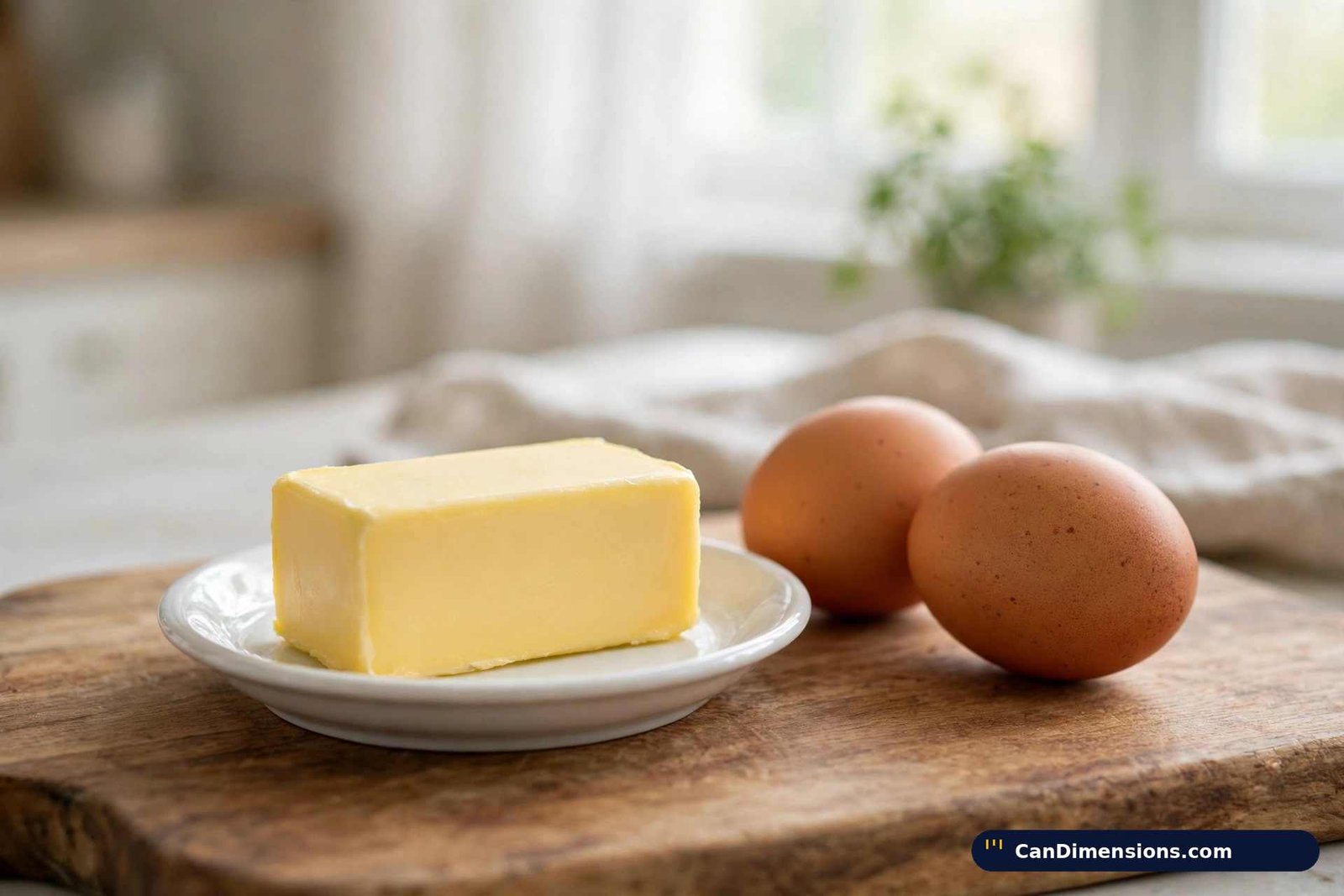
A Stick of Butter
This one is a miss, and it is worth saying plainly. A standard US stick of butter weighs 4 ounces — 113 grams, not 100. If a recipe wants 100 grams of butter, cut about seven-eighths of a stick: seven tablespoons is roughly 99 grams. Close in the hand, wrong on the scale — so butter keeps its heading here but does not count toward the 17.
20 US Nickels (or 40 US Pennies)
The most precise answer on this page costs exactly one dollar. The United States Mint strikes every nickel to a specification weight of 5.000 grams, so twenty of them weigh exactly 100 grams. Pennies work too: every cent minted since 1982 is copper-plated zinc at 2.500 grams, so forty of them also make exactly 100 grams. One caution — cents from before 1982 are mostly copper and weigh 3.11 grams each, so raid a modern change jar, not a vintage one.

A Standard Chocolate Bar
The 100-gram bar is the classic European chocolate format, and it is still everywhere: bars such as the Lindt EXCELLENCE range are sold at a labelled net weight of exactly 100 g. American standard bars run smaller — a regular Hershey’s bar is about 43 grams — so check the wrapper. If it says 100 g, the printed net weight is the chocolate itself, and you are holding exactly 100 grams.
Four AA Batteries
Another popular claim that does not survive a datasheet. Energizer’s official specification for its E91 AA battery gives a typical weight of 23 grams, so four AA batteries weigh about 92 grams — noticeably light. Five would overshoot at about 115 grams. Four AAs are a decent “almost” if you only want to feel the weight, but they are not 100 grams and they are not counted here.
A Deck of Playing Cards
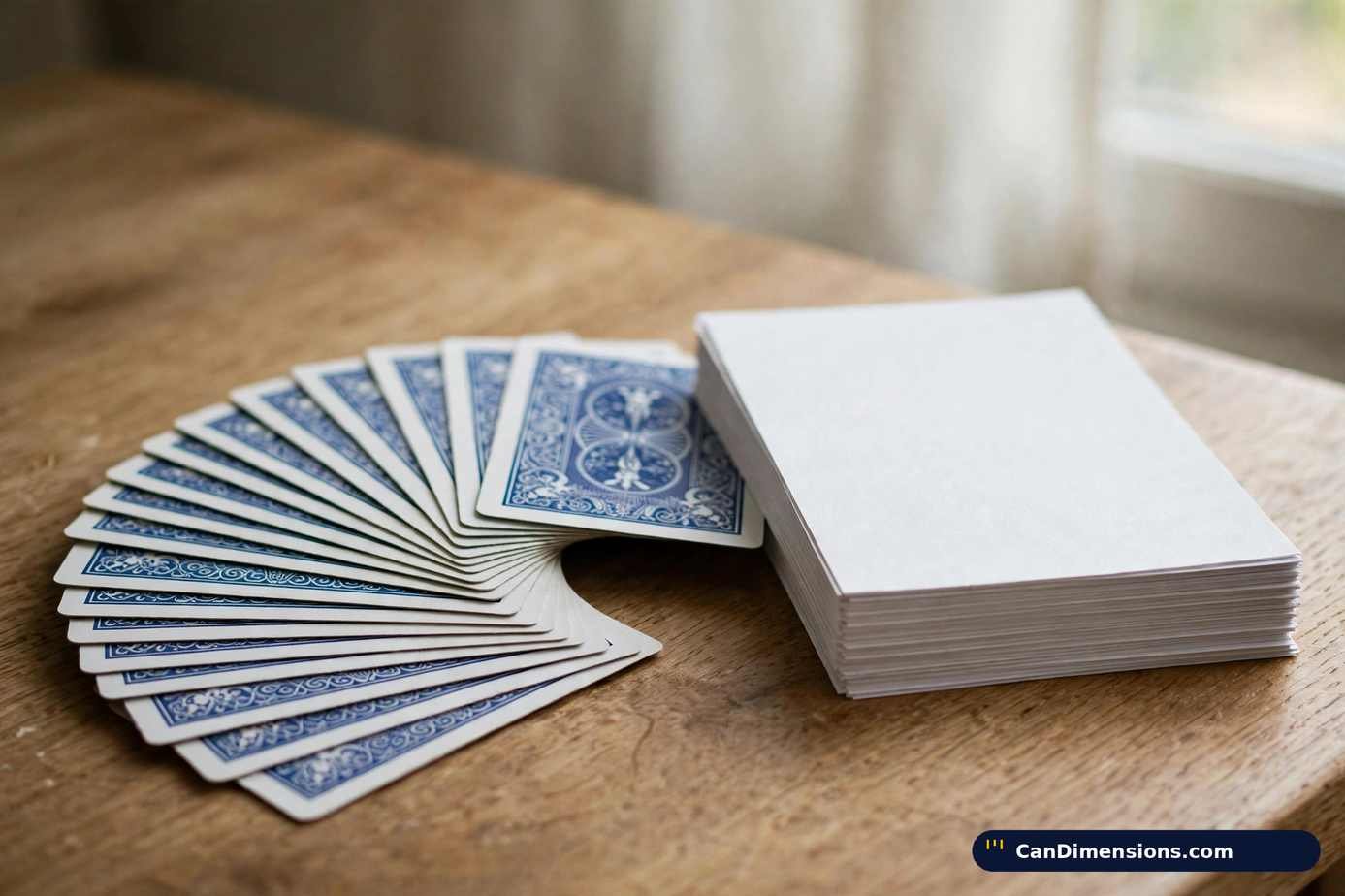
A standard poker-size deck — 52 cards plus the jokers, in its tuck box — weighs roughly 90 to 100 grams; a Bicycle deck sits around 94–96 grams, with each card accounting for a little under 2 grams of that. Decks vary slightly with card stock and finish, so treat this as an “about 100 grams” you can hold, not a calibration standard. The cards themselves are just as standardised as their weight, incidentally — see Pokémon card dimensions for the exact standard card size.
Two Medium-Sized Eggs
Eggs are graded by weight, which makes them surprisingly dependable. The USDA’s medium class means a minimum of 21 ounces per dozen, which works out to about 49.6 grams per egg in its shell — so two medium eggs weigh about 99 grams, effectively 100. Buy the right class, though: two large eggs run about 113 grams, and two small ones only about 85 grams.
100 Paperclips
This is the internet’s favourite answer, and it cannot be verified. No manufacturer publishes an official weight for a standard paperclip, and the estimates that circulate run from about 0.5 grams to 1.4 grams per clip depending on size and wire — which means 100 clips could total anywhere from roughly 50 to 140 grams. A handful of clips is a fine rough guess, but “100 paperclips = 100 grams” is a slogan, not a measurement, so it is not counted here.
A Small Smartphone or Computer Mouse
The heading promises two gadgets; only one of them checks out. No current smartphone weighs anywhere near 100 grams — modern phones run 150 grams and up, and even the lightest recent models sit around 135 grams — so forget the phone. The mouse, though, is a genuine hit: Apple’s official technical specifications for the Magic Mouse give its weight as 0.22 pounds (0.099 kg) — 99 grams, one gram shy of perfect.
A Medium-Sized Banana
Bananas are classified by the USDA in size classes too, and the classes overturn the usual claim. A small banana (6 to 7 inches long) has an edible weight of 101 grams — that is the 100-gram banana. The official medium banana (7 to 8 inches) weighs 118 grams, and a large one 136 grams. So picture the small banana in the bunch, weighed peeled, and you have almost exactly 100 grams.
Half a Cup of Sugar or Salt
Half right — literally. Granulated sugar weighs 198 to 200 grams per cup on standard ingredient charts, so half a cup is 99 to 100 grams: a genuine match, and a useful one for bakers. Salt breaks the pairing. Table salt is far denser, at 288 grams per cup, so half a cup of salt weighs about 144 grams. Sugar yes, salt no — the two should never have shared a heading, but the heading stays and the facts are separated here.
100 Millilitres of Water
The cleanest example of all. Water weighs almost exactly 1 gram per millilitre at room temperature, so 100 ml of water is 100 grams — the relationship the metric system was built around. Measure 100 ml in a jug, pour it into a tared container, and you have a reference weight accurate enough for any kitchen scale.
20 Sheets of A4 Paper (80 gsm)
Printer paper is sold by weight, and the maths is built into the name. Standard 80 gsm paper weighs 80 grams per square metre; an A4 sheet measures 210 × 297 mm, which is 0.0624 square metres, so one sheet weighs about 4.99 grams. Twenty sheets therefore weigh about 99.8 grams — 100 grams for any practical purpose, worked out straight from the paper’s own rating.
100 US Dollar Bills
Every US banknote, from a $1 bill to a $100 bill, is printed on the same cotton-linen stock and weighs approximately 1 gram — that figure comes from the Bureau of Engraving and Printing itself. So 100 bills of any denomination weigh about 100 grams. A strap of one hundred $100 bills is $10,000 that weighs the same as a chocolate bar.
A 100 g Calibration Weight
The most literal answer on the list: a certified 100 g test weight, made by firms such as Mettler Toledo and Ohaus to an exact nominal 100 grams, exists precisely so you never have to guess. If you bake, brew or ship parcels regularly, one of these costs little, lasts forever, and settles every argument with your scale in seconds.
A Pair of Nintendo Switch Joy-Con Controllers
Gamers are holding 100 grams without knowing it. Nintendo’s published specifications put the left Joy-Con at about 49 grams and the right one at about 52.1 grams — together, about 101 grams. Detach the pair, hold one controller in each hand, and you are feeling 100 grams almost exactly.
A 100 g Gold Bar
At the other end of the price scale, a minted 100 g gold bar — PAMP Suisse’s Lady Fortuna is the famous one — contains exactly 100 grams of .9999 fine gold in a bar just 47 × 27 mm. It is the densest way to hold 100 grams: the same weight as the chocolate bar, in something roughly the size of a matchbox.
Two Medium Figs
USDA food data lists one medium fresh fig at 50 grams, which makes the maths pleasingly simple: two medium figs weigh exactly 100 grams. Figs vary with ripeness and water content more than coins or gold do, so treat this as a nature-grade 100 grams — but as listed, it is exact.
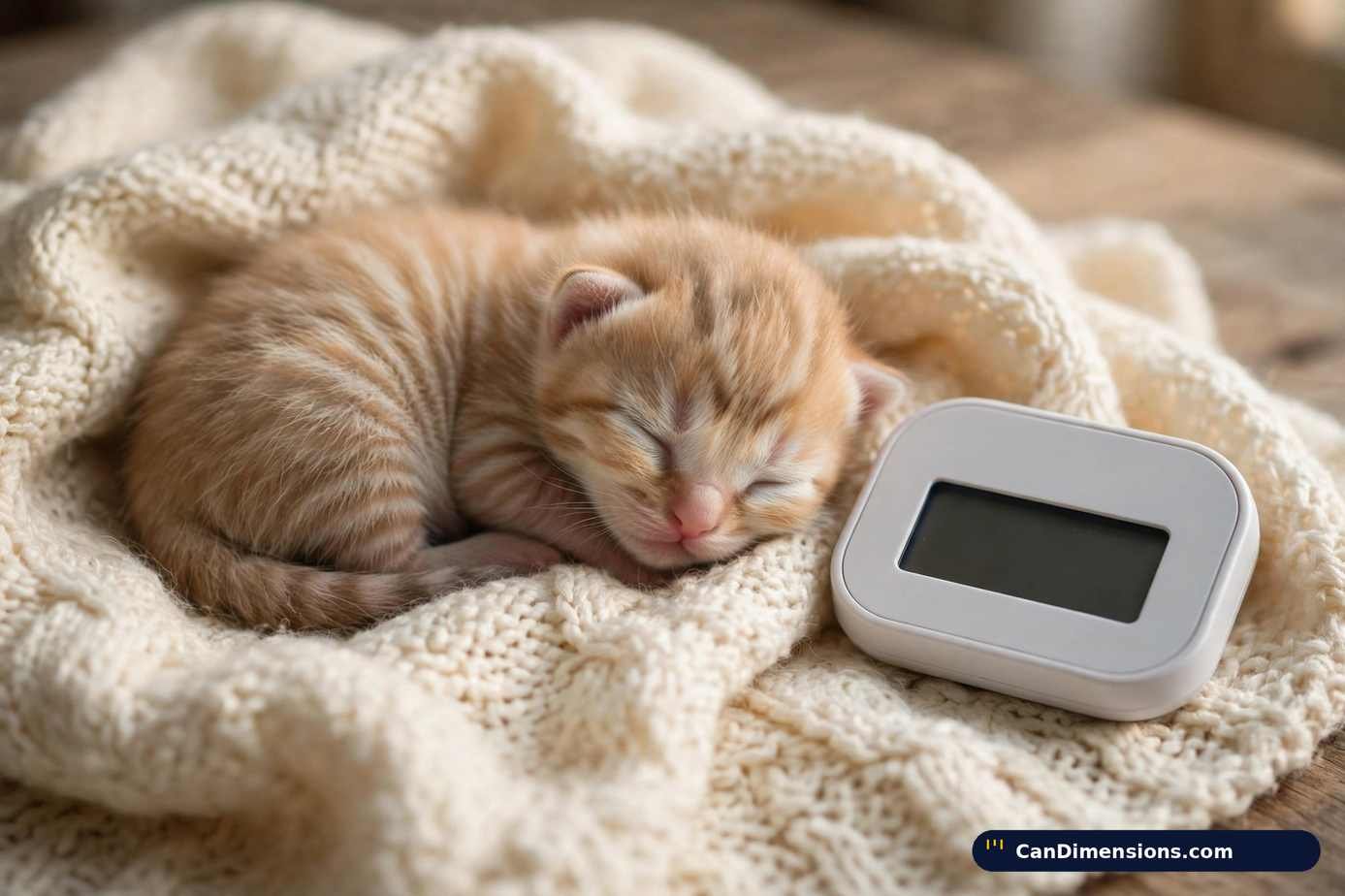
A Newborn Kitten
The softest entry on the list. International Cat Care puts a newborn kitten’s weight at around 100 grams — a healthy kitten typically arrives somewhere between about 90 and 110 grams, and should gain weight steadily from there. Rescues weigh kittens daily on kitchen scales for exactly this reason: at this size, 100 grams is not a curiosity, it is a vital sign.
How to Measure 100 Grams Without a Scale
No scale? You still have options, and the best of them are hiding in your change jar.
Using Coins for Measurement
Coins are the gold standard of improvised weights, because mints hold them to tight specifications. Twenty nickels make exactly 100 grams, and forty post-1982 pennies do the same. Mixing works too — ten nickels (50 g) plus twenty pennies (50 g) also totals exactly 100 grams. Stack them on the scale pan, or balance them against your ingredient on a homemade balance, and you are measuring, not guessing.
Using Measuring Cups and Spoons
Cups work when you respect density. Half a cup of granulated sugar is 99 to 100 grams; 100 ml of water is 100 grams and equals about 6.7 tablespoons or 20 teaspoons; flour needs about 0.8 of a cup to reach 100 grams. What you must not do is swap ingredients inside the same measure — the half-cup that works for sugar gives you 144 grams of salt.
Using Known Food Items
Labelled food is a reference weight you already own. A 100 g chocolate bar, a bar of soap stamped 100 g, or two medium eggs at about 99 grams can all stand in for a scale check. Packaged goods are produced under net-weight rules, so they are more trustworthy than loose produce — an apple can only ever be “about”.
Estimating with Your Hand
For portions rather than precision, your hand gives a rough guide: 100 grams of meat or cheese looks about the size of a deck of cards, or your palm without your fingers. It is a serving-size visual, nothing more — hands differ, cuts differ, and no hand should ever be used to calibrate a scale.
Why 100 Grams Is the Calibration Sweet Spot
Scale makers and testing labs could have standardised on any round number, but 100 grams hits a practical sweet spot. It is heavy enough that a scale’s small errors show up clearly, light enough that a certified weight is cheap and pocket-sized, and it matches the quantities home cooks actually weigh — a portion of flour, a bar of chocolate, a parcel’s first price band. That is why so many check weights, coin tricks and water measures cluster at exactly this number: if your scale reads 100 grams correctly, it is probably honest everywhere else too.
100 Grams of Food: What It Looks Like on a Plate
On a plate, 100 grams is a modest portion, and it helps to picture it. It is about 80 whole almonds — the “20 to 25 almonds” figure that circulates online is the count for one ounce, not 100 grams, since the USDA puts roughly 23 almonds in a 28-gram ounce. It is about half a cup of uncooked rice. It is a palm-sized piece of meat, a small banana or a small apple. Restaurant portions of meat often run two or three times this weight, which is why 100 grams can look surprisingly small when it is served — the weight is real; the expectations are inflated.
Common 100-Gram Myths, Checked
Because this weight is asked about so often, the myths have had time to harden. These are the ones checked and corrected in this guide:
- “A stick of butter weighs 100 grams.” It weighs 113 grams — a full US stick is 4 ounces.
- “Four AA batteries make 100 grams.” Energizer’s datasheet says 23 grams each: four make about 92 grams.
- “100 paperclips weigh 100 grams.” Unverifiable — no maker publishes a clip weight, and estimates span roughly 50 to 140 grams per hundred.
- “Half a cup of salt is 100 grams, like sugar.” Salt is denser: half a cup is about 144 grams.
- “A medium apple or banana weighs 100 grams.” USDA classes put the medium apple at 182 grams and the medium banana at 118 grams; the small sizes are the 100-gram ones.
- “20–25 almonds make 100 grams.” That is an ounce. 100 grams is about 80 almonds.
Question’s
How Much is 100 Grams in Ounces?
Exactly 3.527 ounces — about 3.53 oz, or roughly three and a half ounces.
How Much is 100 Grams in Pounds?
0.2205 pounds — just under a quarter of a pound (a full quarter-pound would be 113 grams).
Is 100 Grams a Lot?
Not really. It is a small apple, a bar of soap or a chocolate bar — a light handful, and a common single portion in recipes.
How to Visualize 100 Grams?
Picture a 100 g chocolate bar, a deck of playing cards, or twenty nickels resting in your palm.
What common object weighs 100 grams?
A labelled 100 g chocolate bar or bar of soap, a certified 100 g calibration weight, or 100 ml of water.
How many pennies weigh 100 grams?
Forty — as long as they are post-1982 zinc cents at 2.5 grams each, per the US Mint specification.
What is an example of 100 grams?
Two medium eggs (about 99 g), a small banana (101 g by USDA classes), or an Apple Magic Mouse (99 g by Apple’s specs).
What can 100 grams be compared to?
A small apple, a standard chocolate bar, or 100 dollar bills — three very different objects that all weigh about the same.
What weighs 100 grams so I can calibrate my scale?
A certified 100 g calibration weight is best. Twenty nickels (exactly 100 g by Mint spec) or 100 ml of water in a tared container also work.
What coins can be used in combination to weigh 100 grams?
Any mix that adds up on Mint weights: 20 nickels, 40 post-1982 pennies, or 10 nickels plus 20 pennies all total exactly 100 grams.
How to weigh 100 grams without a scale?
Use a known reference — coins, a labelled 100 g product, or 100 ml of water — and balance or compare what you are measuring against it.
How big is 100 grams of meat?
About the size of a deck of playing cards, or your palm without your fingers — a visual guide only; the exact size varies by cut.
How many almonds are in 100 grams?
About 80 whole almonds. The often-quoted 20–25 is the count for one ounce — the USDA puts roughly 23 almonds in 28 grams.
Conclusion
100 grams stops being abstract the moment it has anchors: twenty nickels, 100 ml of water, a labelled chocolate bar, two medium eggs. Those are the examples worth remembering, because each one was checked against the people who actually make or measure the thing — the Mint, the USDA, the manufacturer.
Just as useful is knowing which famous examples to retire: the 113-gram butter stick, the 92 grams of AA batteries and the unverifiable paperclips. And if you weigh food, parcels or portions often, a small kitchen scale removes the guesswork entirely — check it once against twenty nickels, and every recipe after that gets easier.