How Many Pounds Is 500 g? 13 Shopping-Basket Things That Weigh 500 Grams
Nobody meets this weight in a laboratory. You meet it at the checkout, because how many pounds is 500 g is printed, in grams, on half the bags and trays in a weekly shop — and the honest short answer is 1.10231 pounds, a little over the one-pound line most imperial shoppers picture.
This page reads the weight the way a shopping basket presents it: pack by pack, tray by tray, bunch by bunch. Thirteen basket items below carry a check behind them — a mint specification, a food database portion, a regulated net-weight label or a maker’s nominal size — so each one can stand in for the weight at home.
Three familiar basket claims fail that check and stay on the page marked as failures: the pair of medium apples, the big soup can and the medium hardcover. A basket list that hides its failures would send you home calibrating a scale with the wrong groceries.

500 Grams in Pounds and Ounces: The Basket Conversion Card
Supermarket labels print grams; most American shoppers think in pounds and ounces. The fixed arithmetic between the two systems never moves, and this weight sits at a tidy point on it — halfway up the kilogram, just past the pound.
- 500 grams = 0.5 kilograms (half a kilo exactly)
- 500 grams = 500,000 milligrams
- 500 grams = 1.10231 pounds (one pound is 453.592 grams)
- 500 grams = 17.637 ounces (one ounce is 28.3495 grams)
- 500 grams = 0.0787 stones
- 500 grams = 2,500 carats (one carat is 0.2 grams)
- 500 grams = 7,716 grains
- 500 grams = 500 millilitres of water (water weighs a gram per millilitre)
Hold on to the gap inside the pound line: this weight overshoots a pound by roughly 46 grams, about nine nickels’ worth of metal. Treating the two as equal under-weighs every parcel and portion by nearly a tenth. For the whole ladder of kitchen weights, our grams to ounces converter runs the same fixed figures rung by rung.
13 Everyday Things That Weigh About 500 Grams
The table gathers the thirteen checked items before the detail. Read the basis column first: mint and maker entries rest on a specification, label entries on the regulated net weight printed on the pack, and database entries on sums worked out from a published portion, with the working shown in each section.
| Example | Weight | Basis |
|---|---|---|
| A standard loaf of bread (500 g size) | About 500 g | Bakery rules; wrapper weight |
| 500 millilitres of water | Exactly 500 g | Water density, a gram per millilitre |
| A standard package of pasta | Exactly 500 g | Regulated net weight on the pack |
| 100 US nickels | Exactly 500 g | US Mint (5.000 g each) |
| A small bag of sugar or flour (500 g size) | Exactly 500 g | Printed net weight |
| Ten large eggs | Exactly 500 g | USDA portion data (50 g per large egg) |
| About 100 seedless grapes | About 490 g | USDA: ten grapes = 49 g |
| Sixty-one sweet cherries | About 500 g | USDA FDC 171719 (8.2 g per cherry) |
| Two 250 g butter blocks | Exactly 500 g | Labelled standard block weight |
| A 500 g pack of beef mince | Exactly 500 g | Labelled net weight (standard tray size) |
| A 500 g bag of coffee | Exactly 500 g | Labelled net weight (standard retail size) |
| A 500 g bag of dried red lentils | Exactly 500 g | Labelled net weight (standard bag size) |
| A single 0.5 kg dumbbell | Exactly 500 g | Maker’s nominal size (ranges start at 0.5 kg) |
A Standard Loaf of Bread
Counted: — an “about” entry, on the printed wrapper. Metric bakery law gives this size a formal place: US state rules for loaf weights admit the metric series 250 g, 500 g, 750 g and multiples of 500 g, and shop shelves back the rule up, stocking loaves whose wrappers declare exactly this weight, from German bakery counters to British brioche.
The word “standard” is where shoppers get caught. An American sandwich loaf usually leaves the bakery at a pound (454 g) or a pound and a half (680 g), and the British standard loaf is fixed at 400 g or 800 g. The basket rule is simple: trust the printed band, never the shape — a loaf sold at this size is a true reference, and a loaf merely loaf-shaped may be nowhere near it.
A 500ml Bottle of Water (Full)
Counted: — with a correction attached: what counts is the fill, not the sealed bottle around it. Water carries a gram in every millilitre, so the 500 ml inside is this weight by definition, the cleanest figure on the page.
Plastic is not weightless, though. An empty bottle of this size adds somewhere around 9 to 15 grams — Beverage Marketing Corporation’s recorded industry average was 9.25 g — so a sealed bottle on a scale settles near 510 to 515 grams. To borrow the weight exactly, pour the water into a jug you have already zeroed; to borrow it roughly, remember the bottle rides a little heavy.
Two Medium-Sized Apples
Not counted: — the pair falls well short, by a margin no rounding can hide. The USDA’s FoodData Central puts the medium apple — the three-inch fruit — at 182 grams apiece, so two together reach only about 364 grams — short of the target by more than a quarter. The claim needs a 250-gram medium apple, yet the USDA’s large class is 223 grams and its extra-large class reaches only about 242 grams.
Reaching the target takes two mediums plus three-quarters of another one. Keep the single fruit in mind as a 180-gram guide for lunchboxes and fruit bowls; as a pair, apples belong to a lighter list than this one.
A Standard Package of Pasta
Counted: — exactly, on the label. Dried pasta is where the half-kilo pack rules longest: in Europe, and in most metric markets beyond it, spaghetti, penne and farfalle leave the factory in bags and boxes declaring 500 grams, enough for four or five main-course plates, which is how the size earned its place.
The Atlantic is the exception to memorise. Pasta packed for the United States more often declares 12 ounces (340 g) or a pound (454 g). Glance at the net-weight line before the box goes in the basket — a pack declaring 500 g holds this weight by law.
A Large Can of Soup or Vegetables
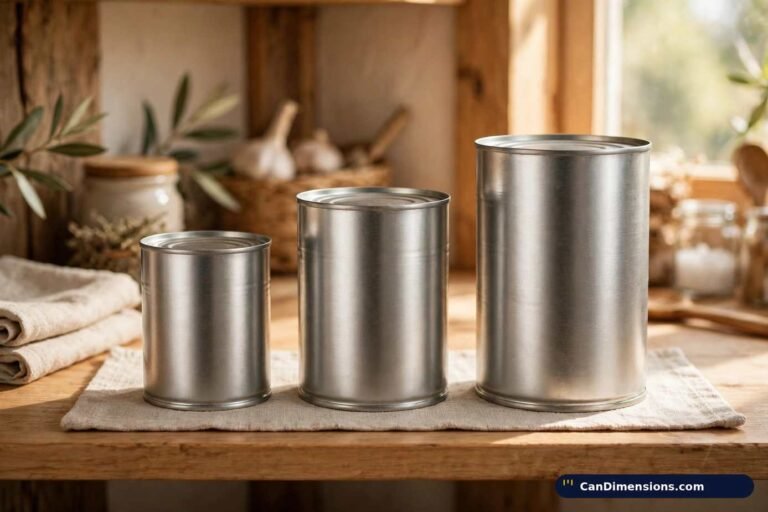
Not counted: — the big can overshoots, and its description mixes two different weights. Take the shelf’s standard big ready-to-eat can, the Campbell’s Chunky line: it is labelled at 18.8 ounces (533 grams) of soup. Contents only, that figure — the tinplate around them adds further grams of its own, so no moment in the can’s life reads 500 grams.
The shelf offers no rescue nearby. Drop a size and the common 15-ounce vegetable can’s contents weigh in at 425 grams. Grocery shelving jumps from the mid-400s into the 530s without pausing at this weight, so the big can is retired here as a “somewhat over” object, not a reference.
100 US Nickels
Counted: — exactly, and the cheapest precision on the page. The United States Mint strikes the nickel to a specification of 5.000 grams — an alloy of 75% copper with 25% nickel, its weight unchanged since the coin’s introduction in 1866 — so one hundred counted coins total exactly this weight.
Because mint figures are tolerances set at manufacture, not estimates gathered afterwards, coin stacks remain the classic home check. Five dollars in nickels, counted slowly onto a pan, will tell you whether a kitchen scale is honest before the shopping comes out of its bags.
A Bag of Sugar or Flour (Small Package)
Counted: — exactly, on the label. Metric shops size the small bag at this weight outright: granulated, brown and powdered sugars, and flours of every grind, sit on the shelf in 500-gram packages, and the figure on the face of the bag is a declaration the packer must legally meet.
Watch for the Atlantic substitution, as with the pasta above. American small bags are frequently a pound (454 g) instead. A face reading 500 g makes the reference exact; a face reading 1 lb leaves it some 46 grams short.
A Medium-Sized Hardcover Book
Not counted: — no standard exists for this category at all. Nothing in publishing sets a weight for a medium hardcover — no publisher’s specification, no printer’s norm, no standards document. Real novels of 300 to 400 pages scatter widely as cover boards, paper stock and trim dimensions change — the same page count can land well under 400 grams or well over 600.
Plenty of single copies do sit near the target, on plenty of shelves. A reference nobody can identify without first weighing it cannot calibrate anything, so the book stays a reading object and leaves the counted list to the groceries.
Ten Large Eggs
Counted: — exactly, on USDA portion data. FoodData Central values a large egg at 50 grams, so the ten-egg box — a standard retail format across metric markets — carries ten times that figure and lands on the target outright. Few items in a basket let you count your way to a weight this cleanly.
Treat the figure as the database’s reference portion rather than a promise about any single shell. Real eggs vary a little with the flock and the season, and a box of mixed sizes drifts with them; a box graded large, though, clusters close enough to audit a scale or anchor a hand.

About One Hundred Seedless Grapes
Counted: — as an “about”, from the same database. The USDA entry numbered 174683 values a set of ten seedless grapes at 49 g in total, a fraction under five grams per fruit, so a hundred grapes — a generous bunch, or two modest ones — come to roughly 490 grams, within a small handful of the target.
Fruit is grown, not machined, so the bunch is an illustration with a database behind it rather than a calibration tool. Small fruit pulls the total down and large fruit pushes it up; counted against the USDA average, though, the hundred-grape bunch is the produce aisle’s most honest handful at this weight.
Sixty-One Sweet Cherries
Counted: — about exactly, on a per-fruit figure verified for this page. USDA FoodData Central entry 171719, for sweet raw cherries, values one cherry at 8.2 grams; multiply by sixty-one and the pile reaches 500.2 grams — a punnet-sized heap that lands on the target almost to the gram.
Cherries vary more than coins do, and a pile of small fruit will stop short while a pile of large fruit runs over. Counted at the database average, though, sixty-one is the number the arithmetic gives, and it turns a market punnet into a surprisingly precise piece of weighing equipment.

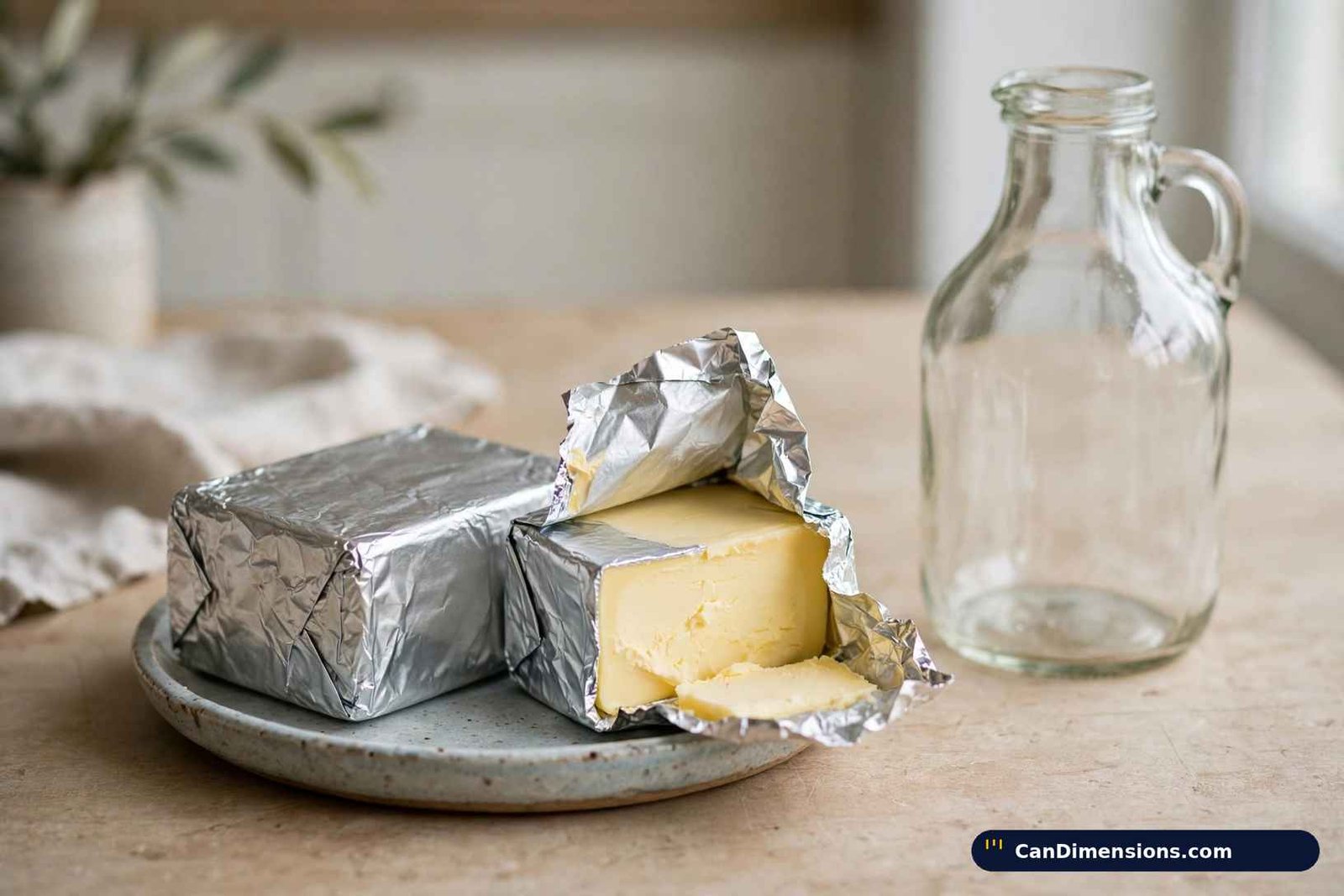
Two 250 g Butter Blocks
Counted: — exactly, on the label, twice. Across Britain and Europe the standard butter block is printed at 250 grams — the size on Tesco, Morrisons and Aldi shelves alike — so two blocks from the dairy case total this weight before either wrapper is opened.
Do not import the American unit into the sum. A US stick weighs 113 grams, and four sticks plus change would be needed to build the same total; the block arithmetic only works because the metric block was sized as a quarter of a kilogram in the first place. Two blocks, still wrapped, are a dairy-case calibration weight.
A 500 g Pack of Beef Mince
Counted: — exactly, on the label. The fresh-meat tray is sized at this weight as the supermarket standard: Tesco, Asda, Sainsbury’s and Aldi all sell their everyday beef mince in packs whose net contents read 500 g, lean and regular grinds alike, making the mince tray one of the most repeated declarations on the shelf.
Cooking changes the story, not the reference. Raw, in its tray, the pack is this weight by declaration; fried, it sheds fat and water and lands far lighter, which is a portion fact rather than a weighing one. American ground beef, for contrast, is more often packed by the pound.
A 500 g Bag of Coffee
Counted: — exactly, on the label. Retail coffee is sold on a short ladder of bag weights — 250 g, 500 g and 1 kg are the standard sizes packaging guides list — and the middle rung is a bag whose regulated net weight is this weight, whole bean or ground.
The bag itself adds a few grams of film and valve, so weigh the declaration, not the package, if the bag ever goes on a scale. As a basket reference it needs no scale at all: the size is the weight, printed on the front, and a household that drinks coffee daily usually has the reference already in the cupboard.
A 500 g Bag of Dried Red Lentils
Counted: — exactly, on the label. Dried pulses are packed small, and the small bag of red split lentils on British shelves — Tesco’s own label and brands such as Great Scot — is printed at 500 g, the standard bag for an ingredient bought a few meals at a time.
Lentils earn a second mention for what happens next: boiled, they take on water and roughly double, so the cooked pot is far heavier than the bag. The reference is the dry bag as sold, and it keeps indefinitely in the cupboard — the longest-lived calibration weight in the basket.
A Single 0.5 kg Dumbbell
Counted: — exactly, on the maker’s nominal size, and the one counted item bought outside the food aisles. Studio and neoprene dumbbell ranges begin at 0.5 kg — FORZA’s neoprene hex range, to name one maker, runs from 0.5 kg upward — and each piece in that smallest size is manufactured to a nominal 500 grams, sold singly or in pairs.
Mind the pair trap: the counted object is one dumbbell, not the pair, which together make a kilogram. The smallest weight on the rack is also the easiest to borrow — a single 0.5 kg piece in a coat pocket carries this page’s weight into any room in the house.

How to Measure 500 Grams Without a Scale
Start with the basket itself. Lift a mince tray in one hand and a coffee bag in the other; both declare the same weight, and holding the pair teaches your grip what the figure feels like in two different shapes — flat and dense from the meat case, soft and shifting from the coffee shelf. Carry that paired sensation to the market, where loose produce has no label to read.
For a checkable method, build the coin balance. Rest a ruler across a pencil as a fulcrum, hang a bag holding a hundred nickels from one end and the item being tested from the other, and shift the item’s bag until the ruler floats level — at balance, it matches the coins’ mint-fixed total. The same trick scales down through the family: five hundred of the banknote-weight pieces in our things that weigh 1 gram guide rebuild this weight one gram at a time.
Water closes the method list. Set an empty jug on any inexpensive scale, zero it, pour to the 500-millilitre line, and the tap has manufactured the exact weight for you — the one reference on this page that can be remade, free, in any kitchen on earth.
The Half-Kilo Shelf: Why Shops Sell in 500 g
Walk a metric supermarket with this weight in mind and a pattern emerges: the shelf is built on a decimal ladder. Butter climbs it in 250 g blocks, mince and lentils sit on the 500 g rung, and coffee, flour and sugar step from that rung to the full kilogram. Pack sizes were chosen so the arithmetic between them is trivial — two blocks, two trays or two bags always make the next round number.
The ladder is also a portioning system. A tray sized at this weight divides into four ordinary servings without a scale ever leaving the drawer, and a bag of pasta at the same size feeds a household in one cooking. Retailers did not settle on the half-kilo by accident; it is the largest pack a single meal routinely consumes and the smallest a weekly shop routinely stocks.
That is why the references multiply so easily here. Fifty of the two-nickel builds in our how much is 10 grams guide stack up to this weight, and every rung of the shop’s ladder is the same trick at a larger size — counted, labelled, and checked before it is trusted.
Comparing 500 Grams to Other Common Weights
500 Grams vs. 1 Pound
The shelf edge is where this confusion lives, because the two figures sit close enough to pass for each other in the hand. They are not equal: a pound is 453.59 grams, so the basket weight clears it by about 46 grams and converts to 1.10231 pounds exactly. The difference is roughly nine nickels — small in a palm, decisive on a postage scale or in a recipe scaled by feel.
Shoppers meet the gap as packaging. The same product crosses the Atlantic and shrinks from a 500 g declaration to a one-pound one, losing a tenth of its contents to the unit change. Reading the grams line, where one is printed, is the only reliable way to know which of the two weights is actually in the basket.
How 500 Grams Relates to Other Metric Weights
250 grams is half of this weight. One butter block, fifty nickels or 250 millilitres of water — the quarter-kilo is the size of single-meal packs and small produce bags.
1 kilogram is double this weight. Two mince trays, two coffee bags or two hundred nickels; the kilo is the ladder’s top rung for most weekly staples, converting to 2.20462 pounds.
100 grams is a fifth of this weight. Twenty nickels or a plain bar of soap; nutrition panels use it as their reference serving, and our guide to what weighs 100g puts that smaller weight through the same item-by-item checking.
Market-Stall Arithmetic: Loose Produce at 500 Grams
Loose produce is where this weight stops being printed and starts being counted. Stallholders weigh to order, but a shopper who knows the database portions can order by number instead: ten large eggs from the graded box, a hundred grapes by the bunch, sixty-one cherries by the punnet. Each count was built earlier on this page from a USDA portion figure, and each lands on or beside the target.
The same arithmetic exposes its own limits one stall over. Potatoes defeat counting: the USDA’s medium russet is recorded at 173 grams, so three of them reach about 519 grams — close, visibly plausible, and honestly over. Produce portions are averages over a crop, not tolerances off a production line, and the stall scale remains the referee whenever the count and the target disagree.
Used the right way, the counts are still the fastest shopping skill on this page. They let you fill a basket to a recipe’s weight before you reach the till, and they turn the produce aisle into the one part of the shop where the reference weights are sold by the piece.
Half-Kilo Traps: When 500 on the Pack Is Not 500 g
Volume is the first trap. A 500-millilitre bottle or jug promises nothing about weight until density has its say: at a density near 0.91 g per millilitre, olive oil gives only about 455 grams to the 500-millilitre bottle, while honey, at about 1.42 times water’s density, packs roughly 710 grams into the same 500 millilitres — which is why a 500 g jar of honey holds barely 350 millilitres. Only water converts one-for-one.
Air is the second trap, and ice cream is its showcase. A tub sold as 500 millilitres has been whipped with air before freezing, so the grams printed beside the millilitres are the smaller of the two numbers — volume the whisk added, at almost no weight. The sealed water bottle from the examples list is the same lesson in miniature: packaging and air both ride along, and neither appears in the headline figure.
The defence is the habit this page is built on — read the gram line, count from a specification, or pour water. The same density trap runs at smaller sizes too, and our guide to what weighs 300 grams checks that weight’s cans and bottles with the same suspicion.
Question’s
What is something that weighs 500 grams?
A mince tray from the meat case, ten large eggs, or a bag of coffee from the middle rung of the coffee ladder. A loaf or a pasta pack printed at this size does the same job.
What weighs 500 grams to calibrate my scale?
A certified test weight, made at exactly this size, is the purpose-built answer. At home, a hundred nickels reach the figure exactly, and a jug filled to the 500-millilitre line, zeroed empty first, matches them.
What does 500 grams look like?
The heaviest single item in an ordinary basket: a mince tray, a coffee bag or a loaf-shaped parcel. In one hand it registers as a firm, deliberate lift.
What is 500g equal to?
Half a kilogram, exactly. In imperial units it is 1.10231 pounds, or 17.637 ounces.
Does 500 g equal 1 lb?
No. A pound is 453.59 grams, so this weight clears it by about 46 grams — roughly nine nickels heavier.
How many nickels are 500 grams?
One hundred. The Mint fixes each nickel at 5.000 grams, and a hundred of them land exactly on the target.
What household object weighs 100g?
A plain bar of soap, at about 100 grams. Twenty nickels build the same weight exactly; a medium apple does not, since the USDA records it at 182 grams.
How much is 500 grams of food?
By the cup it shifts with the ingredient: flour needs a little over four cups, sugar only two and a half, and water measures out at 500 millilitres outright.
Is 500g of meat a lot?
For one diner, yes — it is about four standard servings before cooking. For a family sauce or a stew, it is a single ordinary pack.
Conclusion
A weekly shop turns out to be a weighing kit in disguise. The mince tray, the coffee bag, the lentil bag and the pair of butter blocks all declare the same regulated figure; the eggs, grapes and cherries reach it by database arithmetic; the nickels and the lone dumbbell reach it by specification. Behind every route stands the body that fixes the number — a mint, a database, a packer bound by its label, a maker bound by its size run — and that backing, not the familiarity of the item, is what earned each one its place.
Keep the failures beside the references: apples that fall a quarter short, a soup can that overshoots before its steel is even counted, a book with no standard at all, and every 500-millilitre pack whose contents are lighter or heavier than water. Learn the basket’s honest half-kilo, and the smallest dumbbell on the gym rack stops being exercise equipment and becomes what it also is — the same 500 grams, cast in iron, waiting to check any scale in the house.