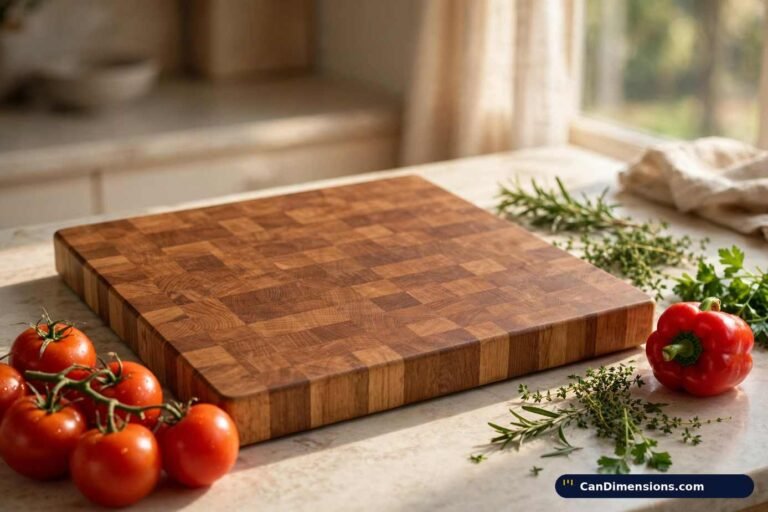
6 Inches: 11 Things with Pictures That Are 6 Inches Long
Six inches is the most reached-for small measurement in American life — and if you are asking how long is 6 inches compared to an object, the cleanest answer is the long edge of a 4 × 6 photograph. Six inches is exactly 15.24 centimetres, 152.4 millimetres, and precisely half a foot.
The catch is that the internet’s favourite 6-inch examples are not all honest. Every object below was checked against a maker specification, an official standard or a reference database before it was counted, and four famous examples fail that check — a brand-new pencil, a pocket comb, an eyeglasses case and a named sandwich among them. They stay on the page under their original headings, corrected, so nobody repeats them.
You will get the exact conversions first, then 11 verified things that are 6 inches long, a ruler-free measuring section with the hand myth corrected, a comparison against the neighbouring sizes, and short answers to the questions people actually ask about this length.
How Long Is 6 Inches?
Six inches is exactly half a foot, which is the easiest way to hold it in your head: two of them, end to end, make the 12-inch foot on every ruler. Its metric conversions are fixed numbers, not estimates:
| Unit | 6 Inches Equals |
|---|---|
| Feet | 0.5 feet |
| Yards | 0.1667 yards |
| Centimeters | 15.24 cm |
| Millimeters | 152.4 mm |
| Meters | 0.1524 m |
The comparison usually offered next is your own hand — 6 inches is often described as “roughly the distance from your wrist to the tip of your middle finger on an average adult hand.” That one is wrong, and it matters because people measure with it. The US Army’s ANSUR II anthropometric survey, which measured thousands of adults, puts the median hand length (wrist crease to middle fingertip) at 7.6 inches for men and 7.1 inches for women; even the smallest five percent of women’s hands start at 6.5 inches. An average hand is a 7-inch-class measure, not a 6-inch one. The honest pocket references are below.
11 Common Things That Are 6 Inches Long
Every example under this heading was checked before it was counted. Eleven pass — some exactly, on a maker’s specification or an official size class, and some as honest “about” matches where the corrected basis is stated in the section. Four of the original examples fail, and they stay below as corrected warning sections, clearly marked, so nobody repeats them.
| Thing | Verified size | Counted? |
|---|---|---|
| US dollar bill | 6.14 in long (Bureau of Engraving and Printing) | Yes — about, corrected basis |
| Standard new pencil | 7.5 in unsharpened (19 cm) | No |
| Subway six-inch sandwich | A menu name, not a specification | No |
| Modern smartphone | Pixel 8a body 5.99 in tall (152.1 mm) | Yes — corrected basis |
| Standard eyeglasses case | About 6.4–6.5 in (maker specs) | No |
| Pocket comb | 5 in (the standard Ace/Goody model) | No |
| A 6-inch round cake pan | 6 in diameter (Wilton maker’s size) | Yes |
| A 4 × 6 inch photo print | Long edge exactly 6 in | Yes |
| A 4 × 6 inch index card | Long edge exactly 6 in | Yes |
| A USPS postcard at its maximum size | Long edge exactly 6 in (postal standard) | Yes |
| A 6-inch ruler | 6 in (the half-foot ruler) | Yes |
| A 6-inch terracotta pot | 6 in across the rim (trade size) | Yes |
| A 6-inch embroidery hoop | 6 in diameter | Yes |
| A 3 × 6 inch pillar candle | 6 in tall | Yes |
| A small banana | USDA small class starts at exactly 6 in | Yes — corrected basis |
US Dollar Bill
Counted: as an honest “about,” on a corrected basis. Every US note, of every denomination, is made to one fixed size by the Bureau of Engraving and Printing: 6.14 inches long by 2.61 inches wide. That is not exactly 6 inches — it is 0.14 of an inch over, about the thickness of two credit cards — so the claim that the bill measures “exactly” 6 inches, repeated on the original page, does not survive its own number.
Counted anyway, with the gap printed, because nothing else in a wallet comes closer: a bill is a government-made object of a guaranteed size, and 6.14 inches is near enough for any everyday estimate as long as you know it runs a hair long. A bill does double duty as a reference, too — a single note weighs about a gram, which is why it anchors our guide to things that weigh 1 gram, and its full official dimensions are set out in our dollar bill dimensions guide.
Standard New Pencil
Not counted: a brand-new pencil is nowhere near 6 inches. The classic American school pencil — the Dixon Ticonderoga is the reference example — has an unsharpened length of 19 centimetres, which is 7.48 inches, conventionally rounded to 7.5. That is the size with the eraser on, straight out of the box, before a single sharpening.
So the original claim — a new #2 pencil at “approximately 6 inches,” standardised by Dixon and Paper Mate across the industry — is wrong by an inch and a half, roughly a quarter of the pencil. Sharpening only brings it down toward 7 inches, never to 6. A pencil is a fine reference for 7.5 inches; used as a 6-inch ruler it will overshoot everything you measure with it. It stays here as a warning because it is probably the most repeated 6-inch claim on the internet after the sandwich below.
Subway Six-Inch Sandwich
Not counted: “six-inch” here is a name on a menu board, not a measurement anyone guarantees. The sandwich is made by cutting the chain’s footlong bread in half, and baked bread does not hold an exact length — that is not an opinion, it is a court record. In the federal Subway Footlong litigation, the evidence established that the unbaked dough sticks are uniform but the baked rolls vary with the natural variability of baking, some falling slightly short of 12 inches; the Seventh Circuit decided the case in 2017.
Half of a loaf that is itself only approximately 12 inches cannot be exactly 6 inches. Nothing in the chain’s own testing, as the courts recorded it, promises a 6.00-inch sandwich. Enjoy it as lunch; do not measure with it.
Modern Smartphone
Counted: on a corrected basis — a named model, not a range. The original page says most modern smartphones measure “between 5.8 and 6.1 inches in height.” As a claim about phone bodies, that range is wrong at the top: the standard flagships stand just under 5.9 inches (Apple’s iPhone 16 is 5.81 inches tall, Samsung’s Galaxy S24 is 5.79), and the 6.1-inch figure belongs to screen diagonals and larger Plus and Max models, not to the body of a typical phone.
The honest version names a phone. Google’s Pixel 8a has a specified body height of 152.1 millimetres, and 152.1 mm is 5.99 inches — one hundredth of an inch under 6. If your phone is a Pixel 8a, you are carrying a 6-inch reference; if it is almost any other standard model, you are carrying about 5.8 inches, and the difference is worth knowing before you measure a shelf with it.
Standard Eyeglasses Case
Not counted: the standard hard case runs long. Maker and retailer specifications for ordinary clamshell eyeglasses cases cluster at 6.4 to 6.5 inches long — the Pyramex CA500B eyewear case, a typical zippered hard case, is specified at 6½ × 3½ × 2 inches, and common hard sunglasses cases are listed at 163 to 165 millimetres long, the same 6.4-to-6.5-inch band. No standard case specification lands on 6.0 inches.
The original claim — “almost exactly 6 inches” — is off by nearly half an inch, which at this scale is the whole margin. A case protects your glasses well; as a ruler it will add a phantom half-inch to everything. It stays here because it is quoted everywhere, and it is wrong everywhere it is quoted.
Pocket Comb
Not counted: the standard pocket comb is a 5-inch object. The comb the original page is picturing — the classic Ace pocket comb, sold today under the Goody Ace name — is literally a named product: the “ACE Hair Comb, 5-Inch Fine Tooth Pocket Comb.” Five inches is the size the category is built around, chosen so the comb disappears into a shirt or jeans pocket.
Other combs exist at other lengths — dressing combs run 7.5 inches, some pocket models 5.25 — but 6 inches is not the standard the page claims, and no major maker’s pocket-comb specification sits there. The comb belongs on a 5-inch list. It is kept here, corrected, because “pocket comb equals 6 inches” is one of those claims that sounds too tidy to check — and tidiness is exactly what gave it away.
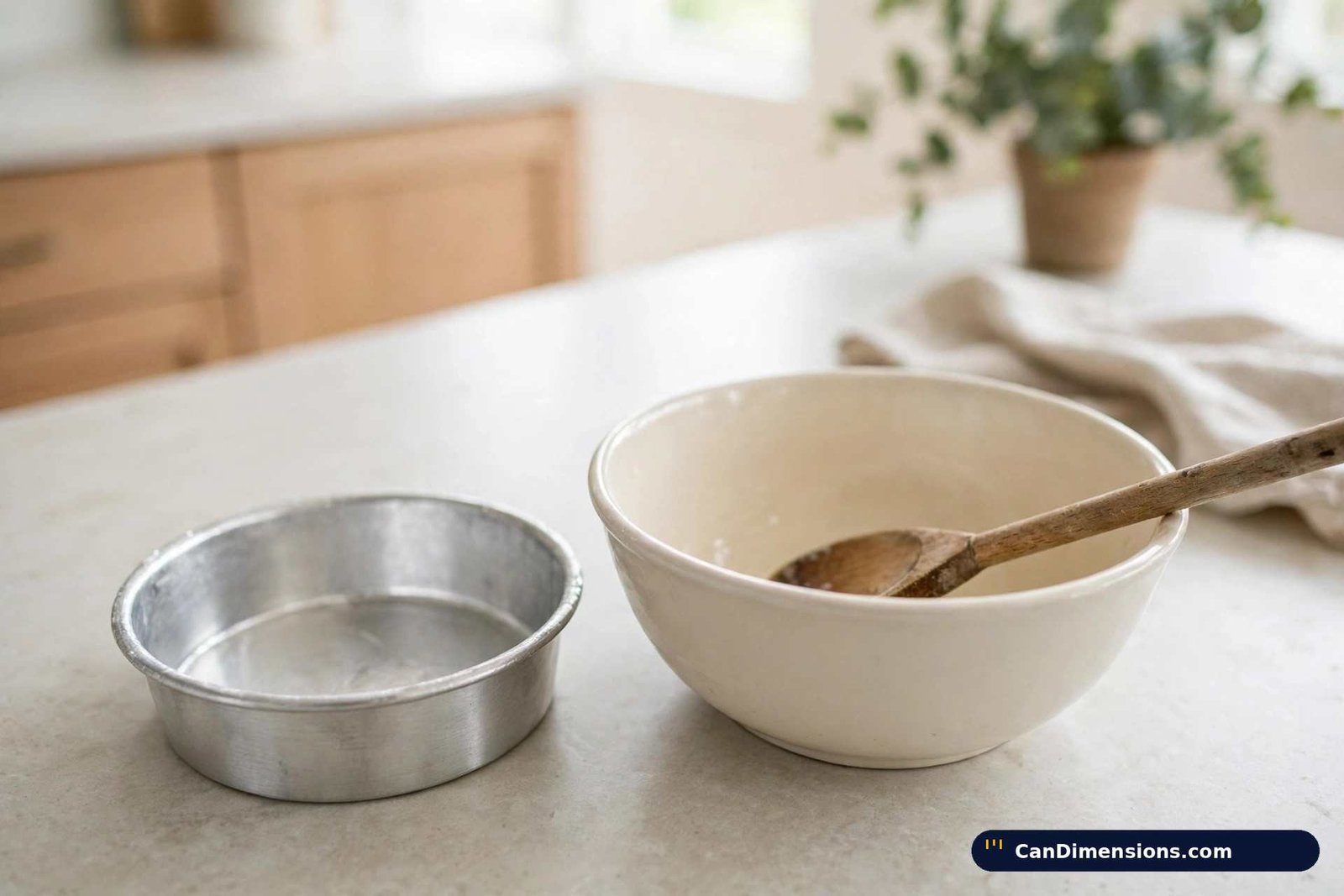
A 6-Inch Round Cake Pan
Counted: exactly, on the maker’s own size. The 6-inch round is one of the core small sizes on Wilton’s cake pan charts and in every pan conversion table — 6 inches across, the pan sold for smash cakes, small layers and the bottom tier of stacked cakes, in 6 × 2 and 6 × 3 inch versions. Retailer specification tables for Wilton’s 6-inch pans list the item diameter at 6 inches.
Pans are sized by their inside measurement at the top, which is the dimension recipes depend on, and a pan is a manufactured object: every unit of the model comes out at the stated size. If a 6-inch cake pan is in the cupboard, your 6 inches is settled.
A 4 × 6 Inch Photo Print
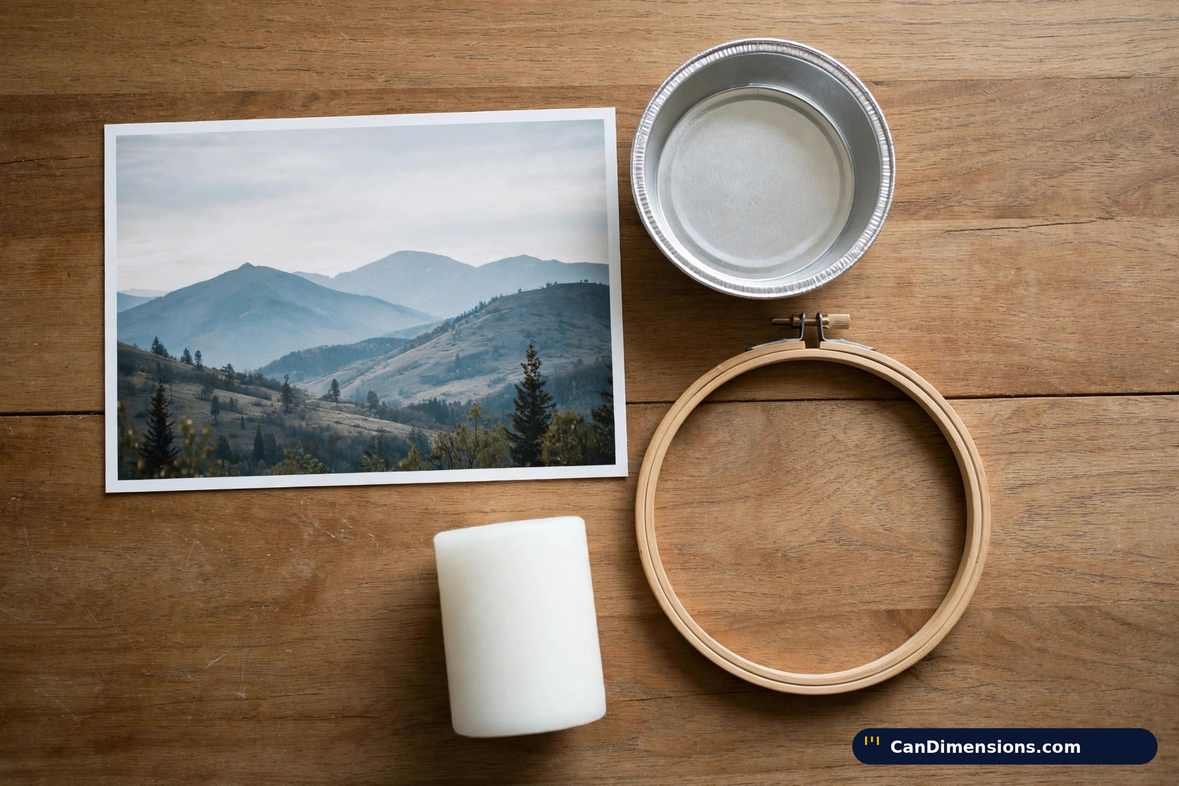
Counted: exactly — the long edge is 6 inches by the print standard. The 4 × 6 is the default photo print size in the United States, and its dimensions are a fixed standard, 4 inches by 6 inches (101.6 × 152.4 millimetres — the same 152.4 mm this page started with). Every lab, kiosk and online print service cuts to it.
This is the reference the introduction promised: a photo print is stiff, straight-edged and already in most houses. Hold its long edge against anything and you are measuring with a true 6 inches, not an approximation.

A 4 × 6 Inch Index Card
Counted: exactly — the long edge is 6 inches. Index cards come in a small set of standard sizes, and 4 × 6 inches is the middle one, between the 3 × 5 card and the 5 × 8. The size is the product’s name and its specification: a pack sold as 4 × 6 contains cards that measure 4 inches by 6 inches.
The original page mentions index cards only in passing, under school supplies, but the card deserves its own place on the counted list: it is a rigid, right-angled, exactly-6-inch object that costs pennies and lives in desk drawers everywhere. For measuring, it beats every flexible or baked reference on this page.
A USPS Postcard at Its Maximum Size
Counted: exactly — by postal law, at the ceiling. The US Postal Service’s mailing standards define what may travel at the postcard rate: at least 3.5 inches high by 5 inches long, and no more than 4.25 inches high by 6 inches long. A postcard made to the maximum permitted size has a long edge of exactly 6 inches, set not by a manufacturer’s habit but by the Domestic Mail Manual.
The everyday 4 × 6 postcard sits just inside that ceiling, which is why the standard card and the maximum are nearly the same object. Either way, the long edge of a standard postcard is a regulated, checkable 6 inches — one of the few everyday lengths with a rulebook behind it.
A 6-Inch Ruler
Counted: exactly, by definition. The short ruler — the half-foot ruler sold for pencil cases, geometry sets and glove compartments — is a 6-inch measuring edge, made to the same inch standard as the 12-inch ruler it halves. It sounds circular to list a ruler as a thing that is 6 inches long, but it earns its place for one reason: it is the reference every other object on this page is ultimately checked against.
If you own one, the search that brought you here is over. If you do not, the photo print and the index card above are its equal in accuracy and already in your house.
A 6-Inch Terracotta Pot
Counted: exactly, on the trade size. Flower pots are sold by the diameter across the rim, and 6 inches is one of the standard steps in every garden range — the size most herbs, small houseplants and starter vegetables are sold in. A pot sold as 6-inch measures 6 inches across the top, inside the rim, which is the dimension the grower plants into.
One honest limit, printed because this page prints them: clay pots are moulded and fired, so a cheap pot can sit a small fraction off its stated size in a way a steel pan cannot. The stated size is the standard, and for any everyday purpose the rim of a 6-inch pot is 6 inches.

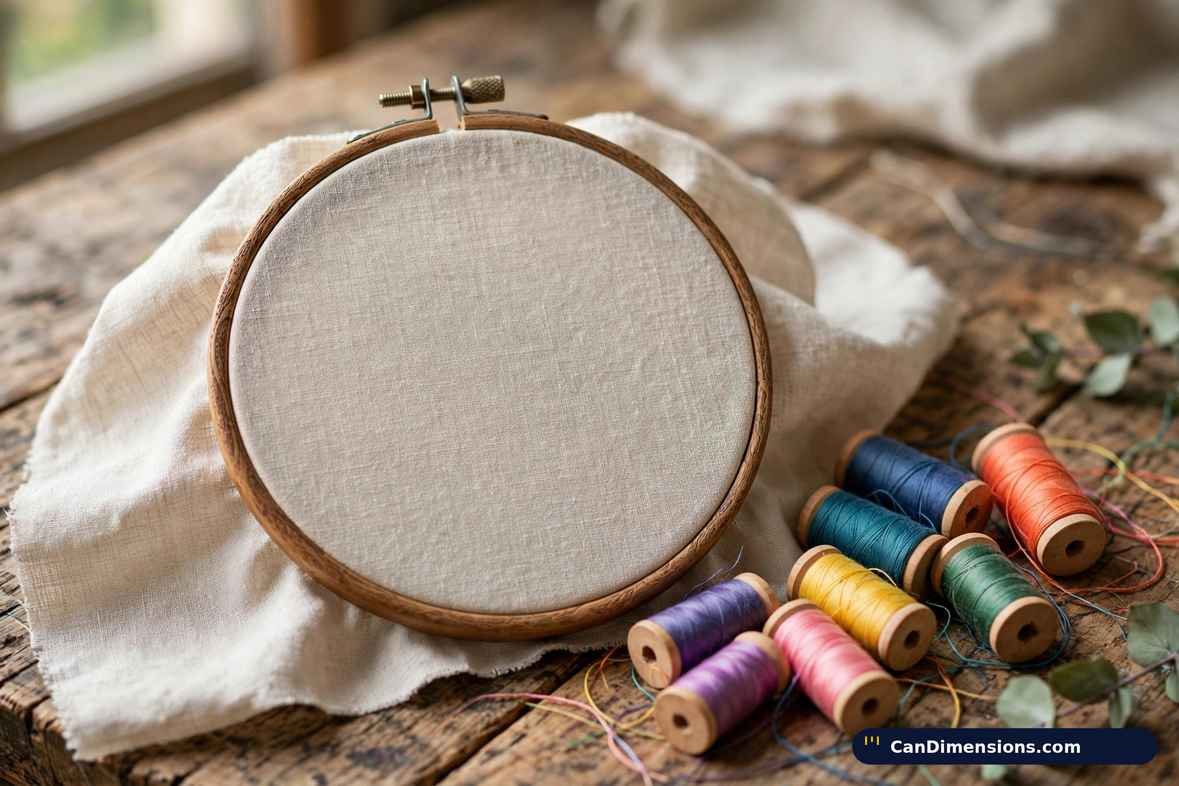
A 6-Inch Embroidery Hoop
Counted: exactly, as a standard stocked size. Embroidery hoops are sold by diameter in whole-inch sizes, and 6 inches is one of the standard steps in every maker’s range — the size most small hoop-art and beginner stitching projects are built around. The hoop’s stated size is its working diameter, the circle that holds the fabric.
Hoops run from tiny 3-inch frames up to 14 inches and beyond, and the sizes in between are as regular as pan sizes. A 6-inch hoop is a true circle of a stated diameter, which makes it a better reference than most round objects in a kitchen.
A 3 × 6 Inch Pillar Candle
Counted: exactly — 6 inches tall by its size name. Pillar candles are sold by diameter and height together, and 3 × 6 inches is one of the standard pairs on every candle maker’s list: 3 inches across, 6 inches tall. The height is the product’s stated dimension, printed on the label, and a moulded candle holds it.
Candles are a quietly useful reference because they are rigid, straight-sided and common — a 3 × 6 pillar on a shelf is a 6-inch vertical measure that never needs batteries or a signal. Burn it down, of course, and the reference burns with it; measure with a fresh one.
A Small Banana
Counted: on a corrected basis, and the correction is the whole point of the example. Bananas are not one size, but they are classified by length, and the USDA’s FoodData Central entry sorts them into classes: extra small under 6 inches, small from 6 to just under 7 inches, medium 7 to just under 8, large 8 to just under 9. A banana at the bottom of the small class measures exactly 6 inches — the smallest banana that is not “extra small.”
So the honest claim is narrow: not “a banana is 6 inches,” but “a small banana starts at 6 inches.” For scale, the USDA’s small banana weighs 101 grams — very nearly what weighs 100 grams — and the medium fruit most people picture is a 7-to-8-inch object, a full size class up.
How to Visualize 6 Inches Without a Ruler
These object-based methods help you estimate 6 inches quickly — with the two methods the original page rated most highly corrected, because one of them is a 7.5-inch object and the other is a 7-inch-class body part:
| Method | Accuracy | How To |
|---|---|---|
| 4 × 6 Photo or Index Card | ★★★★★ | Long edge of any standard print or card |
| US Dollar Bill Length | ★★★★★ | Any bill in your wallet — 6.14 in, a hair over |
| Half of a 12-Inch Ruler | ★★★★★ | The common ruler, folded in half mentally |
| 6-Inch Cake Pan or Hoop | ★★★★☆ | Any pan or hoop sold at the 6-inch size |
The most reliable method is the photo print or index card — a rigid 4 × 6 whose long edge is exactly 6 inches. The dollar bill runs a close second at 6.14 inches. What not to use: a new pencil (7.5 inches unsharpened, corrected above) and your own hand — wrist to middle fingertip averages 7.1 to 7.6 inches across adults, so a hand-span estimate built on “about 6 inches” will overshoot by more than an inch every time.
Where Does 6 Inches Appear in Daily Life?
Kitchen & Food: The honest kitchen 6 inches is the small cake pan — the Wilton 6-inch round — joined by the 3 × 6 pillar candle on the counter. The famous food example, the six-inch sandwich, is a menu name rather than a measurement, as its section above shows; the kitchen’s real references are manufactured ones.
Wallet & Pocket: A US dollar bill at 6.14 inches means every American with cash is carrying a near-6-inch measuring tool, and the 4 × 6 postcard and photo print ride in the same pockets and drawers. The two pocket items usually quoted at exactly 6 inches — the eyeglasses case and the pocket comb — are not: the case runs about 6.5 inches and the comb is a 5-inch product, both corrected above.
Tech & Gadgets: One named phone, Google’s Pixel 8a, stands 5.99 inches tall; most other standard smartphones stand about 5.8. Six inches is the ceiling of the standard phone class rather than its middle — the bigger figures quoted for phones are screen diagonals or the larger Plus and Max bodies.
School & Office: The 4 × 6 index card embeds an exact 6 inches into American classrooms and offices, and the 6-inch pencil-case ruler halves the school ruler precisely. The classroom’s other famous object, the new pencil, is a 7.5-inch reference — the most useful correction on this page for anyone who measures with one.
6 Inches Conversion Chart (CM, MM, Feet and Meters)
The formula is simple — multiply inches by 2.54 to get centimetres — and this chart is the same 6 inches stated in every unit a reader is likely to need, so it can be read off directly.
| Unit | 6 inches equals |
|---|---|
| Centimetres | 15.24 cm |
| Millimetres | 152.4 mm |
| Metres | 0.1524 m |
| Feet | 0.5 ft |
| Yards | 0.1667 yd |
The millimetre figure is the one people stumble on, because 152.4 mm is hard to picture on its own. It helps to anchor the small end of the scale separately — our guide to 2 mm shows what a single small metric unit looks like against coins and card, and 6 inches is simply 76.2 of those laid end to end.
Is 6 Inches Big?
It depends on what it is the size of, and the honest answer is: hand-sized. Six inches is exactly half a foot — large for a comb or a candle’s width, small for a shelf or a scarf. It is roughly the size of the things you hold in one hand: a phone, a photo print, a small pan.
Two paper comparisons fix it in most people’s minds. A sheet of US Letter paper is 11 inches long and 8.5 inches wide, so 6 inches is a little over half the long edge of the most familiar rectangle in American life — and exactly the long edge of the 4 × 6 card that sits on top of it. Anything described as 6 inches is, to a first approximation, “half a ruler.”
6 Inches vs 3, 9 and 12 Inches: Neighbouring Sizes Compared
Six inches makes most sense next to its neighbours. Three inches (7.62 cm) is the sticky-note size; 9 inches (22.86 cm) is the pie-plate and hardcover-book size; 12 inches (30.48 cm) is the foot itself — the ruler on the desk.
| Length | Centimetres | Everyday anchor |
|---|---|---|
| 3 inches | 7.62 cm | A standard sticky note |
| 6 inches | 15.24 cm | A 4 × 6 photo print, a 6-inch cake pan |
| 9 inches | 22.86 cm | A 9-inch pie plate, a 6 × 9 book |
| 12 inches | 30.48 cm | A full foot — the standard ruler |
The steps are worth memorising: 3 inches is exactly half of 6 inches — two of those short measures laid end to end land on 6 inches precisely — and 9 inches is 6 inches plus half of itself again. Doubling 6 inches reaches the foot, which is why 6 inches is the most useful halfway house in the whole inch system.
Almost 6 Inches: Look-Alikes That Miss the Mark
Some famous objects get quoted as 6 inches and are not — close enough to fool an estimate, wrong enough to matter. The dollar bill itself overshoots: at 6.14 inches it is the best pocket reference there is, but it is not exact, and this page counts it as “about” for that reason.
Under the mark, a standard smartphone like the iPhone 16 stands 5.81 inches — a fifth of an inch short — and the pocket comb misses by a full inch at 5. Over the mark, the standard eyeglasses case runs about 6.4 to 6.5 inches, and a new pencil overshoots by an inch and a half at 7.5. Near 6 inches is a crowded neighbourhood; the counted list above is the part of it that is exactly 6.
Question’s
What is an example of 6 inches?
The long edge of a 4 × 6 photo print or index card — exactly 6 inches. A 6-inch cake pan, a 6-inch ruler and a maximum-size postcard are also exact. A US dollar bill, at 6.14 inches, is the closest pocket approximation.
How big is 6 inches compared to an object?
Exactly half a foot: 15.24 centimetres. Against objects, it is the long edge of a 4 × 6 photograph, the diameter of a small cake pan, and — within a hundredth of an inch — the height of a Google Pixel 8a.
How long is 6 inches without a ruler?
Use a 4 × 6 photo print or index card (exactly 6 inches on the long edge) or a dollar bill (6.14 inches, a hair over). Do not use a new pencil — it is 7.5 inches — or your hand span, which averages 7.1 to 7.6 inches in adults.
Is 6 inches a foot long?
No — 6 inches is exactly half a foot. A full foot equals 12 inches, so 6 inches is precisely 50% of one foot, or 15.24 centimetres in metric measurement.
Final Thoughts
Six inches becomes simple once it is attached to objects that genuinely measure 6 inches — and just as important, once the famous near-misses are retired. The new pencil is 7.5 inches, the pocket comb is 5, the eyeglasses case is about 6.5, the named sandwich is a name, and your own hand averages over 7. The honest references are quieter ones: the photo print, the index card, the small cake pan, the hoop.
Keep one of them where you can reach it and the size never needs guessing again. A 4 × 6 print in a drawer, a 6-inch pan in the cupboard, or a postcard at the postal maximum in the mail — each one is exactly 6 inches in its working dimension, verified against the people who make or regulate them, and ready to measure against anything else.