How Many Pounds Is 500 g? 13 Common Things That Weigh 500 Grams
If you are asking how many pounds is 500 g, the exact answer is 1.10231 pounds — 17.637 ounces, or precisely half a kilogram. It is the weight of a full single-serve water bottle, a standard pack of pasta or a hundred American nickels.
Five hundred grams is the metric weight Americans meet most often without noticing. It is printed on pasta packs, coffee bags and European food labels, it is the size of the bigger soup cans’ neighbourhood, and it sits just over the one-pound line that imperial recipes and postal scales are built around — close enough to a pound to cause real confusion, far enough away to matter.
So below are 13 everyday things that weigh 500 grams, each one checked against a real source — US Mint and Royal Mint specifications, USDA food data, a governing body’s rulebook or a manufacturer’s minted weight. You also get the exact conversions and the honest corrections: three famous “500 gram” examples, including the two medium apples and the hardcover book, do not actually weigh 500 grams, and this guide says so where they appear.
How Many Pounds Is 500 Grams? The Exact Conversions
Five hundred grams is exactly half a kilogram, and the rest of its conversions follow from the fixed definitions of each unit. The pound and ounce rows are the ones worth memorising, because 500 grams is not one pound: a pound is 453.59 grams, so 500 grams overshoots it by about 46 grams — roughly the weight of ten extra nickels hiding in the measurement.
| Unit | 500 Grams Equals | Notes |
|---|---|---|
| Kilograms | 0.5 kg | Exactly half a kilogram |
| Milligrams | 500,000 mg | 1 g = 1,000 mg |
| Pounds | 1.10231 lb | 1 lb = 453.592 g |
| Ounces | 17.637 oz | 1 oz = 28.3495 g |
| Stones | 0.0787 st | 1 st = 14 lb |
| Carats | 2,500 ct | 1 ct = 0.2 g |
| Grains | 7,716 gr | 1 gr ≈ 0.0648 g |
| Volume of water | 500 ml | Water weighs 1 g per ml |
Read the carat and grain rows as the jeweller’s and the reloader’s versions of the same weight: 500 grams is 2,500 carats of gemstone or about 7,716 grains of powder measure. And the last row is the one the kitchen runs on — because water weighs almost exactly one gram per millilitre, 500 grams and 500 millilitres of water are the same thing wearing two labels.
13 Everyday Things That Weigh About 500 Grams
Here is the whole verified list at a glance. Every row is one of the counted examples detailed below; the three popular examples that failed the check — the two medium apples, the large soup can and the hardcover book — keep their headings further down, clearly marked as misses.
| Example | Weight | Checked Against |
|---|---|---|
| A standard loaf of bread (500 g size) | About 500 g | Legal metric loaf weights; labelled retail loaves |
| 500 millilitres of water | Exactly 500 g | Density of water, 1 g per ml |
| A standard package of pasta | Exactly 500 g | Labelled net weight (standard metric pack) |
| 100 US nickels | Exactly 500 g | US Mint (5.000 g each) |
| A small bag of sugar or flour (500 g size) | Exactly 500 g | Labelled net weight |
| 100 British 20p coins | Exactly 500.0 g | The Royal Mint (5.0 g each) |
| 200 US pennies (post-1982) | Exactly 500 g | US Mint (2.500 g each) |
| 500 US dollar bills | About 500 g | Bureau of Engraving and Printing (~1 g each) |
| 100 sheets of A4 paper (80 gsm) | About 499 g | ISO 216 size × rated grammage |
| A 500 g gold bar | Exactly 500 g | PAMP Suisse minted bar specification |
| A 500 g calibration weight | Exactly 500 g | Certified test weight (ASTM/OIML) |
| A 500 g javelin (under-18 girls) | Exactly 500 g | World Athletics implement specification |
| A human placenta at full term | About 500 g | Medical references (average at term) |
Each example below was checked against a mint specification, an official standard or reference data before it earned its place. Three famous names from lists like this one keep their headings but are clearly marked as misses, because they do not weigh 500 grams and pretending otherwise would make this list useless for calibrating anything.
A Standard Loaf of Bread
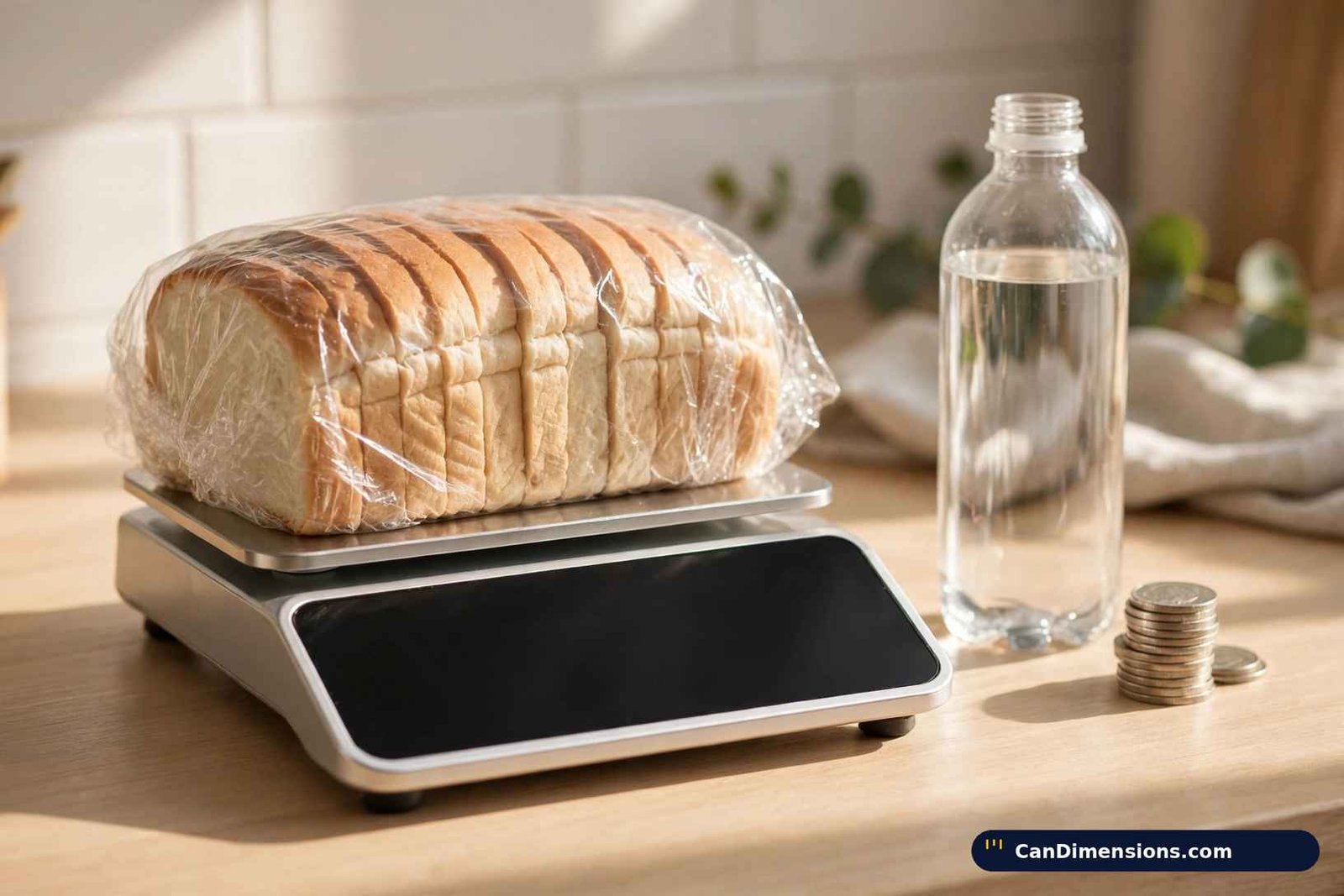
Counted, as an “about” — with the geography disclosed. Five hundred grams is a genuine standard loaf weight in the metric system: it is one of the legal metric loaf weights in US state bakery rules (250 g, 500 g, 750 g, or a multiple of 500 g), and labelled 500 g loaves are on supermarket shelves from German bakeries to British brioche. So a loaf sold as 500 grams is a true 500-gram reference.
The catch is the word “standard”. An American sandwich loaf is usually 1 pound (454 g) or 1½ pounds (680 g), and a British standard loaf is 400 g or 800 g by law — neither is 500. Trust the printed weight on the wrapper, not the word “loaf”: a 500 g loaf is a real thing, but it is a size you select, not the default everywhere.
A 500ml Bottle of Water (Full)
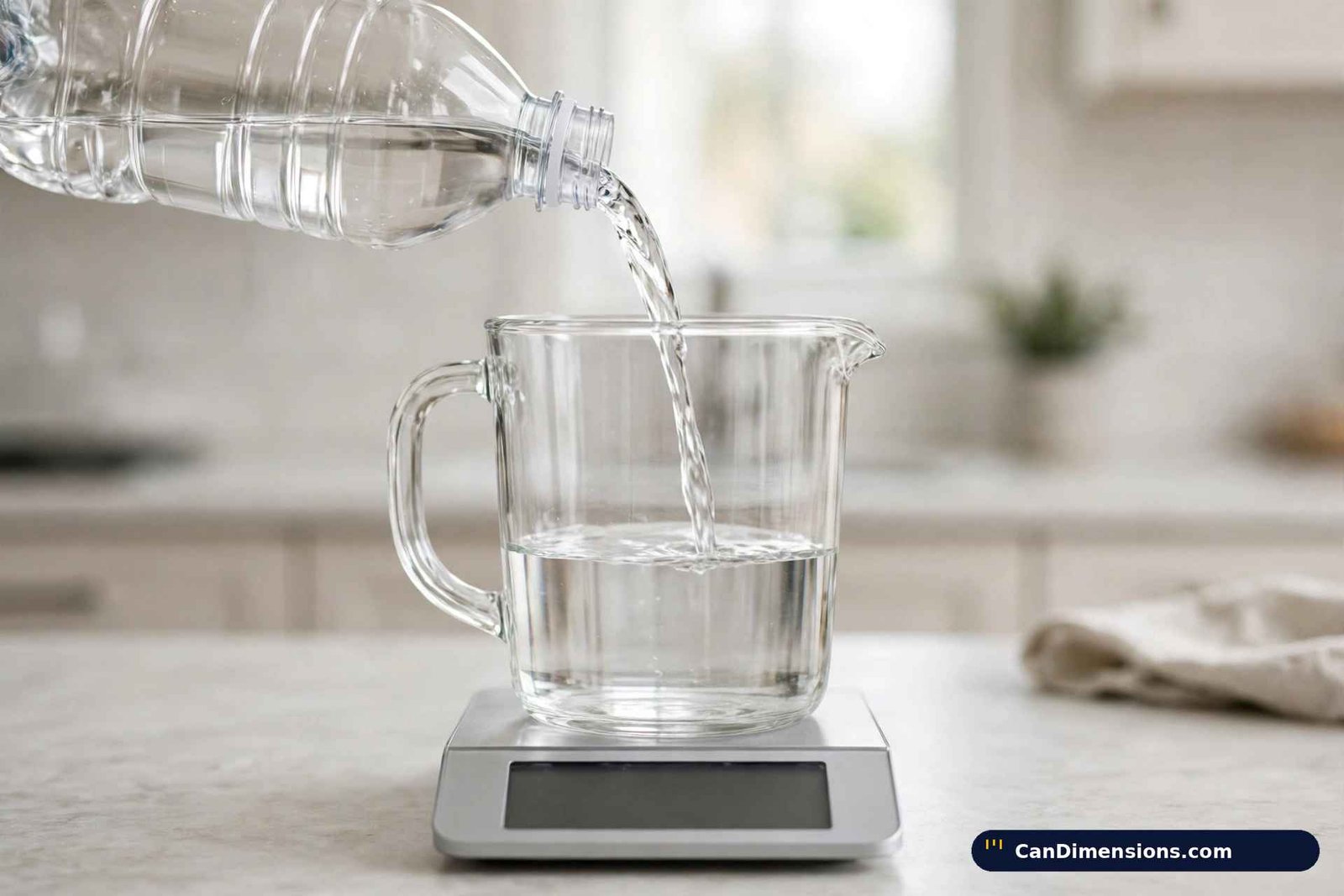
Counted on the corrected basis printed here: it is the water that weighs exactly 500 grams, not the full bottle. Water’s density is 1 gram per millilitre, so 500 ml of water is 500 grams by definition — the cleanest reference on this page. But the bottle itself is not weightless: an empty 500 ml PET bottle adds roughly 9 to 15 grams (the industry average was 9.25 g in Beverage Marketing Corporation data), so a full, sealed bottle actually reads about 510 to 515 grams on a scale.
For calibrating a scale, pour 500 ml of water into a tared container instead of standing the sealed bottle on the pan — that way you weigh the exact 500 grams, not 500 grams plus packaging.
Two Medium-Sized Apples
This one is a miss, and the arithmetic is not close. USDA FoodData Central puts a medium apple — 3 inches across — at 182 grams, so two medium apples weigh about 364 grams, more than a quarter short of 500. The claim behind this heading needs each apple to weigh 250 grams, but the USDA’s large apple is 223 grams and even its extra-large tops out around 242 grams; a 250-gram “medium” apple does not exist in the reference data.
To reach 500 grams of apples you need about two and three-quarter medium apples, or two large ones plus most of a third. Apples are a fine 180-gram reference each. As a pair, they are not 500 grams, so they are not counted here.
A Standard Package of Pasta
The pantry’s own calibration weight. Five hundred grams is the standard metric pack size for dried pasta across Europe and much of the world — spaghetti, penne and farfalle are all sold at a labelled net weight of exactly 500 grams, an amount that serves four to five people as a main course, which is why manufacturers settled on it.
The one caution is the Atlantic crossing: pasta sold in the United States is more often packed at 1 pound (454 g) or 12 ounces (340 g). Read the net-weight line before you trust the box — if it says 500 g, the contents are 500 grams by law.
A Large Can of Soup or Vegetables
Close, but verifiably over — and the usual description muddles two different weights. The big ready-to-eat soup cans this heading points at, Campbell’s Chunky being the standard example, are labelled 18.8 ounces, which is 533 grams of soup. That is the net weight of the contents alone; the steel can adds more on top, so a full Chunky can on a scale reads higher still — nowhere in the can’s life does it weigh 500 grams.
Smaller large cans exist — a 15-ounce vegetable can holds 425 grams of contents — but the shelf jumps from the mid-400s to the 530s without stopping at 500. A big soup can is a “a bit over 500 grams” reference at best, and it is not counted here.
100 US Nickels
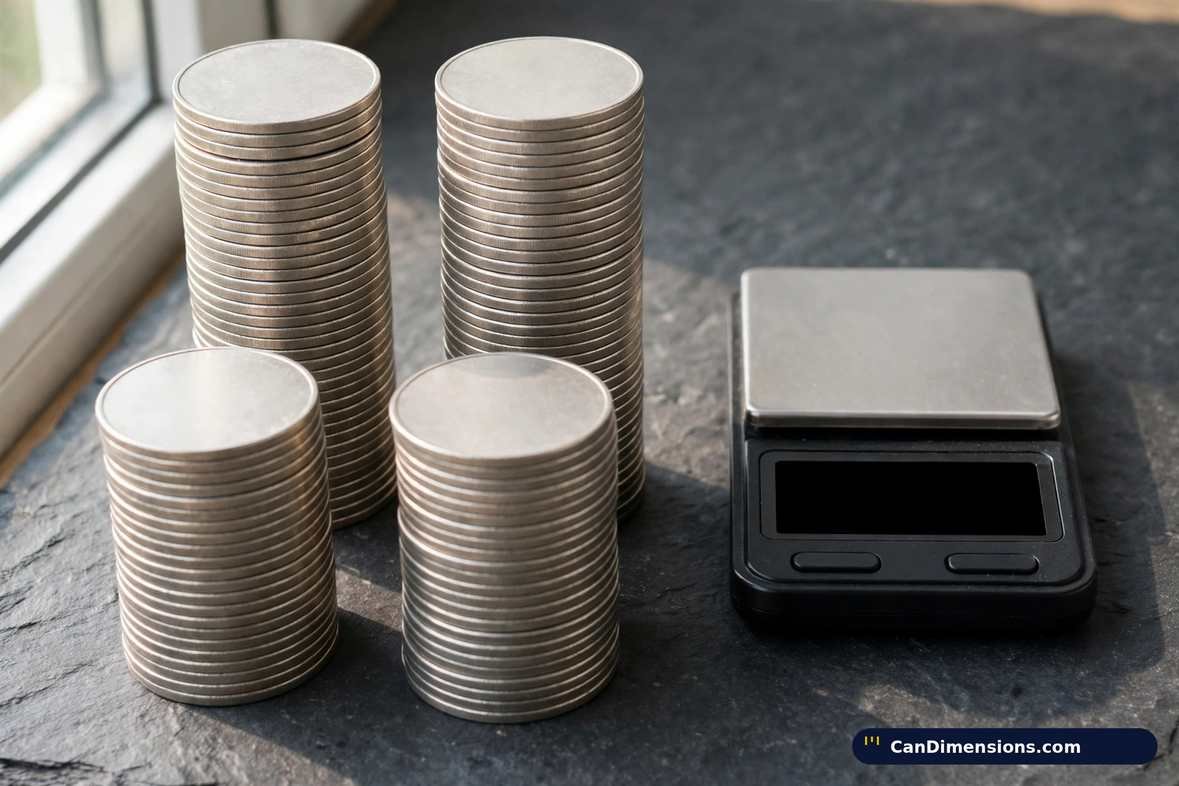
The most precise answer on this page costs five dollars. The United States Mint strikes every nickel to a specification weight of 5.000 grams, so 100 of them weigh exactly 500 grams — the same coin maths as two nickels making 10 grams, scaled up. The coins are 75% copper and 25% nickel, and the weight has been standard since the nickel was introduced in 1866.
Mint specifications are manufacturing tolerances, not estimates, which is why coin stacks are the classic home calibration check. If you own a hundred nickels, you own a pocket 500-gram weight.
A Bag of Sugar or Flour (Small Package)
Counted, on the label. In metric markets the small bag is the 500 g bag: granulated sugar, brown sugar, powdered sugar and flour are all sold in labelled 500-gram packages, and the net weight printed on a package is a legal claim, not a rough guide. A bag that says 500 g contains 500 grams.
The variation to watch is the same one as the pasta: in the US, the small bag is often 1 pound (454 g) instead. Check the label — if it reads 500 g, this is an exact reference; if it reads 1 lb, it is 46 grams light.
A Medium-Sized Hardcover Book
This one fails for a quieter reason: there is no such thing as a standard book weight to check it against. No publisher, printer or standards body fixes what a “medium hardcover” weighs, and real 300-to-400-page hardcovers scatter widely — trim size, paper stock and cover boards move the same page count from well under 400 grams to well over 600.
Some individual hardcovers certainly land near 500 grams, the way some individual apples land near 250. But a reference you cannot identify without a scale is not a reference. Not counted.
One Hundred British 20p Coins
Britain’s seven-sided 20p coin is the nickel’s exact transatlantic twin. The Royal Mint’s specification gives the coin a weight of 5.0 grams — cupro-nickel, 21.4 mm across, in circulation since 1982 — so any hundred 20p coins weigh exactly 500.0 grams. Between the nickel hundred and the 20p hundred, most pockets on either side of the Atlantic can assemble a precise 500 grams for twenty pounds or five dollars.
Two Hundred US Pennies (Post-1982)
Two hundred pennies work too, with the same date condition as the smaller coin references. Every cent minted since 1982 is copper-plated zinc at a Mint specification of 2.500 grams, so 200 of them weigh exactly 500 grams. Cents from before 1982 are mostly copper and weigh 3.11 grams each, so 200 vintage pennies would total about 622 grams — check the dates before you trust the pile.
Five Hundred US Dollar Bills
Every US banknote, from a $1 bill to a $100 bill, is printed on the same cotton-linen stock — 75% cotton, 25% linen — and weighs approximately 1 gram, a figure that comes from the Bureau of Engraving and Printing itself. So a strap of 500 bills of any denomination weighs about 500 grams. Note the “about”: the Bureau says approximately, so this is a very good reference rather than a specification-grade one — and at roughly 11 centimetres tall, a 500-bill stack is also the most compact half-kilo on this list.
One Hundred Sheets of A4 Paper (80 gsm)
Printer paper is sold by weight, and the maths is built into the name. Standard 80 gsm paper weighs 80 grams per square metre; an A4 sheet measures 210 × 297 mm, which is 0.0624 square metres, so one sheet weighs about 4.99 grams. One hundred sheets therefore weigh about 499 grams — 500 grams for any practical purpose, worked out straight from the paper’s own rating. A full ream is 500 sheets, so the reference is simply one-fifth of a ream, counted out.
A 500 g Gold Bar
At the other end of the price scale, a minted 500 g gold bar — PAMP Suisse’s Lady Fortuna is the famous one — contains exactly 500 grams of .9999 fine gold. Gold is sold and priced by weight, so minted bars are manufactured to their nominal weight as a matter of trade, not approximation. Dense as it is, half a kilogram of gold is still a surprisingly small object: a bar you can cover with one hand.
A 500 g Calibration Weight
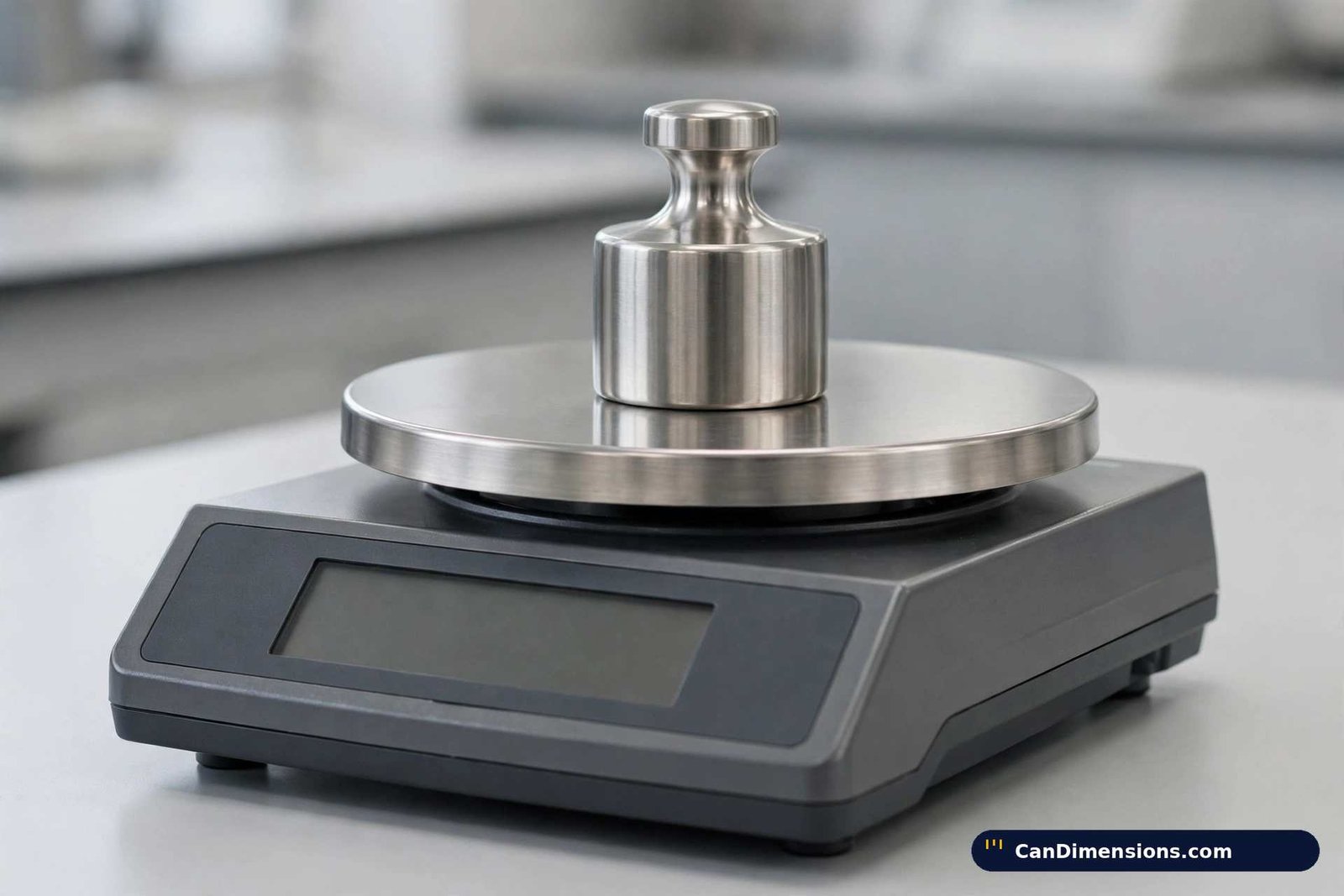
The most literal answer on the list: a certified 500 g test weight, made by firms such as Mettler Toledo and Ohaus to an exact nominal 500 grams under ASTM or OIML classes, exists precisely so you never have to guess at this weight. If you weigh coffee, parcels or portions regularly, one of these costs little, lasts forever, and settles every argument with your scale in seconds — it is also the honest tool behind the FAQ’s calibration question below.
A 500 g Javelin (Under-18 Girls)
Sport’s heavyweight reference — literally. World Athletics’ implement specifications set the javelin by age group and sex: senior men throw 800 grams and senior women 600 grams, but the under-18 girls’ implement is specified at exactly 500 grams, the spear the world’s best 16-year-olds compete with. Like the smaller sports references, its weight is fixed by a rulebook rather than estimated, which is what makes it countable.
A Human Placenta at Full Term
The most surprising entry on the list is one the body manufactures. Medical references put the placenta at approximately 500 grams at full term — the Human Protein Atlas gives “approximately 500 grams” for the term organ, and midwifery texts put the normal range at about 450 to 600 grams, roughly one-sixth of the baby’s birth weight (the standard fetal-to-placental ratio is 6:1). Counted as an average, with the range disclosed: any single placenta wanders around the 500-gram mark, but as a population figure it is one of the best-documented “about 500 grams” in medicine.
How to Measure 500 Grams Without a Scale
Start with muscle memory. Hold a full 500 ml water bottle — remembering it actually reads about 510 to 515 grams with the bottle — then hold 500 ml of water poured into a jug, which is the exact weight. Close your eyes and fix the sensation; that physical memory is what you will estimate against later, and studies of hand-weighing aside, it is genuinely how cooks and packers learn this weight.
For something checkable, use the coin method: 100 nickels, 100 British 20p coins or 200 post-1982 pennies each make exactly 500 grams by mint specification. Put the coins in one bag and your item in another, hang them from the ends of a ruler balanced on a pencil, and adjust the item until the ruler sits level — at balance, your item weighs 500 grams. And when precision matters, tare a container on any inexpensive digital scale and pour in water to 500 ml: you have manufactured an exact 500 grams out of a tap.
500 Grams of Food: What It Looks Like in the Kitchen
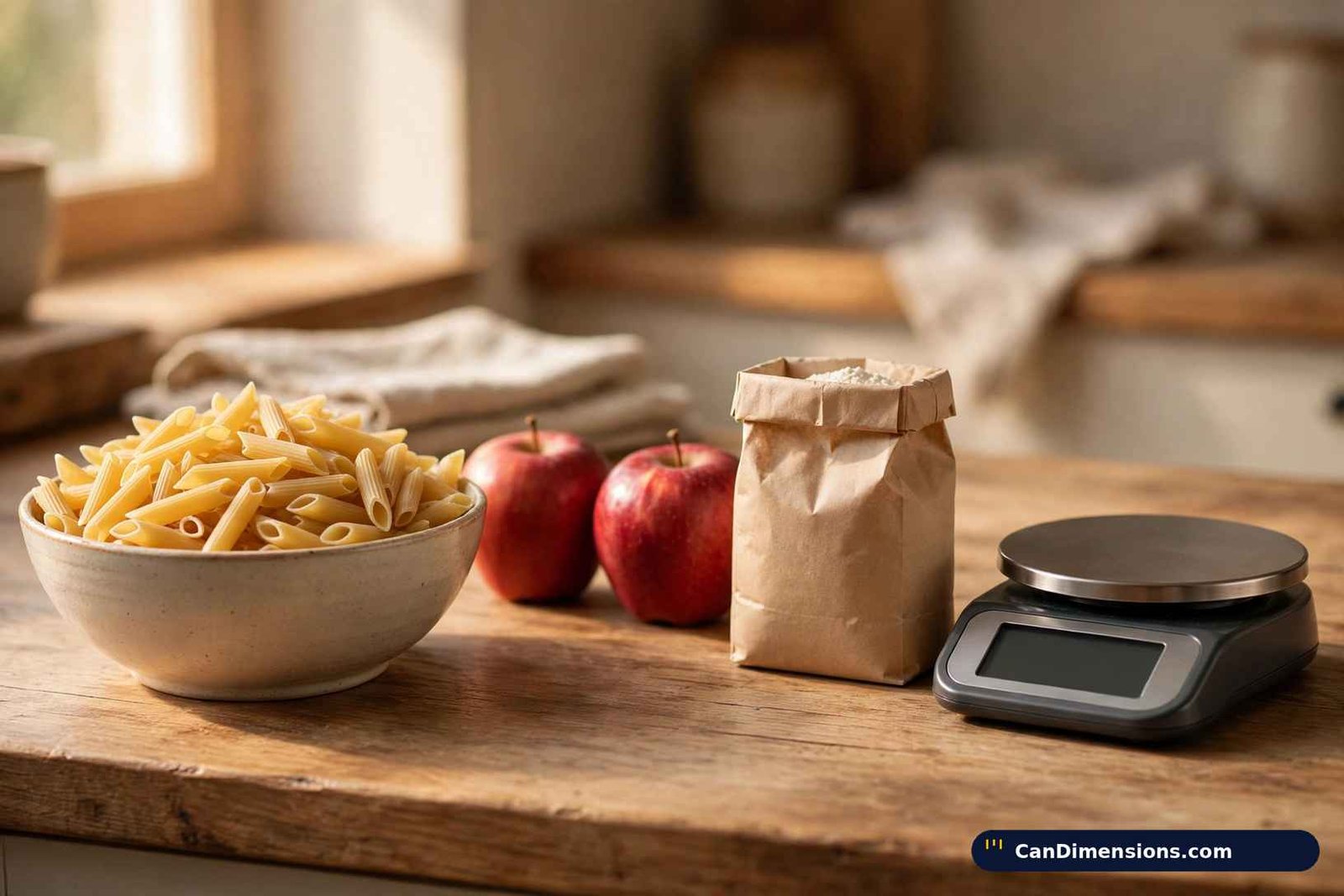
Five hundred grams is a cooking quantity, so it helps to picture it in cups — remembering that cups measure volume, and the gram weight of a cup changes with the ingredient. For all-purpose flour, at about 120 grams per cup, 500 grams is roughly 4⅙ cups. For granulated sugar, at about 200 grams per cup, it is 2.5 cups. For water it is simply 500 ml, about 2.1 cups. For uncooked long-grain rice, at about 185 grams per cup, it is roughly 2.7 cups, and for Greek yogurt it works out to about two standard cups.
On the plate, the same weight is a family-size pasta pack before cooking, about four servings of raw meat, or a loaf-sized bag of sugar emptied into the bowl. It is a substantial but ordinary amount of food — the weight of a meal’s main ingredient for a household, not a banquet — which is exactly why the 500 g package became the standard it is.
Comparing 500 Grams to Other Common Weights
500 Grams vs. 1 Pound
This confuses people constantly, because the two are close enough to feel identical in the hand. 500 grams does NOT equal 1 pound. One pound equals 453.59 grams, so 500 grams is about 46 grams heavier than a pound — 1.10231 pounds, to be exact. The gap is small but real: it is roughly ten nickels’ worth of weight, enough to push a parcel into the next postage band or throw off a recipe scaled by feel. If a scale, label or recipe treats the two as interchangeable, it is wrong by about ten percent.
How 500 Grams Relates to Other Metric Weights
250 grams is half of 500 g. That is 50 nickels, 250 ml of water, or about one and a third medium apples — the size of single-serving food packages and small produce items.
1 kilogram is double 500 g. That is 2.20462 pounds, two standard pasta packs, or 200 nickels. Many household staples come in 1 kg packages because it is the metric system’s clean base number.
100 grams is one-fifth of 500 g. That is 20 nickels, 100 ml of water, or a standard bar of soap — and the weight nutrition labels use as their reference serving, which is why our guide to what weighs 100g gives that smaller weight the same verified treatment, example by example.
500 Grams vs 1 Kilogram: A Quick Sense of Scale
The two metric anchors bookend everyday weighing, and everything on this page is a fraction or a multiple of them. Five hundred grams is exactly half a kilogram: two of anything here — two pasta packs, two hundred nickels, two 500 ml bottles of water — make the kilo. Scale down instead and the same list disassembles neatly: fifty of the references in our how much is 10 grams guide, or five hundred of the paperclip-weight items in our things that weigh 1 gram guide, rebuild this exact weight. Learn the heft of one honest 500-gram object — the water measure is the easiest — and the kilogram stops being abstract too: it is that heft, doubled.
Common 500-Gram Myths, Checked
Because this weight is asked about so often, the myths have had time to harden. These are the ones checked and corrected in this guide:
- “500 grams equals 1 pound.” It equals 1.10231 pounds; one pound is 453.59 grams. The two differ by about 46 grams.
- “A full 500 ml water bottle weighs exactly 500 grams.” The water does; the bottle adds roughly 9 to 15 grams, so the full bottle reads about 510 to 515 grams.
- “Two medium apples weigh 500 grams.” USDA puts a medium apple at 182 grams; two weigh about 364 grams. No USDA size class — not even extra-large, at about 242 grams — makes a “medium” apple 250 grams.
- “A large can of soup weighs 500 grams.” The standard big can, Campbell’s Chunky, is labelled 533 grams net — contents only, before the can itself is weighed.
- “A medium hardcover book weighs 500 grams.” No standard book weight exists; page count alone does not fix a book’s weight, and real hardcovers scatter from under 400 to over 600 grams.
- “One medium apple weighs about 100 grams.” That figure appears in the competitor’s FAQ answers, and it is wrong by the same USDA record: a medium apple is 182 grams. A bar of soap is the honest ~100 g household reference.
- “Four AA batteries weigh 100 grams.” An AA alkaline cell weighs about 23 grams, so four come to roughly 92 grams — close, but not the round number.
Question’s
What is something that weighs 500 grams?
A standard 500 g package of pasta, 100 US nickels, or 500 ml of water. A labelled 500 g loaf of bread or small bag of sugar works too.
What weighs 500 grams to calibrate my scale?
A certified 500 g calibration weight is the exact tool. At home, 100 nickels weigh exactly 500 grams by US Mint specification, and 500 ml of water in a tared container does the same.
What does 500 grams look like?
A standard pasta pack, a small bag of sugar, or a full single-serve water bottle. In the hand it feels like a solid one-handed lift — about the heft of a thick paperback novel’s bigger hardcover cousin, or two and three-quarter medium apples.
What is 500g equal to?
Exactly 0.5 kilograms. In imperial units it is 1.10231 pounds, or 17.637 ounces.
Does 500 g equal 1 lb?
No. One pound is 453.59 grams, so 500 grams is 1.10231 pounds — about 46 grams, or ten nickels, heavier than a pound.
How many nickels are 500 grams?
Exactly 100. Each US nickel weighs 5.000 grams by Mint specification, so 100 × 5 g = 500 g.
What household object weighs 100g?
A standard bar of soap, at roughly 100 grams, is the classic reference — and 20 nickels make exactly 100 grams. A medium apple does not: USDA puts it at 182 grams.
How much is 500 grams of food?
It depends on the food: about 4⅙ cups of all-purpose flour, 2.5 cups of granulated sugar, 500 ml of water, or roughly two cups of Greek yogurt.
Is 500g of meat a lot?
It is a substantial amount — about 1.1 pounds raw, which cooks down to roughly three to four standard servings. For one person it is several meals; for a family dinner it is one main course.
Conclusion
Five hundred grams stops being abstract the moment it has anchors: 100 nickels, a pasta pack, 500 ml of water measured into a tared jug, a hundred sheets of A4. Those are the examples worth remembering, because each one was checked against the people who actually make or measure the thing — the mints, the USDA, the manufacturers and the rulebooks.
Just as useful is knowing which famous examples to retire: the 364 grams of two medium apples, the 533-gram soup can, the standardless hardcover book and the full water bottle that quietly includes its own packaging. Keep one verified reference where you weigh things — the certified weight if you are serious, the coin stack if you are not — and when a track-and-field fan mentions that the youngest international throwers compete with a 500-gram javelin, you will know exactly how heavy that spear is: half a kilogram, no more, no less.